
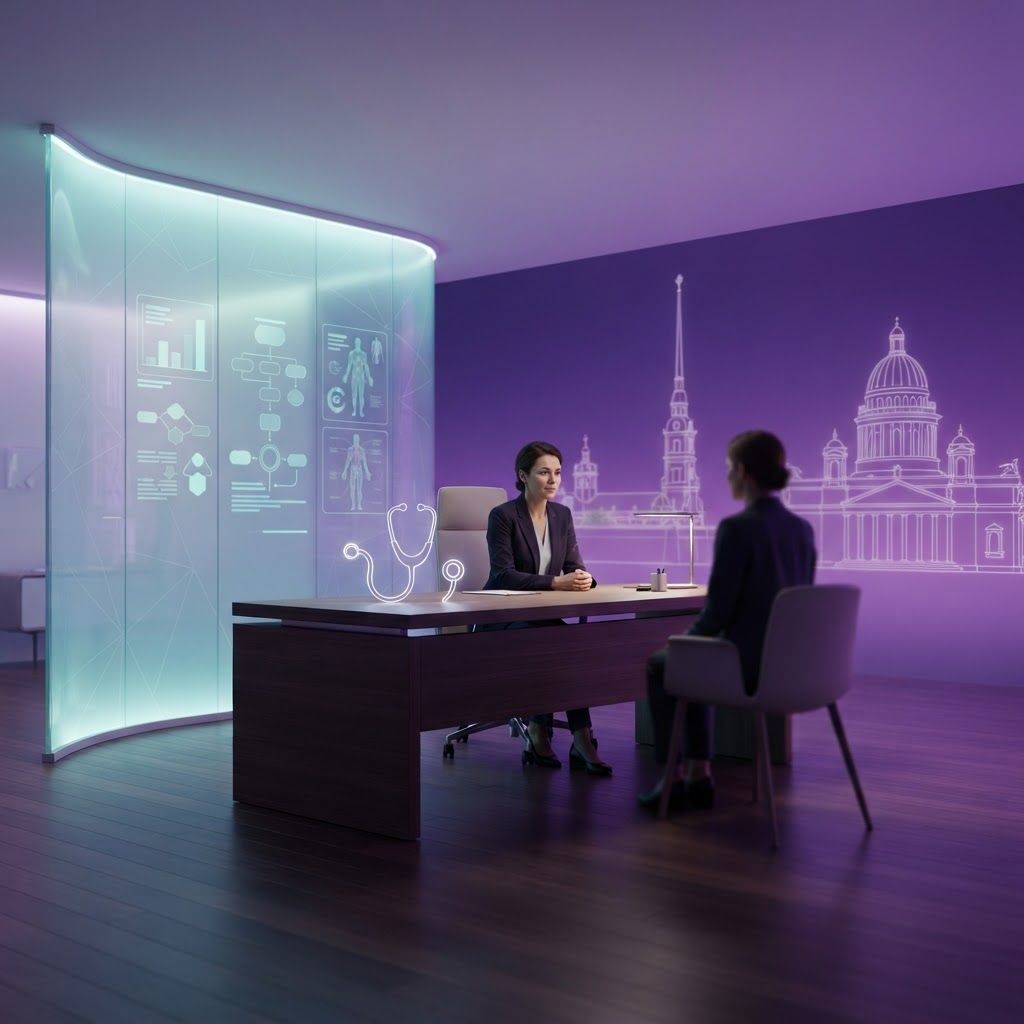
Where Most Healthcare Actually Happens
Hospitals attract attention, but the majority of medical encounters take place in clinics. In St. Petersburg, a mature network of private and commercial multidisciplinary clinics has developed alongside the state polyclinic system, offering shorter waits, extended hours and a more consultative style of consultation. For routine care, chronic condition management and diagnostics, these clinics are where most residents make their real healthcare decisions.
The city's clinic market is notably competitive, which has driven genuine improvements. Many networks now operate their own laboratories and imaging departments, run unified electronic records across branches, and offer telemedicine for follow-up. That integration is the main practical advantage over assembling care from separate independent providers.
Ten Clinic Networks and Centres
Medi is a long-established local network offering multidisciplinary outpatient care with particularly strong reputations in dentistry, dermatology and aesthetic medicine alongside general specialities. Its longevity in the market has built substantial patient trust.
SM-Clinic operates a broad multidisciplinary network with in-house diagnostics, day surgery and paediatric services. Its appeal is breadth: most common needs can be met within one organisation and one record system.
EMS Clinic positions itself around international standards of care, with a strong emphasis on family medicine, comprehensive checkups and English-speaking service. It is frequently chosen by expatriate patients and by those wanting a primary-care physician who genuinely coordinates their care.
Scandinavia Clinic, part of the Ava-Peter group, is well known for obstetrics, gynaecology, reproductive medicine and paediatrics, with its own maternity capability. Its integrated pathway from fertility treatment through delivery and paediatric care is a genuine differentiator.
Medem International Clinic and Hospital combines outpatient care with inpatient and surgical capability in a central location, oriented toward comprehensive service and international patients.
Sogaz Medical Group operates a substantial network of clinics with strong corporate healthcare programmes, occupational medicine and multidisciplinary outpatient services. Its scale supports serious diagnostic equipment.
MedSwiss focuses on family medicine and a personal-physician model, appealing to patients who want continuity with a single doctor rather than a series of specialist appointments.
Allergomed and similar focused clinics illustrate the value of specialisation, concentrating on allergology, immunology and respiratory conditions with depth that generalist networks rarely match.
Mother and Child Group clinics concentrate on women's health, fertility, pregnancy and paediatrics, with structured programmes covering the full reproductive journey.
Budget-focused network clinics across residential districts round out the market, providing accessible consultations and basic diagnostics closer to home. For straightforward needs they offer real value, and proximity meaningfully improves adherence to follow-up.
How to Choose a Clinic
Start with what you actually need. For a single specialist opinion on an unusual condition, a focused clinic or academic specialist is usually better than a general network. For ongoing management of something like hypertension, diabetes or thyroid disease, an integrated multidisciplinary clinic with a consistent physician and unified records is far more valuable.
Check whether diagnostics are in-house. Clinics with their own laboratory and imaging can typically complete investigation within one visit, and their doctors can review images directly rather than relying on external written reports. That reduces both delay and information loss.
Investigate the individual doctor, not just the brand. Clinic networks vary considerably between branches and between practitioners, and reputation within a network is rarely uniform. Ask about the specific physician's specialisation, years in practice and whether they hold hospital affiliations for cases requiring surgery.
Questions Worth Asking Before Booking
Ask how long a standard consultation lasts. Fifteen-minute slots make thorough history-taking impossible, and for complex or chronic problems the appointment length is one of the strongest predictors of a useful outcome. Clinics offering longer initial consultations usually charge more and are usually worth it.
Ask about record access. You should be able to obtain your own results, imaging and consultation notes without friction, ideally through a patient portal. Portable records protect you if you change providers or need a second opinion.
Ask how the clinic handles escalation. If an investigation reveals something serious, does the clinic have established referral routes to hospitals with the necessary capability, and will your physician coordinate that transfer? Clinics that manage this transition well save patients weeks of self-navigation.
Understanding Pricing and Packages
Private clinic pricing is usually transparent per service but easy to underestimate in total. An initial consultation frequently generates laboratory panels, imaging and a follow-up visit, so ask for an estimated total pathway cost rather than the entry price. Comprehensive checkup packages can offer good value, but review their contents critically since some include tests with limited value for asymptomatic patients.
Insurance arrangements matter. Many clinics work with voluntary medical insurance and corporate programmes, and coverage details determine which specialists and investigations are included. Confirming coverage before treatment avoids uncomfortable conversations afterwards.
Trends in Outpatient Care
Preventive medicine has gained real traction, with structured screening programmes tailored by age and risk profile rather than generic annual test batteries. Telemedicine has settled into a sensible role, well suited to reviewing results and adjusting treatment while still requiring in-person assessment for anything new.
There is also visible movement toward day surgery, allowing procedures that once required admission to be completed in an outpatient setting with faster recovery. For patients, the practical takeaway is to prioritise clinics that offer continuity, integrated diagnostics and a physician who takes responsibility for the whole picture rather than one organ system.