
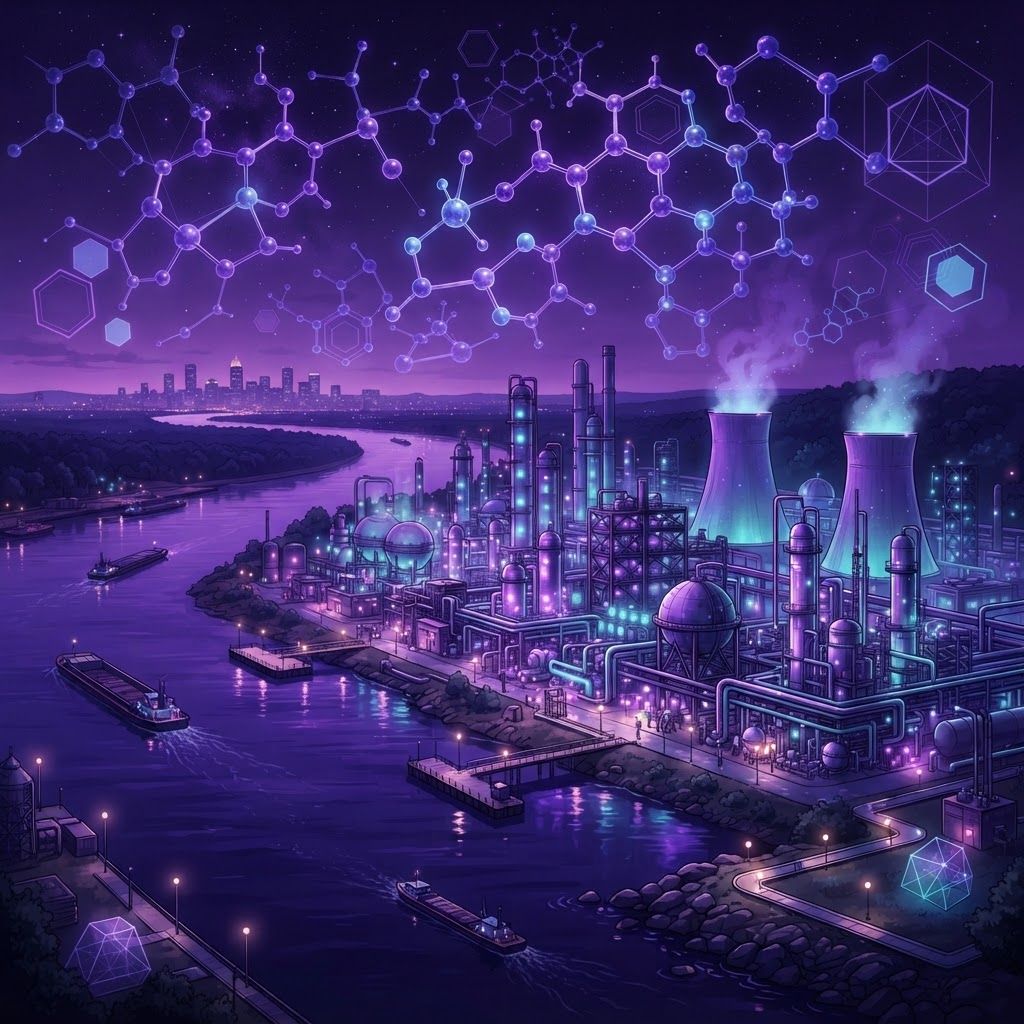
One of the World's Great Chemical Corridors
The stretch of the Mississippi River between Baton Rouge and New Orleans hosts an extraordinary density of chemical manufacturing. The reasons are structural rather than accidental: deep-water river access for feedstock and product movement, pipeline connectivity to Gulf natural gas and petroleum production, abundant industrial water, large tracts of industrially zoned land, and a workforce with generations of process operations experience.
Chemical manufacturing here spans the value chain. Basic chemicals such as ethylene, chlorine and ammonia derivatives feed intermediate producers, who in turn supply specialty chemical formulators and plastics manufacturers. Around these plants sits a supporting ecosystem of catalyst suppliers, analytical laboratories, environmental consultants and specialized maintenance contractors.
How Companies Were Evaluated
Selection considered production scale and technical complexity, safety and process management reputation, environmental performance initiatives, product portfolio breadth, research and technical service capability, and importance to the regional industrial supply chain.
1. ExxonMobil Chemical Baton Rouge
The chemical operations integrated with the Baton Rouge refining complex produce olefins, polymers and specialty products at very large scale. Integration with refining allows feedstock and energy optimization that standalone plants cannot achieve, and the site's technical organization has long been a training ground for process engineers across the region.
2. BASF Geismar
Located in the corridor south of Baton Rouge, this large multi-product site manufactures intermediates and performance chemicals serving agriculture, coatings, automotive and construction markets. Multi-plant sites of this type benefit from shared utilities, integrated logistics and a deep on-site engineering bench.
3. Shintech Louisiana
Chlor-alkali and polyvinyl chloride production connects salt and natural gas feedstocks to plastics manufacturing. Operations of this scale represent major capital investment in the parish and illustrate how competitive energy costs anchor chemical manufacturing in Louisiana.
4. Honeywell Baton Rouge Operations
Specialty fluorine chemistry and performance materials manufactured in the region serve refrigeration, industrial and specialty applications. Technical service depth matters greatly in this segment, since customers often need application engineering alongside product supply.
5. Rubicon Geismar
Producing aniline and related intermediates used in polyurethane and rubber chemistry, this operation exemplifies the intermediate tier of the chemical value chain that connects basic chemicals to finished products. Process safety management is central given the hazardous nature of the chemistry involved.
6. Air Products and Industrial Gas Operations
Hydrogen, nitrogen, oxygen and specialty gases delivered by pipeline underpin refining and chemical operations across the corridor. Industrial gas infrastructure is one of the least visible yet most critical elements of the regional industrial system, and pipeline reliability is essentially non-negotiable.
7. Capital Region Specialty Chemical Formulators
Smaller formulators blend and package specialty products for water treatment, oilfield service, cleaning, coatings and agricultural applications. Their advantage is responsiveness, offering custom formulation and small-batch production that large producers cannot economically supply.
8. Bayou Analytical Laboratories
Chemical manufacturing depends on measurement. Independent laboratories in the region provide product quality analysis, environmental sampling, method development and troubleshooting support with accredited procedures and documented chains of custody.
9. Delta Catalyst and Chemical Services
Catalyst handling, regeneration, screening and reactor services are highly specialized activities performed during plant turnarounds. Firms in this niche combine confined space expertise with materials handling capability under demanding schedule pressure.
10. Red Stick Environmental and Process Safety Consultants
Process hazard analysis, air permitting, emissions modeling, risk assessment and management of change support are essential functions for chemical operators. Consultancies in this space help facilities maintain compliance while identifying genuine risk reduction opportunities.
Trends Reshaping Chemical Manufacturing
Emissions reduction and energy efficiency projects are attracting significant capital, often justified by fuel savings alone. Carbon capture and storage evaluation is advancing along the corridor, supported by favorable geology and existing pipeline infrastructure. Chemical recycling of plastics is moving from pilot to commercial consideration. Digital process optimization using advanced analytics is improving yield and reliability. And workforce succession planning has become urgent as experienced operators and engineers retire, prompting expanded partnerships with technical colleges.
How to Evaluate a Chemical Supplier or Partner
Review process safety performance and ask specifically how management of change is administered, since uncontrolled change causes most serious incidents. Request certificates of analysis and understand specification tolerances rather than nominal values. Confirm supply reliability arrangements, including alternate production capability during turnarounds or weather events. Verify regulatory compliance status and transportation and handling documentation. For custom work, evaluate technical service and application support depth. And discuss product stewardship, including safe handling guidance and end-of-life considerations.
Final Thoughts
Baton Rouge's chemical industry combines enormous scale with genuine technical sophistication, and it is actively investing in efficiency, emissions performance and digital reliability. For buyers, employees and communities alike, the sector's direction is toward tighter process control and lower environmental intensity. The companies profiled here anchor a supply chain whose importance extends far beyond Louisiana.