
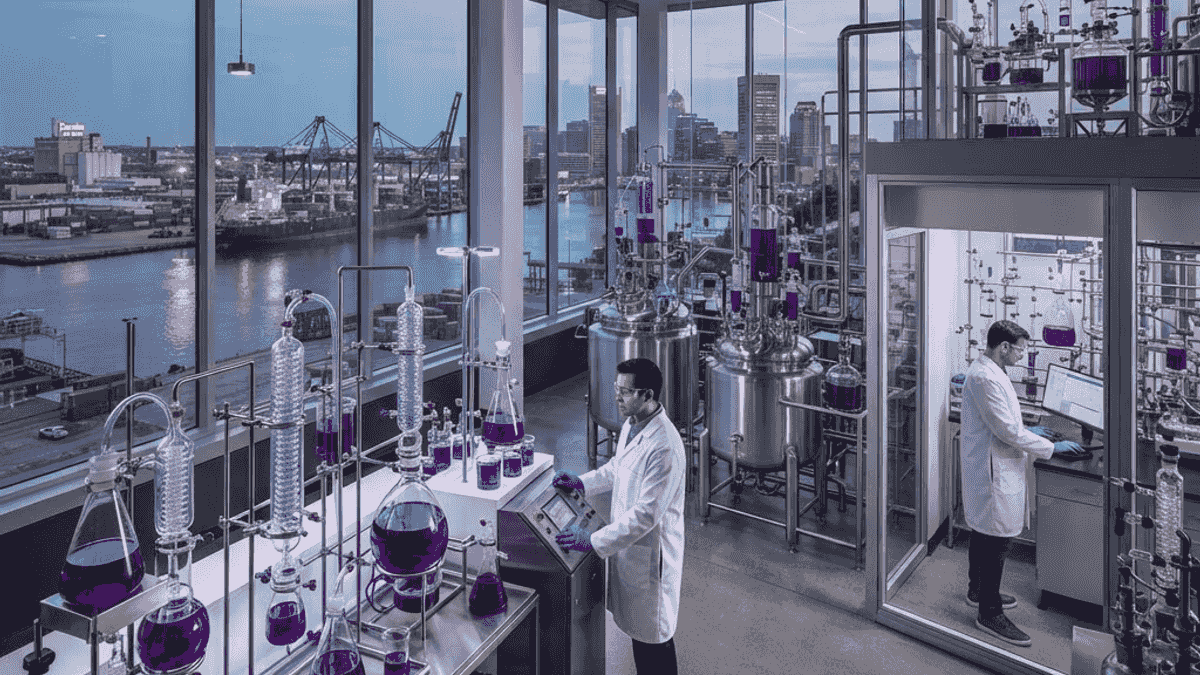
The Chemical Industry in Baltimore
The chemical industry forms a vital part of Baltimore's manufacturing landscape, supplying the raw materials and specialty products that countless other industries depend on. From basic industrial chemicals and coatings to specialty formulations for pharmaceuticals, agriculture, and consumer goods, the region's chemical companies play an essential role in the broader economy. Baltimore's port and transportation infrastructure make it an ideal location for producing, storing, and distributing chemical products across the Mid-Atlantic and beyond.
Because chemical manufacturing involves handling potentially hazardous materials, the industry operates under strict safety and environmental regulations. The companies that thrive in Baltimore have built their reputations on responsible operations, investing in modern facilities, comprehensive safety programs, and environmental stewardship. This commitment protects workers, communities, and the surrounding environment while ensuring reliable supply to customers.
What Defines a Leading Chemical Company
The best chemical companies in Baltimore are distinguished by their dedication to safety, quality, and innovation. Producing chemicals to precise specifications requires sophisticated equipment, rigorous quality control, and deep technical knowledge. Leading firms maintain certified quality systems and invest in research and development to create products that meet evolving customer needs.
Safety and regulatory compliance are non-negotiable in this industry, and top companies treat them as core values rather than mere obligations. Comprehensive training, robust process controls, and proactive environmental management define the strongest firms. Reliability in supply and responsive technical support further set the best companies apart, giving customers confidence that they can depend on their chemical partner for consistent quality and service.
Notable Chemical Companies in Baltimore
Companies such as Patapsco Chemical Group have earned recognition for their specialty chemical production and strong safety culture. Harbor Coatings and Chemicals specializes in industrial coatings and surface treatments. Monument Specialty Chemicals focuses on custom formulations for pharmaceutical and healthcare applications.
Other respected firms include Chesapeake Chemical Company, known for its industrial and water-treatment chemicals, and Bay State Compounds, which serves the agricultural sector. Inner Harbor Chemical Solutions provides distribution and blending services, while Locust Point Polymers concentrates on advanced material chemistry. Rounding out the list are Canton Chemical Manufacturing, Federal Hill Laboratories, and Fells Point Chemical Services, each contributing specialized expertise that supports Baltimore's diverse industrial base.
Trends Shaping the Chemical Sector
Sustainability has become a defining trend in Baltimore's chemical industry. Companies are increasingly adopting green chemistry principles, developing products and processes that reduce waste, energy consumption, and environmental impact. Bio-based feedstocks, safer formulations, and closed-loop systems are gaining traction as customers and regulators demand more responsible chemistry.
Innovation in specialty and high-performance chemicals is another important trend. As industries such as pharmaceuticals, electronics, and advanced materials grow, they require increasingly sophisticated chemical products. Baltimore companies are responding by investing in research capabilities and forming partnerships with universities and research institutions, strengthening the region's position as a center for advanced chemical innovation.
Choosing the Right Chemical Partner
Businesses seeking a chemical company in Baltimore should evaluate factors such as product specialties, quality certifications, safety records, and technical support capabilities. A company with proven expertise in a client's specific application will better understand the relevant requirements and deliver products that perform reliably.
The companies featured here represent the strength and responsibility of Baltimore's chemical sector. Whether a business needs industrial chemicals, specialty formulations, or custom solutions, the city offers experienced partners committed to quality, safety, and innovation in every product they deliver.
Questions to Ask Before Making a Decision
A thoughtful selection process should include direct questions about capacity, lead times, quality controls, workforce expertise, and contingency planning. Ask each prospective company to explain how it manages projects from the first consultation through delivery and ongoing support. Clear answers reveal whether the organization has mature processes or relies on improvised solutions. It is equally useful to request examples of comparable work, references from established customers, and details about insurance, certifications, warranties, and service agreements. These checks help buyers compare meaningful evidence rather than marketing claims alone.
Baltimore-specific considerations deserve attention as well. Companies familiar with the city's industrial corridors, port operations, transportation network, labor market, permitting procedures, and environmental requirements can often identify challenges earlier. Local knowledge is especially valuable when a project involves waterfront access, heavy freight, historic structures, dense neighborhoods, or coordination with regional utilities. Buyers should discuss how the provider handles scheduling disruptions, material shortages, extreme weather, and other conditions that can affect work in the Chesapeake region.
Finally, the lowest initial quote is not always the strongest value. Total cost includes product life, energy use, maintenance, downtime, replacement parts, training, and the quality of post-sale support. A well-run company should be willing to explain these trade-offs in plain language and document the assumptions behind its proposal. Comparing providers on safety, reliability, transparency, technical capability, and long-term service produces a more balanced decision. Readers should verify current capabilities and availability directly, since ownership, product lines, service territories, and operating conditions can change over time.