
The St. Louis Custom Car Scene
St. Louis has a longstanding and genuinely diverse custom automotive culture. Classic American muscle remains strongly represented, reflecting the region's manufacturing history and a generation of owners who kept their cars. Alongside it sits an active import performance community, a growing truck and off-road modification segment, a sophisticated audio installation market and an expanding demand for cosmetic protection work such as wraps and paint protection film. Weekly cruise nights and regional shows throughout the warm months keep the scene visible and connected.
What distinguishes the local market is the availability of specialists rather than generalists. Instead of one shop attempting every discipline, the metro area supports dedicated fabricators, tuners, upholstery shops, wheel and tire specialists and restoration houses. That specialization produces better work, but it means owners planning comprehensive builds need to coordinate multiple vendors or find a shop willing to project-manage.
Ten Leading Customization Specialties and Where They Fit
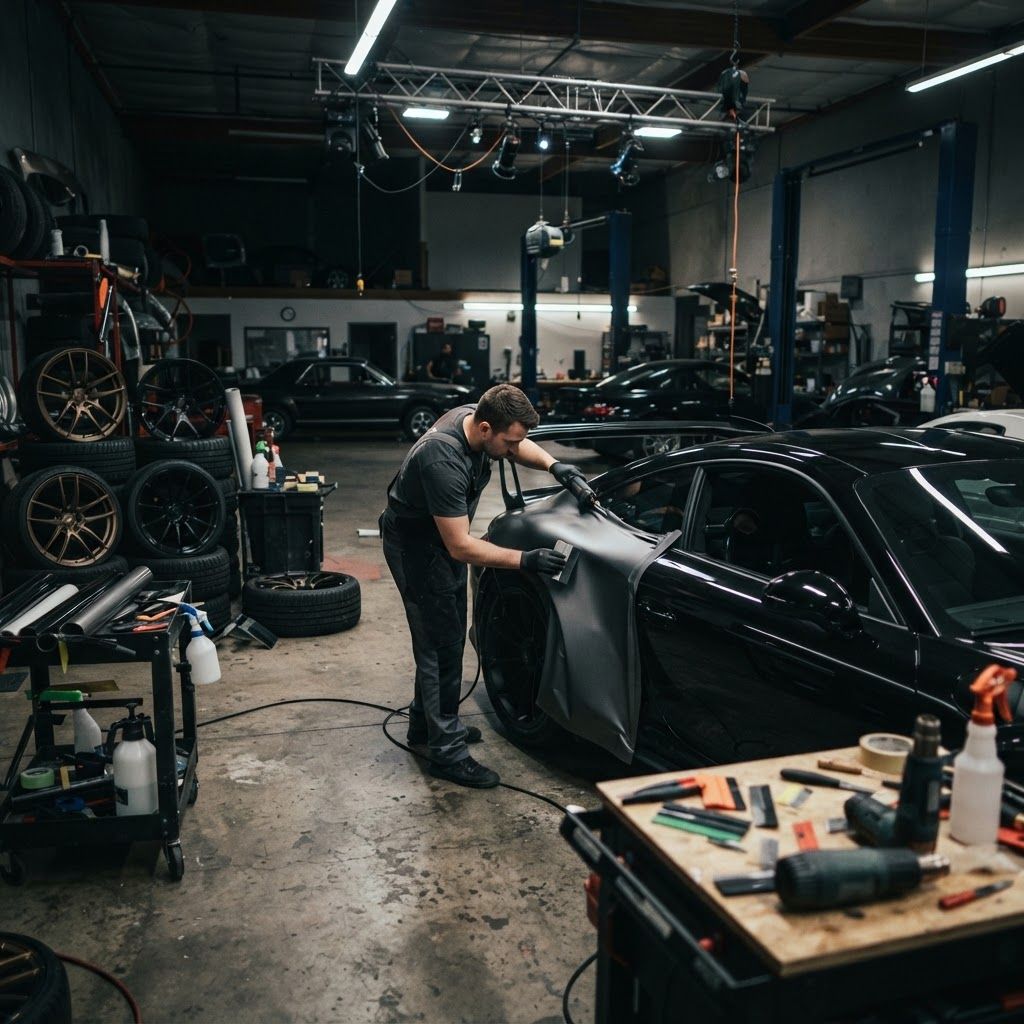
1. Vinyl wrap and paint protection studios represent the fastest-growing segment in the region. Full-color change wraps let owners transform appearance reversibly, protecting original paint and resale value. Quality is determined by surface preparation, panel disassembly and material choice rather than price, and reputable installers in the metro area warranty their work against lifting and edge failure.
2. Performance tuning and dynamometer shops serve owners of modern turbocharged and supercharged vehicles. Calibration on a load-bearing dynamometer produces safe, measurable gains, and shops with in-house tuning capability can address the fueling and timing requirements that bolt-on parts create.
3. Suspension and chassis specialists handle coilover installation, air suspension systems, alignment optimization and bracing. Given regional pavement quality, thoughtful spring and damper selection matters more here than in smoother climates. Air suspension has become particularly popular because it allows show height without sacrificing daily usability.
4. Wheel and tire retailers with custom fitment expertise prevent the most common and expensive customization mistakes. Correct offset, load rating, brake clearance and tire sizing determine whether a wheel package looks intentional and drives properly, and knowledgeable local shops model fitment before ordering.
5. Custom audio and mobile electronics installers continue to be a strong niche. Modern builds involve integrating amplifiers and processors with factory infotainment systems, sound-deadening treatment and fabricated enclosures. Installation craftsmanship, particularly wiring discipline, distinguishes durable systems from those that fail within a year.
6. Upholstery and interior trim shops in the metro area handle leather retrimming, headliner replacement, custom stitching and full interior restoration for classics. This is deeply skilled handwork, and the region retains several genuinely capable practitioners.
7. Restoration shops focused on classic American vehicles represent the traditional core of the local scene. Complete rotisserie restorations, metal fabrication, panel replacement and period-correct assembly are available in the region at a quality level competitive with better-known restoration markets.
8. Truck and off-road outfitters serve a large segment of the local market with lift and leveling kits, bumpers, winches, lighting, bed protection and towing upgrades. Suburban and rural driving patterns around the metro area, along with regional hunting and trail use, sustain steady demand.
9. Custom fabrication and exhaust shops handle mandrel-bent exhaust systems, roll cages, intake piping and one-off brackets. Fabrication capability is what allows a build to progress beyond catalog parts, and skilled welders are the most valuable resource in any custom project.
10. Paint and body shops with custom finish capability complete the list. Custom color mixing, candy and pearl finishes, bodywork on modified panels and blending on classic vehicles require materially different skills than collision repair, and the shops that do both well are worth identifying.
Trends Shaping Customization
Reversible modification has become the dominant philosophy. Owners increasingly favor wraps over permanent repaints, bolt-on modifications with retained original parts, and tuning that can be flashed back to stock. That approach protects resale value in a market where original condition commands premiums.
Restomod builds, which combine classic bodies with modern drivetrains, brakes and climate control, continue to grow because they deliver vintage character with usable reliability. On the newer end, software-defined vehicles have complicated modification, since electronic architectures resist changes and driver assistance systems require recalibration after suspension or wheel changes.
Planning a Build That Holds Value
Define the purpose before selecting parts. A car built for weekend shows demands different choices than a daily driver or a track vehicle, and attempting all three produces compromises in every direction. Establish a total budget and reserve roughly a quarter of it for the unexpected, because disassembly reliably reveals corrosion, prior repairs or worn components that must be addressed.
Sequence work logically. Address structure, brakes and suspension before adding power. Complete bodywork and paint before installing interior and final trim. Handle wiring and electronics before closing up panels. Reversing this order guarantees rework.
Vetting a Shop
Request photographs of completed projects similar to yours, and ask to see work in progress rather than only finished results, since the quality of hidden work matters most. Confirm insurance coverage for customer vehicles, written estimates, expected timelines and how change orders are handled. Ask about warranty on labor and how the shop addresses issues discovered after delivery. Finally, verify that the shop documents work, because a build sheet with parts specifications and torque records adds real value at resale.
Legal and Insurance Considerations
Missouri and Illinois regulate lighting, window tint, exhaust noise and ride height, and inspection requirements differ between jurisdictions in the metro area. Confirm compliance before spending on modifications that cannot pass inspection. On the insurance side, standard policies typically cover only a limited value of aftermarket equipment, so owners of significant builds should carry an agreed-value or stated-value policy supported by appraisal and receipts.
Conclusion
St. Louis offers deep customization capability across wraps, tuning, suspension, audio, upholstery, fabrication, restoration and off-road outfitting. Choosing specialists over generalists, sequencing work correctly and documenting everything produces builds that both perform and retain value. Start with a clear purpose, budget honestly and prioritize craftsmanship in the work nobody sees.