
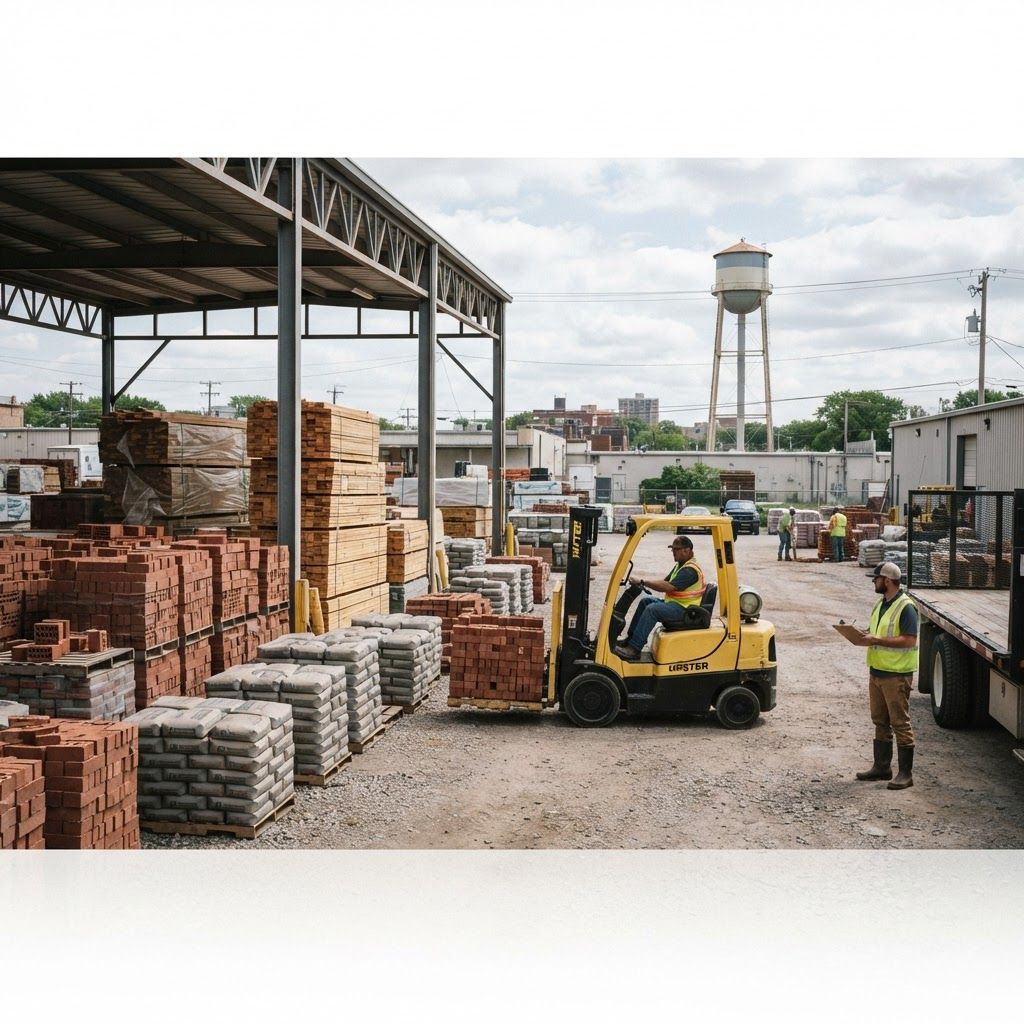
A Region Built From Its Own Materials
Few American cities are as physically defined by their building materials as St. Louis. The red brick that lines entire neighborhoods came from local clay deposits, fired in kilns that once made the region one of the largest brick producers in the country. Limestone quarried from the bluffs framed civic buildings and foundations. That legacy is not just architectural nostalgia; it created a dense local supply chain of quarries, yards, distributors, fabricators, and millwork shops that still serves the metro area today.
Modern buyers benefit from that depth. A contractor working in the region can source masonry, dimensional lumber, engineered wood, roofing, windows, insulation, drywall, concrete products, and specialty finishes without reaching far outside the metro. For a category where freight and delivery scheduling drive project timelines, that proximity is a real advantage.
Understanding the Segments
"Building materials" is an umbrella term covering businesses with very different operating models, and knowing which type you need prevents a lot of wasted calls.
Full-service lumberyards and pro dealers serve builders and remodelers with dimensional lumber, sheet goods, engineered joists and beams, trusses, fasteners, and jobsite delivery. The strong ones offer takeoffs, estimating support, and staged deliveries timed to framing sequence.
Masonry and hardscape suppliers handle brick, block, natural and manufactured stone, pavers, retaining wall systems, mortar, and sealers. Because St. Louis brick has distinctive coloration, these suppliers are essential for matching historic facades during renovation.
Quarries and aggregate producers supply crushed stone, sand, gravel, and base material for roads, foundations, and site work, often paired with ready-mix concrete operations.
Millwork and architectural woodwork shops produce doors, trim, casework, stairs, mantels, and custom profiles. In a market with a large stock of historic homes, the ability to replicate an existing molding profile is a valuable specialty.
Roofing, siding, and building envelope distributors carry shingles, metal panels, membranes, flashing, housewrap, insulation, and the accessories that determine whether an envelope actually performs.
Specialty and commercial suppliers cover structural steel, glazing systems, precast concrete, acoustical products, and fire-rated assemblies for institutional and commercial work.
What Distinguishes the Best Suppliers
Price lists are easy to compare and rarely the deciding factor. The suppliers that builders stay loyal to for decades tend to excel in less obvious ways.
Inventory depth and honest availability. A yard that keeps real depth in common SKUs and tells you truthfully when something is four weeks out is worth more than one that quotes optimistically and stalls a framing crew.
Delivery reliability and jobsite logistics. Boom trucks, moffett-equipped trailers, and drivers who understand tight urban alleys and narrow historic streets prevent damage and rework. Scheduled delivery windows matter more than the delivery being free.
Estimating and takeoff support. Suppliers with trained estimators and modern takeoff software reduce over-ordering and return trips. On a mid-size residential project, a tight takeoff often saves more than any negotiated discount.
Technical knowledge of assemblies. The best counter staff and outside salespeople understand how components work together: vapor control in a mixed-humid climate, proper flashing sequences, compatible sealants, and the code implications of a substitution. Product knowledge at that level prevents callbacks.
Historic matching capability. Given the region's building stock, the ability to match century-old brick, tuckpointing mortar color, or a discontinued trim profile is a genuine differentiator for renovation work.
Warranty and manufacturer standing. Certified or preferred dealer status with major manufacturers can unlock extended system warranties, but only when installation follows the manufacturer's specification. Suppliers that explain those requirements protect their customers.
Trends Shaping the Local Market
Energy code tightening has pushed insulation, air sealing, and high-performance glazing from optional upgrades to baseline expectations. Suppliers now compete partly on their ability to advise on continuous insulation details and blower-door-friendly assemblies. The mixed-humid climate around St. Louis punishes poorly designed wall assemblies, so this technical guidance carries real weight.
Material reuse and salvage have also become significant. The region's inventory of aging brick structures feeds a robust reclaimed brick and timber market, which serves both preservation projects and clients who want the character of aged material. Reclaimed inventory is inherently variable, so reputable dealers grade and document what they sell.
Engineered products continue to displace traditional framing lumber in structural roles. Laminated veneer lumber, I-joists, and prefabricated trusses reduce onsite labor and improve dimensional stability, and suppliers with in-house design capability can turn a floor plan into an engineered layout quickly.
Finally, supply volatility has changed buying behavior. Contractors increasingly lock pricing on long-lead items, order windows and doors earlier in the schedule, and value suppliers who commit to dates in writing rather than quoting a hopeful range.
How to Choose the Right Partner
Begin by matching the supplier's core business to your project type. A high-volume production builder and a preservation-focused remodeler need very different partners, and the best supplier for one is often mediocre for the other.
Visit the yard. Look at how material is stored, whether lumber is covered and banded, whether brick is palletized and labeled by run, and whether the site is organized enough to pull an order accurately. Ask to speak with the estimator who would handle your takeoffs rather than only the salesperson.
Request references from projects similar in scope and age of structure. Ask specifically about how the supplier handled a mistake, because every supplier eventually ships the wrong item; the response is what matters. Confirm return policies on special-order items, restocking fees, and who absorbs freight on a warranty replacement.
Finally, evaluate the relationship on total project cost rather than line-item price. Accurate quantities, on-time staged delivery, correct technical guidance, and fewer callbacks routinely outweigh a few percentage points on unit pricing.
Final Thoughts
St. Louis offers builders and homeowners a rare combination: a deep historic materials tradition and a modern, technically capable distribution network. The strongest building material companies in the region pair broad inventory with genuine expertise in assemblies, historic matching, and delivery execution. Judge suppliers on those capabilities, and the project runs smoother from foundation to finish.