
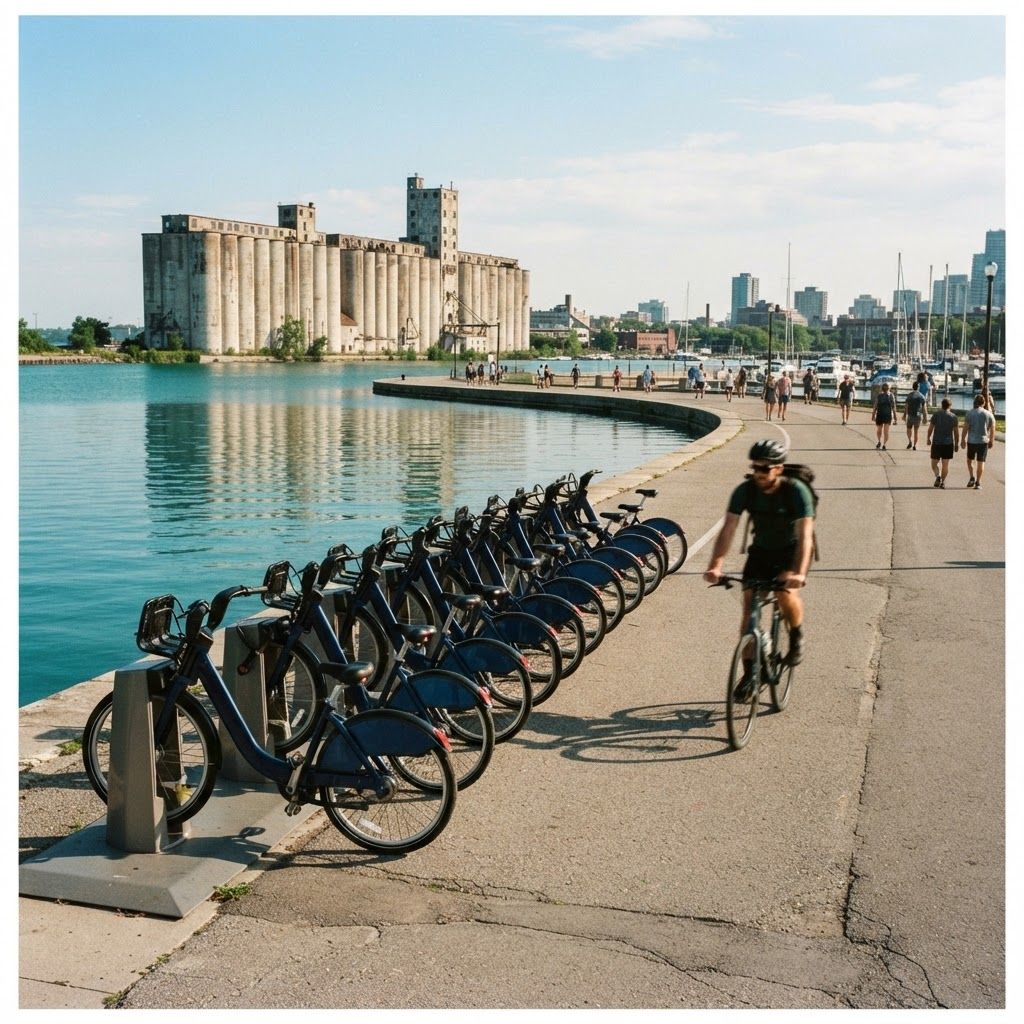
Buffalo's Emergence as a Cycling City
Two decades ago, cycling in Buffalo meant navigating wide arterial roads designed entirely for cars. Today the picture is different. The Riverwalk follows the Niagara River north toward Tonawanda, the Outer Harbor has been rebuilt with waterfront paths, Delaware Park and the Olmsted parkway system provide connected green corridors, and protected bike lanes have appeared on several city streets. Add the Empire State Trail network reaching the region, and Buffalo now supports both casual recreational riding and practical bicycle transportation.
Renting rather than owning suits a large share of that demand: visitors exploring the waterfront, students needing a bike for a semester, residents testing an electric bike before buying, and groups looking for a guided ride through the city's remarkable architecture.
Rental and Bikeshare Options in the Region
Reddy Bikeshare is the most recognizable name in Buffalo cycling, operating a dock and hub-based bikeshare system with stations across the city and into neighboring communities, including electric-assist options. It is designed for short point-to-point trips, integrates with transit travel, and is billed by time or through membership.
For longer rentals and higher-quality equipment, local shops lead. Campus WheelWorks on Elmwood Avenue is a long-established Buffalo bicycle retailer known for service and rentals. Rick Cycle Shop and Bert's Bikes and Fitness serve the region with retail, repair, and rental programs. Buffalo Bicycle Works and Handlebar Bike Shop are cited by local riders for knowledgeable fitting and maintenance support.
Tour and experience operators add another layer. Buffalo Bike Tours runs guided rides focused on the city's architecture, grain elevator district, and neighborhood history, providing bikes as part of the experience. Elevator Alley Kayak and similar outfitters combine cycling with paddling on the Buffalo River. Seasonal rental kiosks operate at Canalside and along the Outer Harbor, offering bikes, tandems, and surrey-style quads for waterfront riding. GObike Buffalo, while primarily an advocacy and education organization, operates community programs and a bicycle repair education center that new riders find valuable.
Choosing Between Bikeshare and Shop Rental
Bikeshare wins for short, one-way, spontaneous trips. You do not need to return to a starting point, pricing for a twenty-minute ride is minimal, and the bikes are built to survive daily abuse. The tradeoffs are weight, limited gearing, and a riding position optimized for durability rather than comfort over distance.
Shop rentals win for longer rides and better equipment. A properly fitted hybrid, road, or gravel bike transforms a thirty-mile ride along the Riverwalk. Shops also supply helmets, locks, racks, child seats, and route advice, and can service a mechanical problem mid-rental. Expect daily and weekly rates, a deposit requirement, and better availability if you reserve ahead during summer weekends.
Electric bikes deserve separate consideration. They flatten the effect of headwinds coming off the lake, extend practical range considerably, and make hilly or longer trips accessible to a much wider range of riders. Several Buffalo shops now rent them, and demand consistently outstrips supply on good weather weekends.
Where to Ride
The Outer Harbor and Canalside area offers flat, scenic, largely car-free riding with lake views and easy access to food and restrooms. The Riverwalk runs north along the Niagara River through Riverside and into Tonawanda, connecting eventually toward Niagara Falls for ambitious riders. Delaware Park and the Olmsted system provide shaded loops and connect to the Elmwood Village and the Albright-Knox area. The grain elevator district along the Buffalo River rewards riders interested in industrial history.
Riders should plan around wind rather than hills. Buffalo is relatively flat, but lakefront wind is a real factor, and a route that felt effortless outbound can become work on the return. Checking wind direction before choosing a direction of travel is the local's trick.
Trends in the Market
Electrification dominates. Electric-assist bikes have moved from novelty to mainstream, and their share of both bikeshare fleets and rental inventory continues rising. Micromobility integration with transit is another clear trend, with bikeshare stations positioned near rail stops to solve the last mile problem.
Infrastructure investment continues to expand the network of protected lanes and trails, which in turn supports rental demand, since riders rent where they feel safe. Seasonal extension has become a business focus as well, with operators experimenting with shoulder-season and even winter service in a city where cycling has traditionally been treated as a summer activity.
Practical Advice
Reserve rentals ahead for summer weekends and holidays. Wear a helmet and confirm one is included. Bring or rent a solid lock and use it even for short stops. Check tire pressure and brakes before leaving the shop, and ask about the mechanical support policy. For bikeshare, understand the pricing model, including overtime charges and where you may legally end a trip.
Families should ask specifically about child seats, trailers, and smaller frames, which are limited in number. Visitors should consider a guided tour for a first outing, since local guides route around the gaps in the network far better than a mapping application will.
Final Thoughts
Buffalo's combination of waterfront trails, park systems, and flat terrain makes it well suited to cycling, and the rental market has matured to match. Use bikeshare for quick urban trips, rent from a shop for serious riding, consider an electric bike if wind or distance is a concern, and book ahead in peak season. The city looks noticeably better from a bicycle than from a car.