
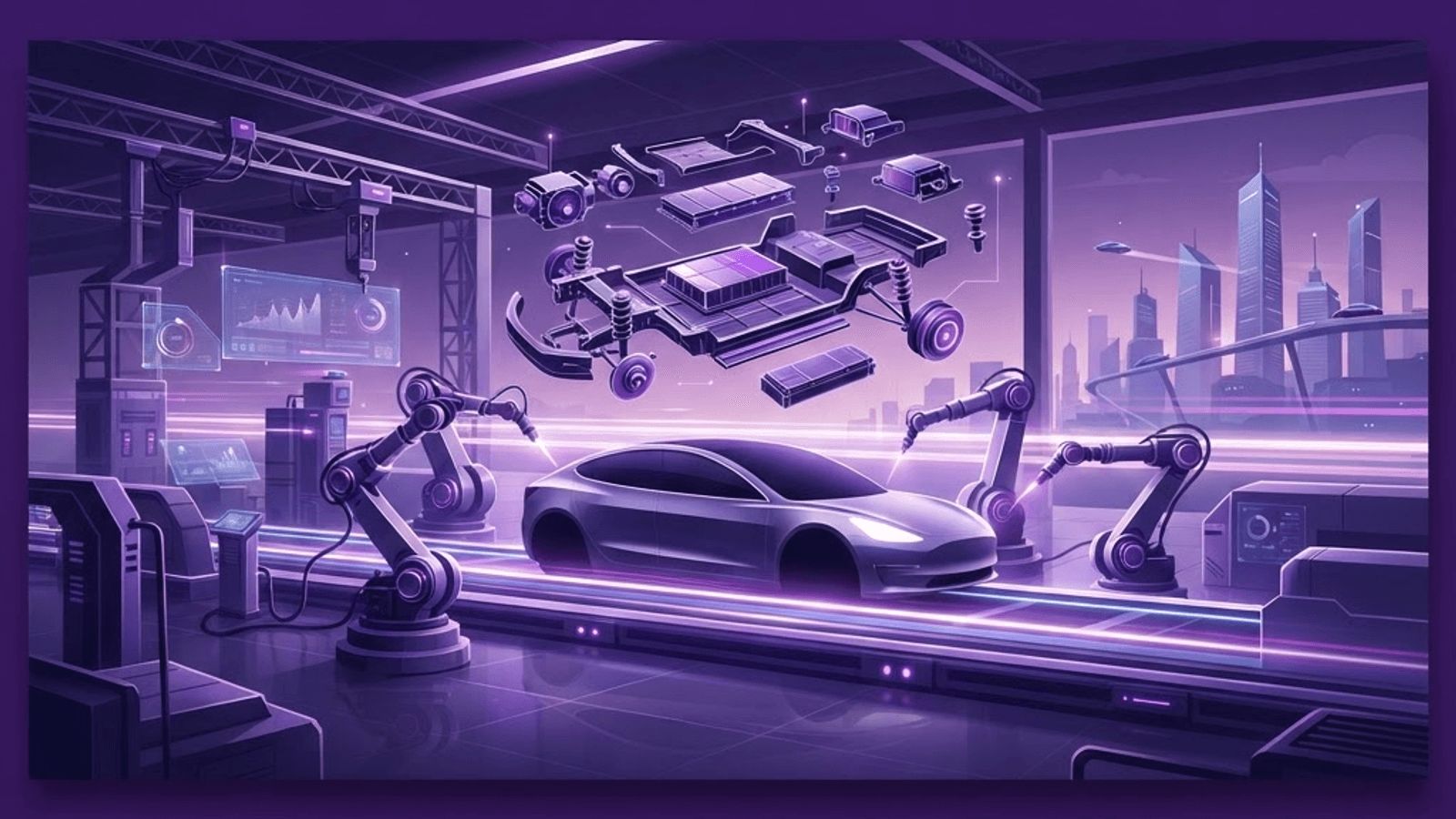
What Automotive Manufacturing Looks Like in Yonkers
Yonkers does not host a vehicle assembly plant, and it is unlikely to. Final assembly of passenger vehicles requires enormous contiguous sites, rail access and supplier parks that are located elsewhere in the country. What Yonkers and the surrounding Westchester industrial corridor do support is the substantial middle of the automotive industry: component manufacturing, commercial vehicle upfitting, specialty body building, electrification conversion, fleet engineering, remanufacturing and aftermarket production.
This is a genuinely significant sector locally. The New York metropolitan area operates one of the largest concentrations of commercial fleets in the country, including delivery vans, utility trucks, municipal vehicles, transit and paratransit buses, emergency apparatus and contractor vehicles. Those vehicles arrive from manufacturers as chassis and require specialized bodies, equipment, lighting, storage systems, lift gates and increasingly electrical infrastructure. That work happens regionally, close to the fleets it serves.
Segments of the Local Automotive Industry
Component manufacturing produces machined parts, brackets, fasteners, wiring assemblies, seals and fabricated metal components supplied to vehicle manufacturers and aftermarket distributors.
Commercial upfitting converts bare chassis and cargo vans into working vehicles with shelving, partitions, refrigeration, lift gates, cranes, tool storage and specialized equipment.
Specialty body building constructs custom bodies for utility, refuse, emergency, food service and municipal applications.
Electrification and conversion retrofits existing fleet vehicles with electric drivetrains or integrates auxiliary electrification such as electric power take-off, reducing idling.
Remanufacturing restores components, transmissions, alternators, hydraulic assemblies, to serviceable condition, extending fleet life at lower cost than replacement.
Fleet engineering and telematics designs vehicle specifications, integrates monitoring hardware and manages compliance for regulated fleets.
Ten Automotive Manufacturers and Builders Serving Yonkers
1. Hudson Line Vehicle Systems. A commercial upfitter converting cargo vans and chassis into service-ready vehicles with custom shelving, electrical systems, lighting and equipment mounting for contractor and utility fleets.
2. Nepperhan Precision Components. A machining operation producing precision automotive components, brackets and assemblies for original equipment and aftermarket customers, working in steel, aluminum and engineered plastics.
3. Getty Square Truck Body Works. Builds and installs specialty truck bodies including flatbeds, service bodies, dump bodies and enclosed units, with in-house welding, fabrication and paint capability.
4. Riverfront Electric Vehicle Conversions. Retrofits commercial fleet vehicles with electric drivetrains and installs auxiliary electrification systems that eliminate engine idling for on-site equipment operation.
5. Empire Automotive Wiring and Harness. Manufactures custom wiring harnesses, control modules and electrical assemblies for vehicle upfitters, emergency apparatus builders and specialty vehicle manufacturers.
6. Palisade Fleet Engineering Group. Provides vehicle specification design, procurement support, telematics integration and lifecycle cost analysis for municipal and commercial fleet operators.
7. Saw Mill Remanufacturing Works. Rebuilds transmissions, hydraulic components, starters, alternators and drive assemblies to original specification, supporting fleets running extended service lives.
8. Westchester Emergency Vehicle Builders. Constructs and equips ambulances, fire apparatus support vehicles and police units with emergency lighting, communications, mounting systems and specialized compartments.
9. Northline Automotive Prototyping. Produces prototype parts, jigs, fixtures and low-volume production components using CNC machining, sheet metal fabrication and additive manufacturing for developers and specialty builders.
10. Bronx River Vehicle Recycling and Parts Reclamation. Operates certified dismantling and parts reclamation, supplying tested used components and handling compliant fluid and material disposal for end-of-life vehicles.
The Electrification Transition
New York has adopted policies driving fleet electrification, including targets for zero-emission vehicle sales and requirements affecting public fleets and certain commercial categories. For fleet operators in Yonkers, this creates a planning problem more than a purchasing one.
The vehicle is often the simpler part. Charging infrastructure is the constraint: assessing available electrical service, coordinating with the utility on capacity upgrades, siting chargers within depot layouts, managing charging schedules to avoid demand charges and planning for growth. Depot electrification projects routinely require service upgrades with long utility lead times, which means planning must begin well before vehicles arrive.
Total cost of ownership analysis, rather than purchase price comparison, is the correct framework. Electric commercial vehicles typically carry higher acquisition cost offset by lower fuel and maintenance expense, with the balance depending heavily on duty cycle, electricity rates and available incentives. Vehicles with high daily mileage and predictable routes electrify most favorably.
How to Evaluate a Builder or Manufacturer
Verify relevant certifications and manufacturer approvals. Upfitters working on specific chassis platforms often hold qualified vehicle modifier status, which matters for warranty preservation. Ask directly whether the modification affects the chassis warranty and get the answer in writing.
Examine safety and compliance capability. Vehicle modifications must comply with federal motor vehicle safety standards, weight distribution limits and, for certain applications, industry standards specific to emergency or commercial equipment. Ask how the builder documents compliance and verifies weight ratings.
Assess capacity and lead time realistically. Chassis availability has been a persistent constraint across the industry, and a builder's quoted schedule depends on receiving vehicles they do not control. Ask what portion of the quoted lead time is chassis delivery versus build time.
Review service and warranty support. A fleet vehicle out of service costs money daily, so the availability of local service, spare parts and warranty response is a substantive purchasing criterion rather than an afterthought.
Trends Shaping the Sector
Supply chain regionalization has increased interest in domestic and near-market component sourcing after several years of disruption. Telematics and connected vehicle data have become standard in commercial fleets, driving demand for integration expertise. Advanced driver assistance systems are appearing in commercial chassis, which complicates upfitting because sensors and calibration must be preserved. And remanufacturing has gained ground as a cost and sustainability strategy as new vehicle prices remain elevated.
Final Thoughts
Automotive manufacturing in Yonkers is a components, upfitting and fleet services industry, and it is well positioned because the region's fleets are large, dense and increasingly complex to specify. Whether you are procuring a single service van or planning a depot electrification program, start with duty cycle and total cost of ownership rather than purchase price, verify warranty and compliance documentation in writing, and choose builders who can support the vehicle throughout its service life rather than only at delivery.