
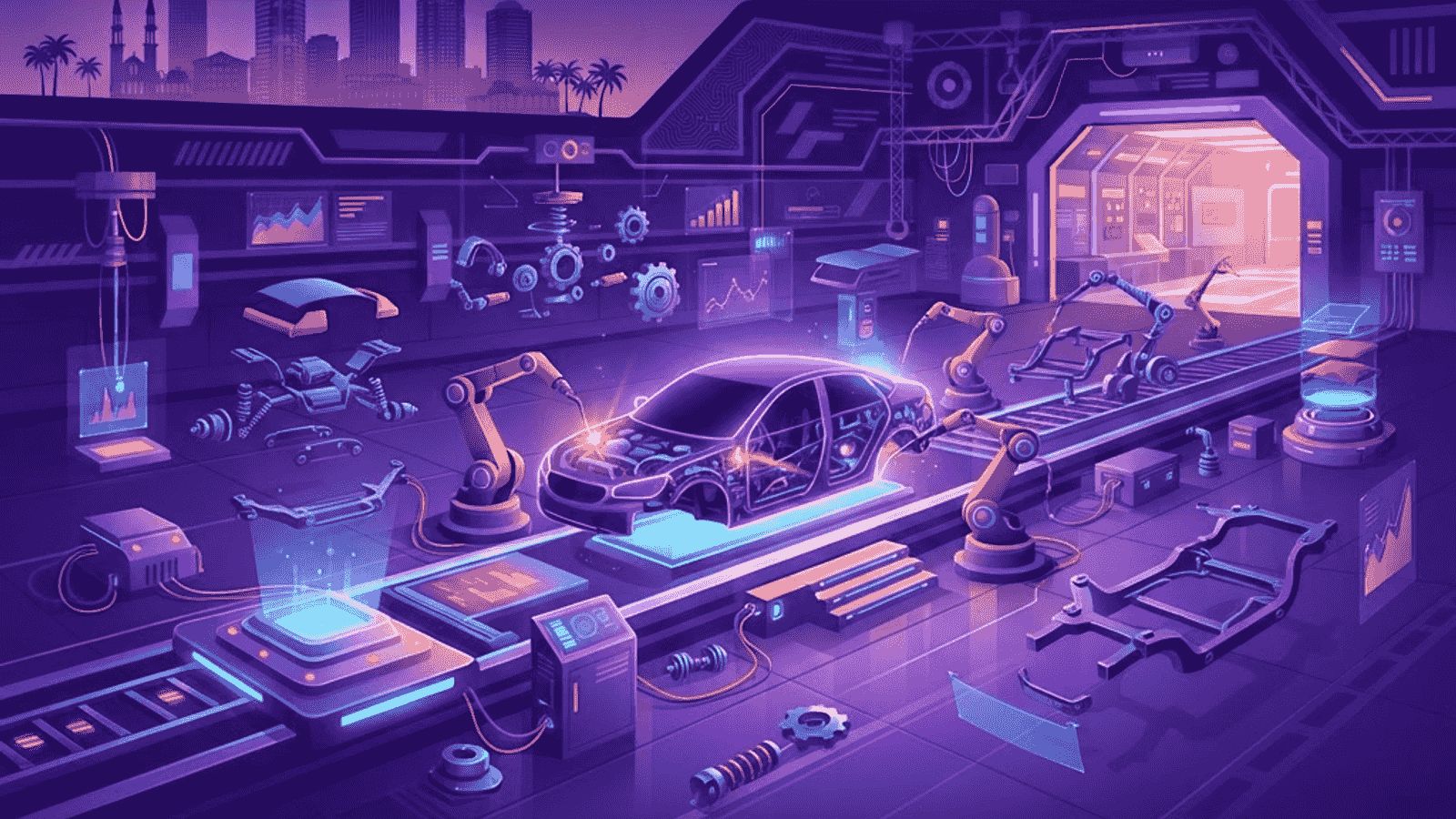
How Automotive Manufacturing Works in Tampa
Tampa is not Detroit, and it does not try to be. There is no sprawling passenger car assembly plant stamping bodies by the thousand. What Tampa Bay has instead is a specialty automotive economy: companies that build, modify, upfit and engineer vehicles and components for specific commercial and enthusiast purposes. In many respects this is a more resilient model, because specialty work is harder to offshore and closely tied to regional demand.
That demand is substantial. Florida's logistics corridors need work trucks and trailers. Its tourism industry needs shuttles, tour vehicles and mobility conversions. Its marine culture drives boat trailer and towing equipment production. Its climate supports year-round motorsports and a large enthusiast base. Each of these creates manufacturing work that stays local.
Segments of the Local Automotive Industry
Commercial vehicle upfitting is the largest segment, converting chassis into service trucks, utility bodies, refrigerated units, ambulances and specialty work platforms. Trailer manufacturing follows closely, spanning boat, cargo, equipment and specialty transport trailers. Performance and restoration fabrication forms a third segment, and component manufacturing, everything from brackets and exhaust systems to electronic modules and machined parts, rounds out the picture alongside a growing electric vehicle conversion and charging equipment niche.
The 10 Best Automotive Manufacturers in Tampa
1. Commercial Truck Body and Upfitting Manufacturers
The backbone of Tampa automotive manufacturing. These operations take bare chassis and build service bodies, utility beds, dump bodies, crane trucks, flatbeds and specialty platforms. Their strengths are structural fabrication, hydraulic and electrical integration, weight distribution engineering and compliance with vehicle regulations. Fleet buyers value them for their ability to standardize a spec across dozens of trucks.
2. Boat and Marine Trailer Manufacturers
Given Tampa's boating density, marine trailer production is a natural regional specialty. Manufacturers here focus on corrosion resistance through galvanized and aluminum construction, submersible lighting systems, bunk and roller configuration for specific hull shapes, and braking systems engineered for saltwater exposure. The engineering nuance in matching a trailer to a hull is genuinely underappreciated.
3. Cargo and Equipment Trailer Builders
Serving contractors, landscapers, race teams and logistics operators, these manufacturers produce enclosed cargo trailers, gooseneck equipment haulers, tilt decks and custom configurations. Differentiation comes from frame engineering, axle and suspension selection, interior fit-out quality and the ability to deliver custom layouts without extended lead times.
4. Ambulance, Fire and Emergency Vehicle Converters
Emergency vehicle manufacturing is precision work with life-safety implications. Regional builders and remounters handle module fabrication, medical equipment integration, high-amperage electrical systems, emergency lighting and siren installation, and testing to industry standards. Municipal buyers rely on them for both new builds and remount programs that extend the life of expensive modules.
5. Mobility and Wheelchair Accessible Vehicle Manufacturers
Florida's demographics make accessible vehicle conversion a significant business. Manufacturers in this category perform structural floor lowering, ramp and lift integration, restraint system installation, and seating reconfiguration, all while preserving crash safety integrity. The best operators combine engineering rigor with genuine empathy for end users.
6. Performance Engineering and Race Fabrication Shops
Tampa Bay supports a strong motorsports fabrication community producing roll cages, chassis, suspension components, turbo systems, custom exhaust and engine builds. Capabilities typically include TIG welding, tube bending, CNC machining, dynamometer tuning and data acquisition. Many of these shops also serve as low-volume component manufacturers for niche automotive brands.
7. Automotive Component Machine Shops
Precision machining operations supply brackets, hubs, adapters, pulleys, housings and custom hardware to both OEM-adjacent and aftermarket customers. Their value lies in CNC turning and milling capacity, materials expertise across aluminum and steel alloys, tight tolerance work, and short-run production that larger suppliers will not accept.
8. Van Conversion and Fleet Interior Manufacturers
The growth of last-mile delivery, mobile services and adventure vans has created steady demand for van interior manufacturing: shelving systems, partitions, insulation and climate packages, electrical and solar systems, and mobile workstation builds. These manufacturers blend cabinetry skills with automotive electrical engineering.
9. Restoration and Custom Coachwork Builders
Classic car restoration is manufacturing in the truest sense, fabricating panels, rebuilding drivetrains, replicating unavailable parts and executing paint and trim work to concours standards. Tampa's climate preserves vehicles well and supports a substantial collector market, sustaining shops with metalworking and upholstery craftsmanship that is increasingly rare.
10. Electric Vehicle Conversion and Charging Equipment Firms
The newest category in the local landscape, these companies handle battery pack integration, motor and controller installation, thermal management and, on the infrastructure side, manufacture and install commercial charging equipment. Fleet electrification pilots across Florida are pulling this segment from experimental to commercial.
Trends Shaping Automotive Manufacturing in Tampa
Electrification is filtering into commercial fleets first, which affects upfitters directly: body builders must now accommodate battery placement, high-voltage safety practices and different weight distribution. Advanced driver assistance systems have made calibration a routine post-modification requirement, adding technical burden to any build that touches sensors, bumpers or windshields.
Materials are shifting as well, with aluminum and composite use expanding to reduce weight, requiring different joining techniques and repair procedures. Digital manufacturing, including CAD-driven design, CNC plasma cutting and additive prototyping, has become standard even at modest shop sizes. Finally, supply chain volatility has pushed builders toward carrying more inventory and qualifying multiple component sources.
How to Choose an Automotive Manufacturing Partner
Define the operational requirement before discussing the build. Payload, duty cycle, environment, service intervals and driver workflow should drive specification, not aesthetics. Ask for examples of comparable completed vehicles and, ideally, references from fleets running them after several years of service.
Verify regulatory awareness. Vehicle modifications carry compliance obligations, and a builder who cannot discuss weight ratings, lighting requirements and safety certification confidently is a risk. Review warranty coverage on both fabrication and installed components, and clarify who supports the vehicle if something fails on the road. Finally, evaluate documentation quality: wiring diagrams, parts lists and service instructions dramatically reduce lifetime maintenance costs.
Final Thoughts
Tampa's automotive manufacturers succeed by building what mass production cannot: purpose-specific vehicles, trailers and components engineered around real operating conditions. Whether you need a fleet of upfitted service trucks, a trailer matched to a particular hull, an accessible conversion or a precision machined component, the region has capable specialists. Choose based on demonstrated experience with your exact application, and the results tend to outlast the vehicles themselves.