
Rochester's Place in the Automotive Supply Chain
Rochester has never been an assembly city in the Detroit sense, yet it has been an automotive town for more than a century. General Motors operated major operations in the region for decades, producing fuel systems, carburetors, and later electronic engine management components. Rochester Products became a widely recognized name inside the industry, and the engineering culture it built still shapes the local supplier base.
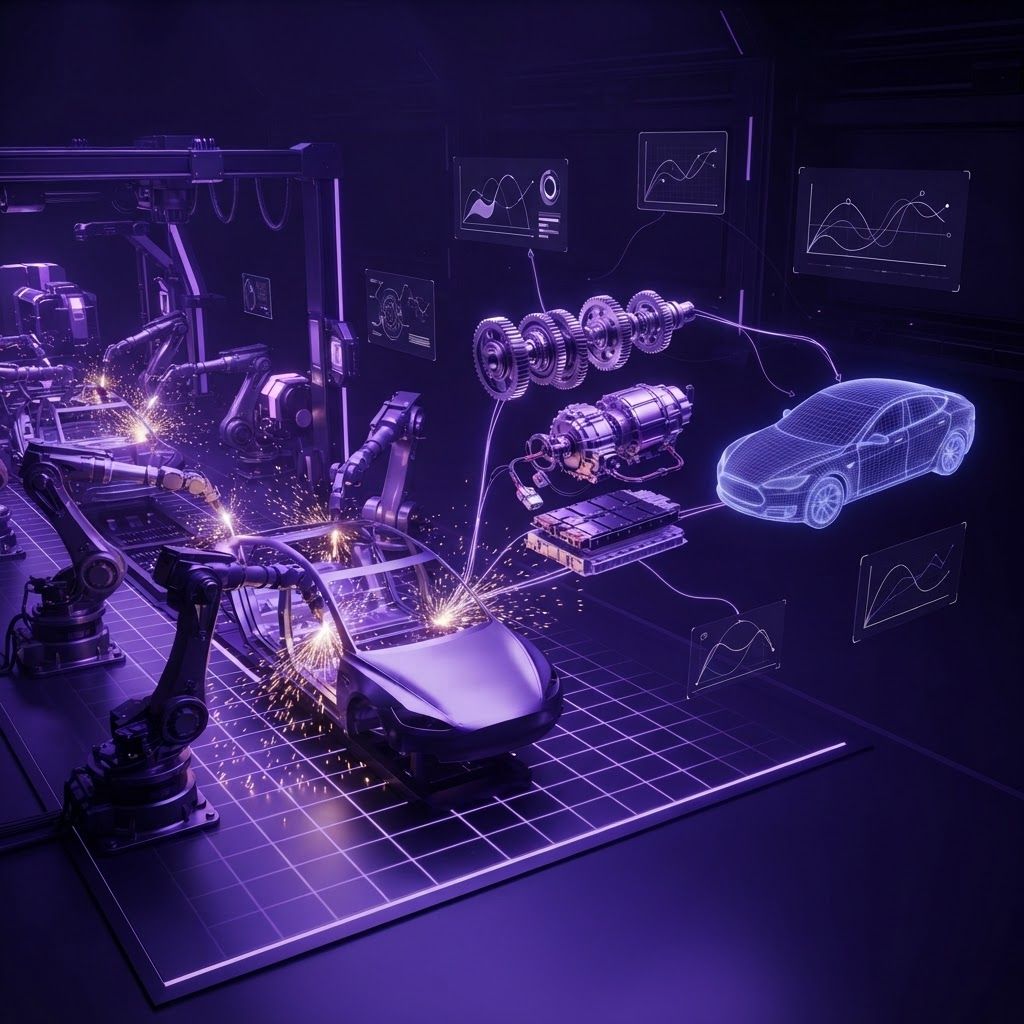
Today the regional automotive footprint centers on components, subsystems, and specialized manufacturing. Companies here produce powertrain parts, precision gears, sensors, electronic modules, seals, castings, and tooling that flow into vehicles assembled elsewhere in North America. As the industry shifts toward electrification, that supplier position has become more interesting rather than less, because electric vehicles require different components but the same precision.
What the Region Actually Produces
Precision machining and gear manufacturing represent one core capability, serving transmissions, differentials, and increasingly electric drive units. Electronics and sensing is another, drawing on Rochester's imaging and instrumentation heritage to supply cameras, detectors, and control modules for driver assistance systems.
Materials and coatings, thermal management components, battery and power electronics work, and seals and weatherstripping round out the picture. Tooling, fixtures, and automation equipment form a supporting layer, with local machine builders supplying production lines to automotive plants across the Midwest and South.
Ten Automotive Manufacturers and Suppliers in the Rochester Region
1. General Motors Rochester Operations. The long-running GM components facility in the Rochester area has produced fuel systems and powertrain components, and remains a significant industrial employer with a role in the company's evolving product portfolio.
2. Gleason Corporation. A Rochester manufacturing landmark, Gleason produces gear manufacturing machines, tooling, and metrology equipment used by transmission and drivetrain producers worldwide, including electric vehicle drive unit makers.
3. Ultra Fab and Ultrafab. Based in Farmington, it manufactures sealing and weatherstrip components with applications in vehicles, appliances, and building products.
4. Transcat. The Rochester-headquartered calibration and test instrumentation company supports automotive suppliers with metrology services essential to quality certification.
5. Bergmann and engineering services firms. Regional engineering consultancies provide plant design, process engineering, and facility support for manufacturing operations serving the vehicle industry.
6. Optimation Technology. A Rochester-area industrial automation and controls integrator that designs production systems, robotic cells, and test stands for manufacturing clients including automotive suppliers.
7. Ultralife Corporation. Its battery and power electronics expertise near Rochester connects to the broader electrification supply chain across transportation and industrial vehicles.
8. Vuzix Corporation. Its waveguide optics work in West Henrietta has applications in heads-up display and augmented reality systems relevant to future vehicle interiors.
9. Regional precision machining and stamping shops. A dense network of contract machine shops around Monroe County produces turned parts, stampings, and assemblies for tier one and tier two automotive customers.
10. Monroe Community College and RIT advanced manufacturing programs. These institutions supply the CNC operators, mechatronics technicians, and manufacturing engineers the supplier base depends on, and partner directly with employers on training pipelines.
Industry Trends Reaching Rochester
Electrification is reshaping supplier demand. Internal combustion components face long-term decline while electric drive units, thermal management systems, power electronics, and battery structures grow. Suppliers with transferable precision capability, particularly in gears, housings, and electronics, are positioned to migrate; those tied narrowly to fuel and exhaust systems face harder transitions.
Advanced driver assistance and eventual autonomy increase electronic content per vehicle, which favors Rochester's sensing and imaging expertise. Cameras, lidar components, and optical calibration equipment all draw on capability the region already has.
Supply chain regionalization is the third trend. After years of disruption, automakers are shortening supply lines and dual-sourcing critical components, which improves prospects for North American suppliers who can demonstrate capacity, quality systems, and cost discipline. Meanwhile, workforce availability remains the binding constraint for many local shops, driving investment in automation and apprenticeship programs.
Working With Automotive Suppliers
Automotive is among the most demanding customer environments in manufacturing. Suppliers must maintain rigorous quality management certification, execute production part approval processes, demonstrate statistical process control, and support continuous cost reduction. Buyers evaluating a new supplier should verify certification currency, review capability studies on similar parts, and assess capacity honestly against projected volumes.
For product developers outside the traditional automotive tier structure, working with Rochester shops offers advantages in prototyping and low-volume production, particularly for specialty vehicles, aftermarket products, and electrification retrofits. Clear tolerance specification, early design for manufacturability review, and realistic tooling budgets prevent most program delays.
Final Thoughts
Rochester's automotive relevance rests on precision, engineering depth, and adaptability rather than assembly volume. As vehicles become more electric and more sensor-dependent, the region's strengths in gears, optics, electronics, and automation align well with where value is migrating. For manufacturers here, the opportunity is to translate legacy powertrain excellence into the components the next generation of vehicles will need.