
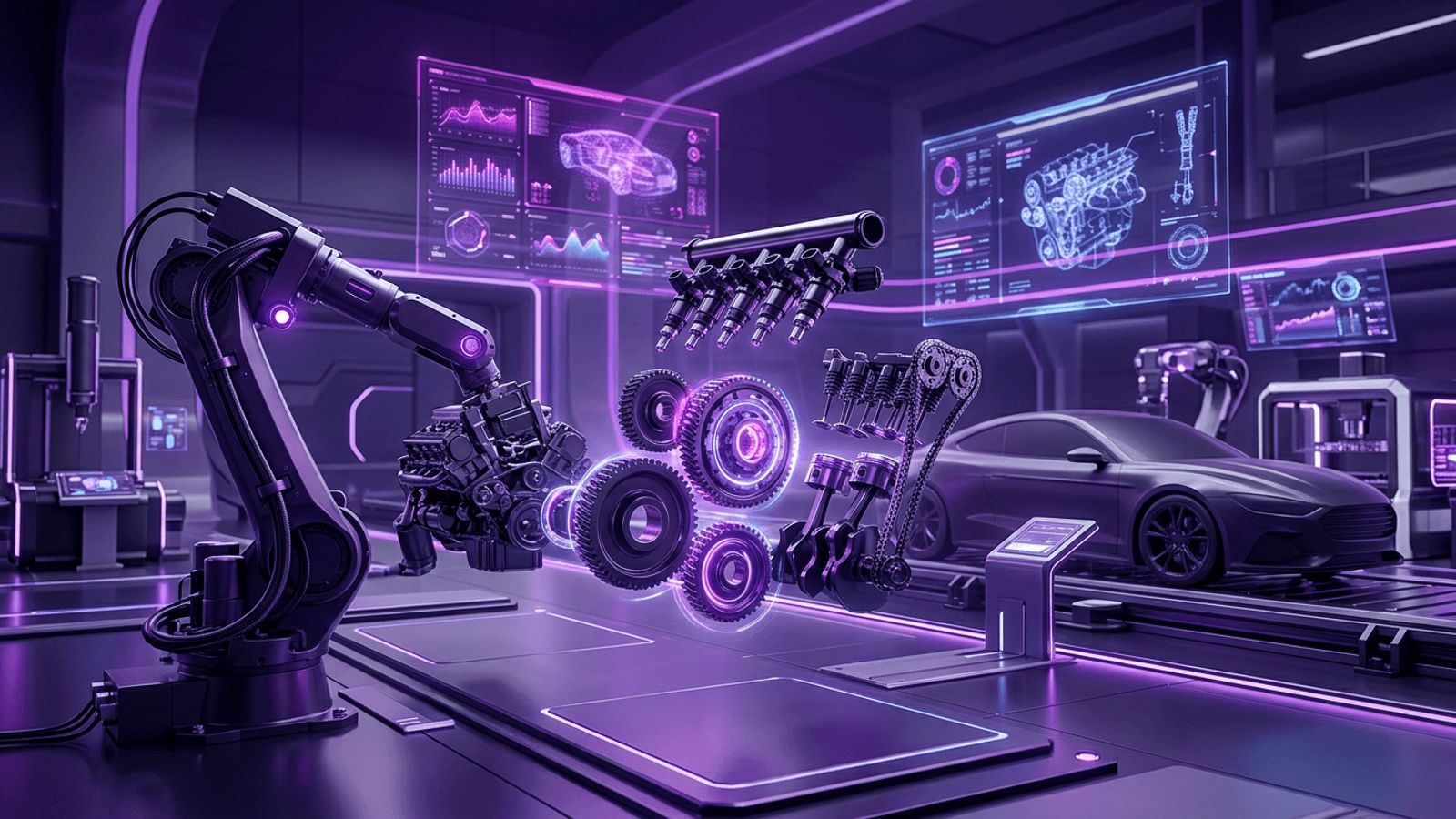
Hartford's Automotive Legacy
Few people realize that Hartford played an important role in the early automobile industry. In the late nineteenth century, the Pope Manufacturing Company, famous for its Columbia bicycles, produced some of the first electric and gasoline automobiles in the United States. That pioneering spirit, combined with the region's precision machining tradition, created a foundation for the automotive suppliers that operate in Greater Hartford today.
While Connecticut does not host large vehicle assembly plants, the region is home to manufacturers that produce engine systems, fuel injection components, springs, fasteners, bearings, and adhesives used by automakers and heavy vehicle builders worldwide. Below are ten notable automotive manufacturers and suppliers.
1. Jacobs Vehicle Systems
Jacobs Vehicle Systems, based in Bloomfield, is known worldwide for its engine braking technology. Its systems improve safety and reduce brake wear in heavy trucks and commercial vehicles. The company also develops valve actuation technologies that improve engine efficiency.
2. Stanadyne
Stanadyne, headquartered in Windsor, designs and manufactures fuel injection systems and fuel pumps for diesel and gasoline engines. Its products serve automotive, agricultural, and industrial markets and reflect decades of engineering expertise.
3. Henkel
Henkel's North American adhesive technologies operations are located in Rocky Hill. Its Loctite brand and other adhesive solutions are widely used in automotive assembly, electronics, and vehicle maintenance, helping manufacturers reduce weight and improve durability.
4. STANLEY Engineered Fastening
STANLEY Engineered Fastening, part of Stanley Black and Decker, which is headquartered in nearby New Britain, provides fastening and assembly solutions to the automotive industry. Its technologies support lightweight vehicle design and efficient production.
5. Barnes Group
Barnes Group, headquartered in Bristol, produces precision components and engineered solutions, including springs, molding systems, and motion control products. Its Associated Spring heritage connects it to automotive and industrial markets.
6. Acme Monaco
Acme Monaco, based in New Britain, manufactures precision wire forms and springs. Its components are used in medical devices, automotive systems, and industrial equipment.
7. Spirol International
Spirol, located in Connecticut, designs and manufactures engineered fasteners, shims, and installation equipment. Automotive manufacturers use its coiled spring pins and inserts in assemblies that require reliability and precision.
8. RBC Bearings
RBC Bearings, headquartered in Oxford, Connecticut, manufactures precision bearings and components for aerospace, industrial, and transportation markets. Its engineered products are known for durability under demanding conditions.
9. Carling Technologies
Carling Technologies, based in Plainville, produces switches, circuit protection, and power distribution systems for transportation applications, including specialty vehicles, trucks, and recreational vehicles.
10. TRUMPF Inc.
TRUMPF Inc., based in Farmington, supplies laser and machine tool systems used extensively in automotive manufacturing for cutting, welding, and marking metal components, including parts for electric vehicles.
The Shift Toward Electric Vehicles
The transition to electric vehicles is reshaping automotive supply chains. Connecticut manufacturers are adapting by developing components for battery systems, power electronics, thermal management, and lightweight structures. Precision machining and laser processing capabilities in the Hartford region are well suited to the demands of electric vehicle production.
Strengths of the Hartford Manufacturing Base
Greater Hartford offers skilled machinists, engineers, and technicians, along with strong vocational and technical education programs. Close collaboration between aerospace and automotive suppliers encourages the transfer of high-precision manufacturing techniques across industries. The region's location also provides efficient access to Northeast and international markets.
How to Choose an Automotive Supplier
Look for quality certifications such as IATF 16949, a proven track record with automotive customers, and engineering support for design optimization. Ask about production capacity, testing capabilities, and supply chain resilience. Suppliers that invest in automation and continuous improvement are typically better prepared for future demand.
Frequently Asked Questions
Are cars built in Connecticut?
Connecticut does not have large passenger car assembly plants today, but it has a strong base of companies that manufacture engine systems, components, fasteners, adhesives, and production equipment used by automakers worldwide.
What is an engine brake?
An engine brake uses the engine to slow a heavy vehicle by altering valve operation, reducing reliance on wheel brakes. It improves safety on long descents and reduces brake wear for trucks and commercial vehicles.
How are Connecticut suppliers preparing for electric vehicles?
Suppliers are developing components for battery systems, power electronics, thermal management, and lightweight structures. Laser processing, precision machining, and advanced adhesives are especially important for electric vehicle production.
What is IATF 16949 certification?
IATF 16949 is the global quality management standard for automotive production and service parts. It emphasizes defect prevention, continuous improvement, and reduction of variation and waste in the supply chain.
Are automotive manufacturing careers available in Hartford?
Yes. Regional suppliers employ engineers, machinists, quality technicians, and production specialists. Technical colleges and apprenticeship programs offer pathways into these well-paying careers.
Final Thoughts
Hartford's automotive heritage lives on in the precision manufacturers listed here. From engine brakes and fuel injection to fasteners and laser systems, these companies contribute critical technology to vehicles around the world.