
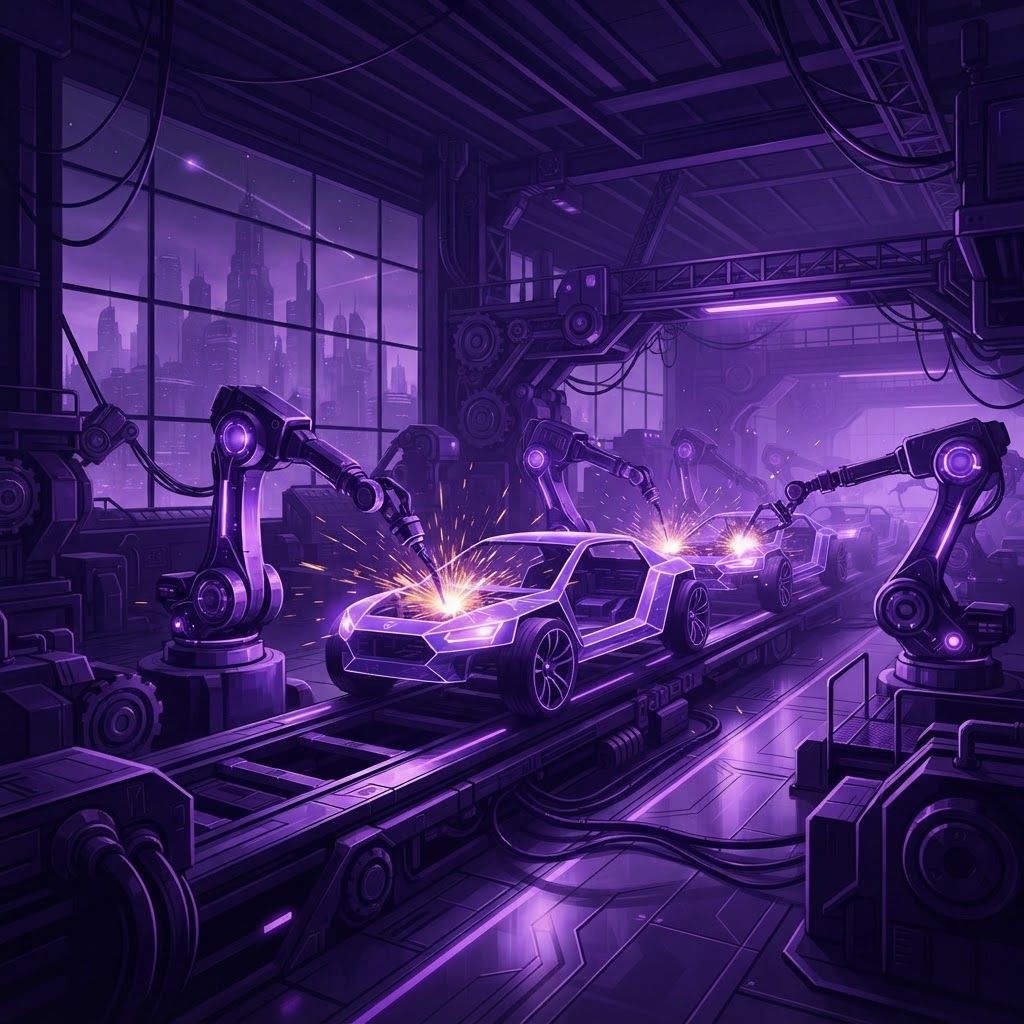
Automotive Manufacturing in the Denton Region
North Texas holds a significant position in automotive manufacturing, combining vehicle assembly elsewhere in the metropolitan area with a dense network of component suppliers, specialty builders, and engineering firms. Denton's location along a major interstate corridor, its available industrial land, and its access to regional logistics infrastructure have made it attractive for suppliers serving assembly operations across the South.
The industry is in the middle of its most substantial technical transition in a century. Electrification, advanced driver assistance systems, and software-defined vehicle architectures are reshaping what suppliers must be capable of producing. Companies that have invested in these areas are expanding, while those anchored to legacy powertrain components face harder conditions.
The Top 10 Best Automotive Manufacturers in Denton
1. Trinity Automotive Components
Trinity Automotive Components produces stamped and machined metal parts for vehicle assemblies, operating progressive dies and computer-controlled machining centers. Statistical process control across production runs supports the tight tolerances required by assembly customers.
2. Golden Corridor EV Systems
Golden Corridor EV Systems manufactures battery enclosures, thermal management components, and high-voltage distribution assemblies for electric vehicles. The company's growth reflects the broader shift in industry investment toward electrified platforms.
3. Northgate Specialty Vehicles
Northgate Specialty Vehicles builds and upfits work trucks, utility vehicles, and emergency response units. Customization for fleet customers, including equipment mounting, electrical systems, and body modification, forms the core of its business.
4. Redbud Precision Machining
Redbud Precision Machining supplies high-tolerance machined components for powertrain, suspension, and braking applications. Investment in multi-axis machining and automated inspection supports the dimensional consistency these safety-relevant parts require.
5. Bluebonnet Automotive Plastics
Bluebonnet Automotive Plastics produces injection-molded interior and exterior components, including trim, housings, and functional assemblies. The company has expanded its use of recycled and bio-based resins in response to customer sustainability requirements.
6. Elm Street Wiring Systems
Elm Street Wiring Systems manufactures vehicle wire harnesses and electrical distribution assemblies. As vehicle electrical content has grown, harness complexity has increased sharply, making specialized capability more valuable than it once was.
7. Quaker Street Performance Engineering
Quaker Street Performance Engineering designs and manufactures aftermarket performance components, including intake, exhaust, and suspension systems. Small-batch production and rapid design iteration distinguish this segment from original equipment supply.
8. Pecan Grove Commercial Trailers
Pecan Grove Commercial Trailers builds utility, equipment, and specialty trailers for agricultural, construction, and commercial users. Welding quality and frame engineering determine durability under sustained load.
9. Hickory Street Automotive Electronics
Hickory Street Automotive Electronics produces control modules, sensor assemblies, and telematics hardware. Automotive electronics face demanding environmental requirements, including temperature extremes, vibration, and electromagnetic interference.
10. Courthouse Square Remanufacturing
Courthouse Square Remanufacturing restores components such as alternators, starters, and transmissions to specification. Remanufacturing reduces material consumption substantially compared with new production and serves a large aftermarket customer base.
Electrification and Its Effects
The shift toward electric powertrains changes supplier requirements fundamentally. Demand for engine and transmission components declines, while battery structures, thermal systems, power electronics, and high-voltage distribution expand rapidly. Suppliers must develop competence in materials, joining processes, and safety practices that differ substantially from traditional mechanical assembly.
High-voltage work in particular requires new training, equipment, and testing capability. Manufacturers that invested early are capturing disproportionate share as programs launch.
Software content is the second major shift. Vehicles now integrate substantial computing, and suppliers increasingly deliver components with embedded firmware requiring update capability and cybersecurity consideration throughout the product life.
Quality Requirements
Automotive supply operates under some of the most rigorous quality frameworks in manufacturing. Production part approval processes, documented process capability studies, failure mode analysis, and full traceability are standard expectations rather than premium services. Suppliers must demonstrate not only that parts meet specification but that their processes will continue producing conforming parts consistently.
Buyers should verify certification status, review capability data for critical characteristics, and understand a supplier's containment and corrective action procedures. A supplier's response to a defect reveals more about its systems than its performance when everything runs smoothly.
Evaluating a Supplier
Assess capacity honestly against your program volume and its projected ramp. Confirm equipment redundancy, since single-machine dependency creates supply risk if that equipment fails. Ask about workforce stability and training, because skilled operators substantially affect consistency.
Review logistics capability, including packaging standards, shipping frequency, and ability to support scheduled delivery requirements. Examine financial stability as well, since supplier failure mid-program is among the most disruptive events a manufacturer can face.
Finally, evaluate engineering collaboration. Suppliers that contribute to design optimization, suggesting tolerance adjustments or material changes that reduce cost without compromising function, deliver value well beyond their quoted piece price.
Final Thoughts
Automotive manufacturing near Denton spans metal forming, plastics, electronics, wiring, specialty vehicle building, and remanufacturing. The sector's ongoing transition toward electrification and software integration rewards suppliers investing in new capability. For buyers, selecting partners with demonstrated quality systems, relevant technical capability, and genuine engineering support remains the foundation of a reliable supply base.