
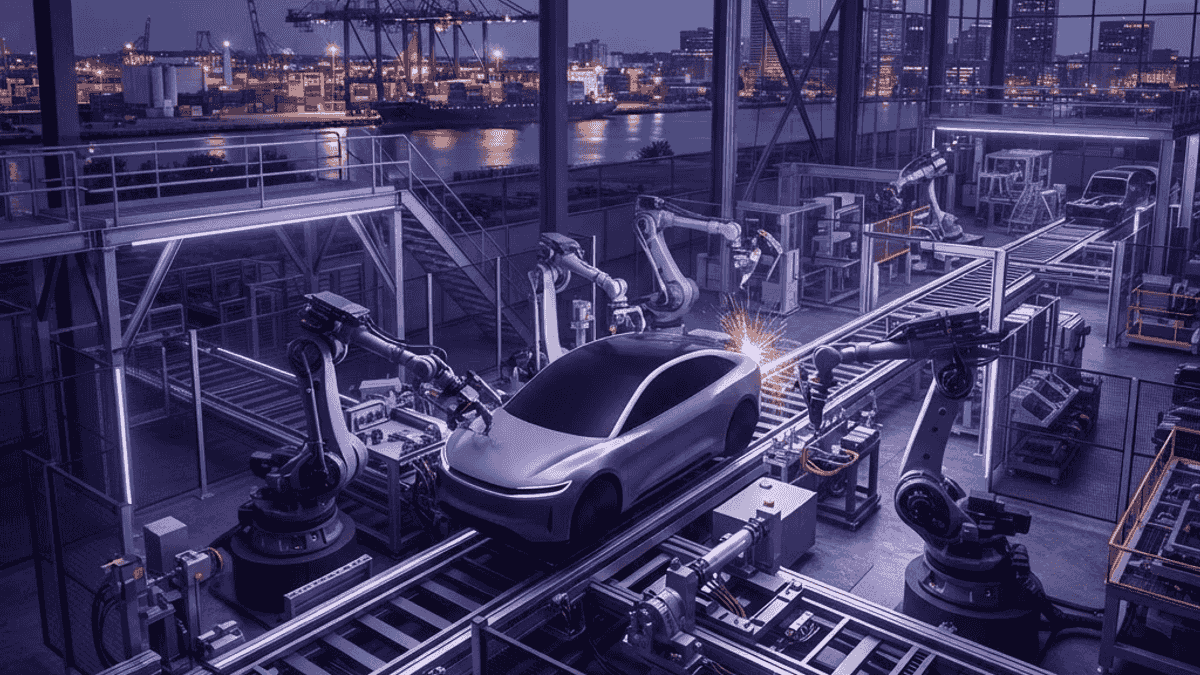
The Automotive Legacy of Baltimore
Baltimore holds a significant place in American automotive history, having been home to major vehicle assembly operations for much of the twentieth century. While the industry has evolved dramatically, the city retains a robust automotive manufacturing sector that spans component production, specialized assembly, aftermarket parts, and emerging electric vehicle technology. This deep manufacturing heritage has left behind a skilled workforce and supplier network that continues to attract automotive business.
The Port of Baltimore adds another dimension to the region's automotive strength. As one of the leading ports for automobile imports and exports in the United States, it connects local manufacturers to global markets and reinforces the city's role in the broader automotive supply chain. This combination of manufacturing capability and logistics infrastructure makes Baltimore a strategic location for companies across the automotive spectrum.
What Defines a Leading Automotive Manufacturer
The best automotive manufacturers in Baltimore are defined by their commitment to quality, precision, and continuous improvement. The automotive industry demands components and assemblies that meet exacting standards for safety, durability, and performance. Leading firms achieve this through disciplined manufacturing processes, rigorous testing, and adherence to internationally recognized quality certifications.
Adaptability is equally important in an industry undergoing rapid transformation. As electric vehicles, advanced driver-assistance systems, and lightweight materials reshape automotive design, top manufacturers invest in new capabilities and retrain their workforce to stay relevant. Strong supplier relationships and efficient production systems allow the best companies to deliver reliably even as the technology and market conditions shift.
Notable Automotive Manufacturers in Baltimore
Companies such as Patapsco Automotive Systems have earned recognition for their precision component manufacturing and strong quality record. Harbor Motorworks specializes in custom and low-volume vehicle assembly, serving niche and specialty markets. Monument Auto Components focuses on producing durable parts for commercial and fleet vehicles.
Other respected firms include Chesapeake Drive Systems, known for its work on powertrain and transmission components, and Bay City Motors Manufacturing, which supports both traditional and electric vehicle platforms. Inner Harbor Automotive provides aftermarket parts and remanufacturing services, while Locust Point Mobility concentrates on electric vehicle technology and battery integration. Rounding out the list are Canton Auto Fabrication, Federal Hill Automotive Group, and Fells Point Vehicle Systems, each contributing specialized expertise to the region's automotive ecosystem.
Trends Transforming the Industry
The most transformative trend in automotive manufacturing is the accelerating shift toward electric vehicles. Baltimore manufacturers are responding by developing new capabilities in battery integration, electric drivetrains, and lightweight materials. This transition represents both a challenge and an opportunity, requiring investment while opening the door to new markets and products.
Automation and advanced manufacturing technologies are also reshaping the sector. Robotics, precision machining, and data-driven quality control enable manufacturers to improve efficiency and consistency while reducing costs. At the same time, growing emphasis on sustainability is prompting companies to adopt cleaner processes and recyclable materials, aligning automotive production with broader environmental goals.
Choosing the Right Manufacturing Partner
Businesses seeking an automotive manufacturer in Baltimore should consider factors such as quality certifications, technical specialties, production capacity, and experience with relevant vehicle platforms. A manufacturer whose expertise aligns with a client's specific needs, whether traditional components or electric vehicle technology, will deliver superior results.
The manufacturers featured here demonstrate the depth and adaptability of Baltimore's automotive sector. As the industry continues to evolve, these companies stand ready to support clients with the quality, precision, and innovation needed to succeed in a rapidly changing market.
Questions to Ask Before Making a Decision
A thoughtful selection process should include direct questions about capacity, lead times, quality controls, workforce expertise, and contingency planning. Ask each prospective company to explain how it manages projects from the first consultation through delivery and ongoing support. Clear answers reveal whether the organization has mature processes or relies on improvised solutions. It is equally useful to request examples of comparable work, references from established customers, and details about insurance, certifications, warranties, and service agreements. These checks help buyers compare meaningful evidence rather than marketing claims alone.
Baltimore-specific considerations deserve attention as well. Companies familiar with the city's industrial corridors, port operations, transportation network, labor market, permitting procedures, and environmental requirements can often identify challenges earlier. Local knowledge is especially valuable when a project involves waterfront access, heavy freight, historic structures, dense neighborhoods, or coordination with regional utilities. Buyers should discuss how the provider handles scheduling disruptions, material shortages, extreme weather, and other conditions that can affect work in the Chesapeake region.
Finally, the lowest initial quote is not always the strongest value. Total cost includes product life, energy use, maintenance, downtime, replacement parts, training, and the quality of post-sale support. A well-run company should be willing to explain these trade-offs in plain language and document the assumptions behind its proposal. Comparing providers on safety, reliability, transparency, technical capability, and long-term service produces a more balanced decision. Readers should verify current capabilities and availability directly, since ownership, product lines, service territories, and operating conditions can change over time.