
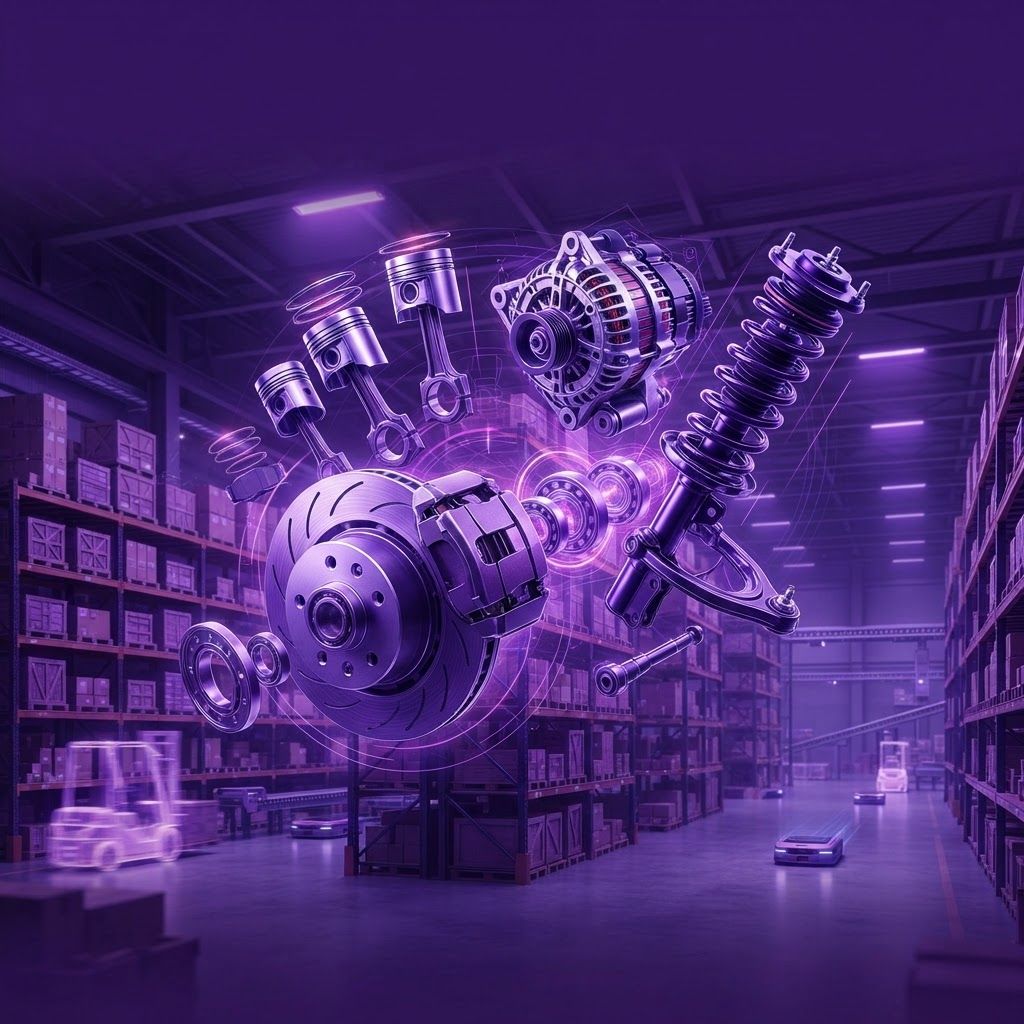
Auto Parts Distribution in a Car-Building City
Toledo has assembled vehicles for over a century, and that history produced more than assembly plants. It created an entire ecosystem of parts manufacturing, remanufacturing, and distribution, along with a workforce that genuinely understands vehicles. For repair shops, fleets, and rebuilders, the practical result is unusually good parts availability and unusually knowledgeable counter support.
The distribution network serves several distinct customer types. Independent repair shops need broad coverage with same-day delivery. Dealership service departments need original equipment parts with warranty integrity. Commercial fleets need standardized parts and predictable pricing to control maintenance cost per mile. Collision centers need body panels and refinish materials matched to insurer requirements. Performance and restoration shops need specialty components that mainstream catalogs never carried.
Ten Auto Parts Wholesalers and Distribution Categories
1. Full-Line Aftermarket Parts Distributors
Regional warehouse distributors stocking hundreds of thousands of stock keeping units across brakes, suspension, engine management, filtration, and electrical. Their competitive weapon is delivery frequency, with multiple daily runs to shops so a vehicle does not occupy a lift waiting on parts.
2. Original Equipment Parts Distributors
Dealer parts departments and authorized wholesalers supply genuine components with exact fitment and factory warranty. For newer vehicles with complex electronics requiring programming, original equipment sourcing is often the only reliable path.
3. Heavy-Duty and Commercial Truck Parts Suppliers
Class 6 through 8 truck and trailer parts serve the substantial trucking activity along the I-75 and I-80/90 corridors. Air brake components, drivetrain parts, and aftertreatment systems dominate demand, and downtime cost makes availability paramount.
4. Remanufactured Component Suppliers
Alternators, starters, steering racks, transmissions, and engines rebuilt to specification offer meaningful savings with warranty coverage. Toledo's manufacturing base supports genuine remanufacturing capability rather than simple resale.
5. Collision and Body Parts Distributors
Sheet metal, bumpers, lighting, and glass, along with paint and refinish materials. Aftermarket certified parts programs and insurer approval requirements shape purchasing decisions in this segment.
6. Automotive Electronics and Diagnostics Suppliers
Sensors, modules, wiring, and diagnostic scan equipment support increasingly software-defined vehicles. Suppliers offering programming services and technical hotlines are valuable as electronic complexity grows.
7. Tire and Wheel Wholesalers
Passenger, light truck, and commercial tires plus wheels and mounting supplies. Regional inventory depth determines whether a shop can complete a job the same day or reschedule the customer.
8. Performance and Specialty Parts Distributors
Suspension, exhaust, forced induction, and engine components for enthusiast and motorsport applications. Technical knowledge and fitment accuracy matter more than price in this niche.
9. Salvage and Recycled Parts Operations
Automotive recyclers supply used original equipment assemblies at significant savings, an increasingly important option for older vehicles where new parts are discontinued or uneconomical. Reputable yards provide interchange verification and warranty.
10. Shop Supplies and Equipment Distributors
Lubricants, chemicals, fasteners, abrasives, lifts, and hand tools keep bays productive. Consolidating these consumables with a single supplier simplifies purchasing considerably.
Understanding Parts Quality Tiers
Not all replacement parts are equivalent, and the differences are frequently misunderstood. Original equipment parts match factory specification exactly. Original equipment supplier parts are made by the same manufacturer without the vehicle brand's packaging, often offering the best value. Quality aftermarket parts from established brands meet or occasionally exceed original specification. Economy aftermarket parts reduce cost through material and tolerance compromises that may be acceptable on a low-mileage vehicle and unacceptable on a fleet asset.
Shops should choose deliberately by application rather than defaulting to the cheapest listing. Brake friction, suspension components, cooling parts, and anything safety-related justify quality tier discipline. Comeback repairs destroy margin and reputation far faster than a slightly higher parts cost.
Availability and Inventory Strategy
Parts availability is the single strongest predictor of shop efficiency. Evaluate distributors on local stocking depth, delivery frequency and cutoff times, and hit rate on first request. Ask about access to a broader hub network for uncommon parts and how quickly those arrive.
Cataloging accuracy is equally important. Vehicle identification number based lookup, clear fitment notes, and up-to-date coverage for recent model years prevent the wasted labor of ordering, receiving, and returning incorrect parts. Return policy on electrical components, which many suppliers restrict, should be clarified before it becomes a dispute.
Industry Trends
Vehicle electrification is beginning to change parts demand. Battery electric vehicles eliminate many traditional service items while adding high voltage components, thermal management systems, and specialized service requirements. Distributors and shops that invest early in training and tooling are positioning for that transition.
Advanced driver assistance systems have made calibration a standard part of collision and even alignment work, creating demand for calibration equipment and targets. Telematics-driven maintenance is helping fleets predict component replacement, which shifts purchasing from emergency to planned.
Right to repair developments continue to influence access to diagnostic data and parts, an issue independent shops watch closely.
Conclusion
Auto parts wholesalers in Toledo benefit from the city's deep automotive roots, offering broad coverage, knowledgeable counter support, and delivery cadences that keep bays turning. The right supplier relationship is built on fill rate, catalog accuracy, and honest guidance on quality tiers, because in vehicle repair the cheapest part is rarely the least expensive outcome.