
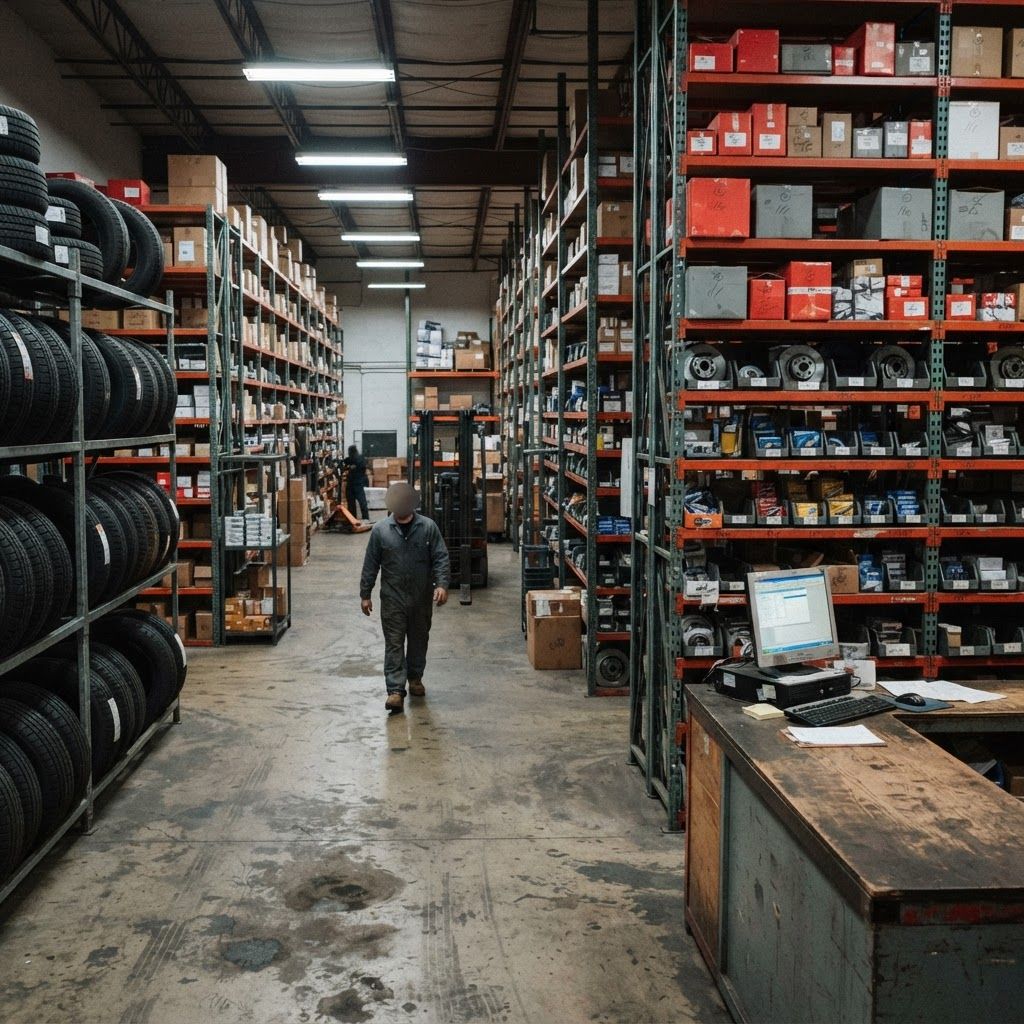
An Automotive City With an Automotive Supply Chain
St. Louis has been building vehicles for over a century, and although the industry has changed shape, the supporting infrastructure never left. Assembly operations, tier suppliers, fleet operators, independent repair shops and dealership service departments all draw on a dense local parts distribution network. For a repair shop, that density is the difference between a same-day fix and a customer waiting three days for a component to arrive from out of state.
The market divides into several distinct segments: OEM and dealer-channel distributors, aftermarket program distributors, heavy-duty and commercial truck suppliers, performance and specialty houses, and recycled or remanufactured parts operations. Each serves a different combination of price, availability and warranty expectations.
Evaluation Criteria
Suppliers were assessed on inventory depth and fill rate, delivery speed, cataloging accuracy, warranty and return handling, technical support quality, coverage across vehicle years and makes, and reliability for both independent shops and fleet operations.
1. Gateway Auto Parts Distributors
Gateway Auto Parts Distributors is a broad aftermarket wholesaler covering brakes, suspension, steering, filtration, electrical, cooling and engine management components. Fill rate is its defining strength: multiple daily delivery runs and deep local stock mean shops can commit to same-day repairs with confidence. Cataloging accuracy is equally important and frequently praised, since a wrong part number costs a shop far more in labor and goodwill than the part itself.
2. Midwest OEM Parts Supply
Midwest OEM Parts Supply focuses on genuine manufacturer components sourced through dealer channels, serving collision centers, warranty repair operations and shops working on newer vehicles. For late-model electronics, ADAS-related sensors and body panels requiring precise fitment, OEM parts are often the only defensible choice, and the company's advantage is access plus accurate VIN-based identification. Documentation support for insurance and warranty claims is a practical benefit for collision shops.
3. Arch City Heavy Duty Parts
Arch City Heavy Duty Parts serves commercial trucks, trailers, buses and vocational equipment with air brake systems, drivetrain components, suspension parts, lighting and diesel engine components. Downtime economics in trucking are brutal, so the company organizes around rapid availability and technical accuracy for complex applications. Fleet maintenance managers value its ability to identify parts from unit serial numbers rather than guesswork.
4. Riverfront Performance Parts
Riverfront Performance Parts covers the enthusiast and motorsport segment: forced induction components, exhaust systems, suspension upgrades, brake kits, tuning hardware and engine internals. Technical credibility is the differentiator, as performance buying involves compatibility questions that generic catalogs cannot answer. Staff who understand how components interact across a build save customers from expensive mismatches.
5. Show Me Auto Recyclers Wholesale
Show Me Auto Recyclers Wholesale supplies quality-graded recycled and used original components — engines, transmissions, body panels, doors, lamps and interior assemblies. For older vehicles and insurance-conscious repairs, recycled OEM parts often deliver the best combination of fit and cost. The company's inventory management and condition grading are its strengths, along with warranty coverage on major assemblies that removes much of the traditional risk from used parts.
6. Heartland Remanufacturing Company
Heartland Remanufacturing Company rebuilds alternators, starters, calipers, steering racks, transmissions and engines to specification, with replaced wear components and tested output. Remanufactured parts occupy a valuable middle ground: substantially cheaper than new OEM, more predictable than used, and typically warranted. Environmental benefits from core reuse are a growing consideration for fleets tracking sustainability metrics.
7. Delmar Tire and Wheel Distributors
Delmar Tire and Wheel Distributors handles passenger, light truck, commercial and specialty tires along with wheels, TPMS sensors and mounting supplies. Seasonal demand in the Midwest creates sharp swings, and the company manages inventory to keep winter-rated and all-weather stock available when temperatures drop. Fitment guidance and load rating support help shops avoid liability from incorrect specification.
8. Missouri Diesel and Fleet Supply
Missouri Diesel and Fleet Supply concentrates on diesel systems, emissions components, filtration programs and fluids for fleets running work trucks, agricultural equipment and generators. Emissions system complexity has made diesel service far more technical, and the company's product knowledge around aftertreatment components and diagnostic-driven parts selection is a genuine advantage. Bulk fluid programs and scheduled maintenance kits simplify fleet purchasing.
9. Soulard Auto Electrical and Electronics
Soulard Auto Electrical and Electronics specializes in the fastest-growing area of vehicle repair: sensors, modules, wiring harnesses, batteries, charging components and hybrid or electric vehicle service parts. As vehicle content shifts toward electronics, shops need suppliers who understand programming requirements, module compatibility and high-voltage safety. The company supports that transition with both parts and guidance.
10. Cardinal Body Shop Supply
Cardinal Body Shop Supply provides collision repair consumables and equipment: refinish products, abrasives, adhesives, panel bonding materials, masking supplies, spray booth consumables and PPE. Paint matching support and color-tinting assistance are central services, since refinish quality determines whether a repair is invisible or obvious. Training on evolving adhesive and structural repair procedures adds meaningful value for shops handling modern vehicle materials.
Trends in Automotive Parts Distribution
Vehicle electrification is reshaping demand, reducing some traditional categories while creating entirely new ones in battery service, thermal management and high-voltage components. Advanced driver assistance systems have made calibration and precise OEM fitment far more important after even minor collisions. Digital cataloging integrated with shop management software is reducing ordering errors dramatically. Vehicle fleet age continues to rise, sustaining strong demand for aftermarket, remanufactured and recycled parts. Finally, right-to-repair developments continue to influence access to diagnostic data and parts availability.
How to Choose an Auto Parts Wholesaler
Judge suppliers on fill rate and delivery frequency before price, because a cheap part that arrives tomorrow is expensive when the bay sits idle. Confirm warranty terms and how labor claims are handled on defective parts. Verify catalog accuracy with a few complex lookups. Evaluate technical support by asking a question that requires real knowledge. Most shops benefit from a primary aftermarket distributor, an OEM channel for late-model work, and a recycled or remanufactured source for cost-sensitive repairs.
Final Thoughts
The St. Louis parts network is deep enough that almost any repair can be supported locally. Shops that build strong relationships across OEM, aftermarket and recycled channels gain flexibility to solve problems at multiple price points, which is increasingly what customers expect as vehicles get older and repairs get more technical.