
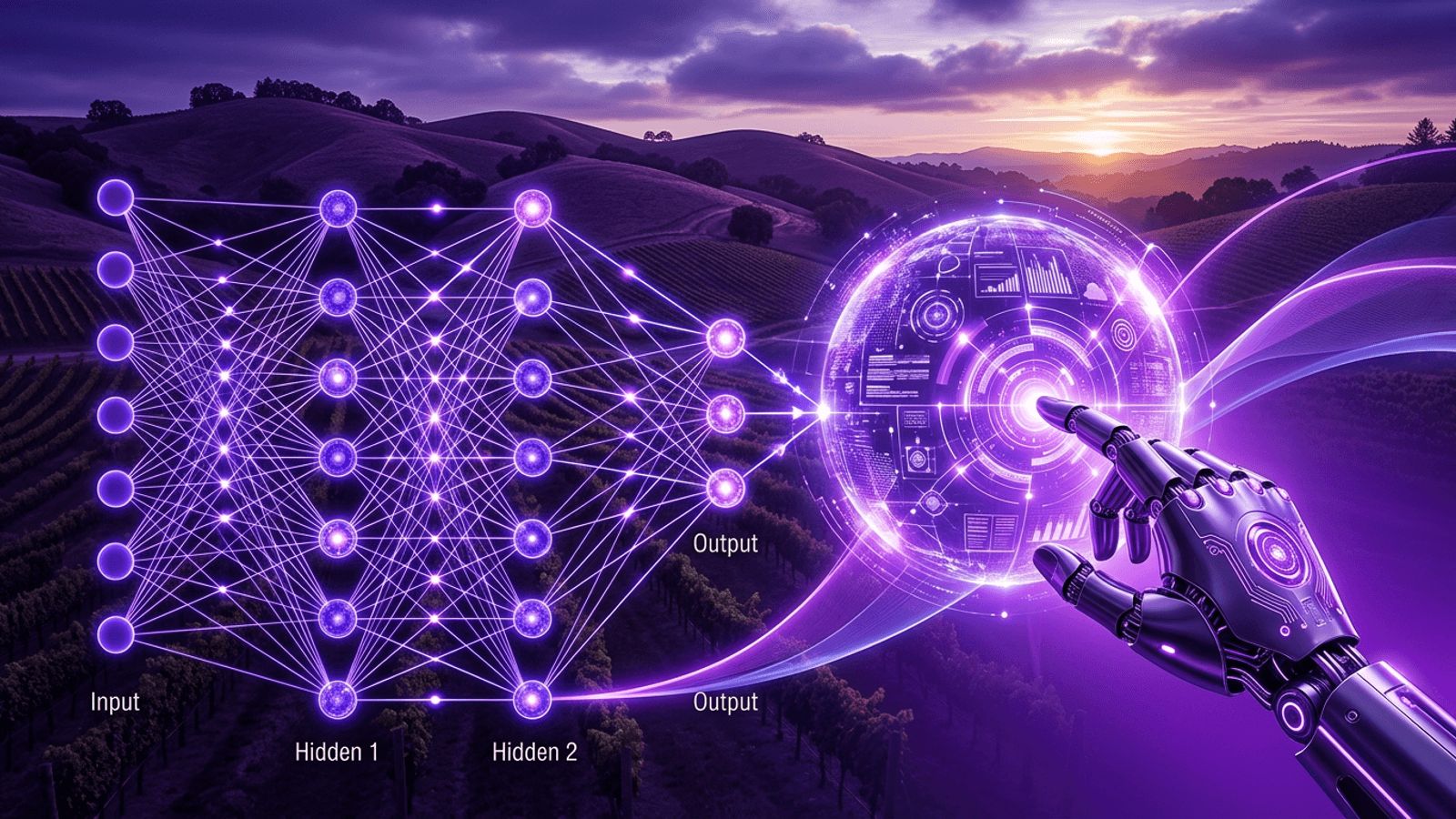
Machine Learning in the Santa Maria Valley
Machine learning sits at the heart of modern artificial intelligence. It allows computers to learn patterns from data and make predictions, whether that means forecasting strawberry yields, identifying defective products on a packing line, predicting equipment failures, or recommending products to online shoppers. For data-rich industries in Santa Maria, machine learning offers practical, measurable value.
While general AI assistants grab headlines, many organizations need platforms to build, train, and deploy their own models using proprietary data. This guide highlights ten AI and machine learning companies that provide the tools, infrastructure, and expertise to make that possible.
Where Machine Learning Creates Value Locally
The Santa Maria Valley's agricultural sector generates vast amounts of data from weather stations, soil sensors, drones, and harvest records. Machine learning models can transform this data into irrigation recommendations, pest alerts, and labor planning. Food processors use computer vision to grade produce and detect contamination.
Aerospace and defense organizations near Vandenberg apply machine learning to satellite imagery, telemetry analysis, and autonomous systems, while healthcare providers use predictive models to improve patient outcomes and operational efficiency.
How We Evaluated These Companies
We considered model development capabilities, ease of deployment, scalability, industry relevance, open-source contributions, governance features, and accessibility for organizations without large data science teams.
Top 10 AI and Machine Learning Companies
1. Databricks
Databricks offers a unified data and AI platform that combines data engineering, analytics, and machine learning. Organizations use it to build models on large datasets while maintaining strong governance.
2. Hugging Face
Hugging Face is the leading hub for open-source machine learning models and datasets. Developers can discover, fine-tune, and deploy models for language, vision, and audio tasks.
3. DataRobot
DataRobot provides automated machine learning that helps business analysts build predictive models without extensive coding. It accelerates use cases such as demand forecasting and risk scoring.
4. H2O.ai
H2O.ai offers open-source and enterprise machine learning platforms with strong automated modeling capabilities. Its tools are popular in finance, insurance, healthcare, and manufacturing.
5. Scale AI
Scale AI specializes in high-quality data labeling and evaluation, which are essential for training accurate models. It supports autonomous vehicles, defense applications, and generative AI development.
6. C3 AI
C3 AI delivers enterprise AI applications for predictive maintenance, supply chain optimization, and energy management. Industrial and government organizations use it to deploy AI at scale.
7. Cohere
Cohere builds enterprise-focused language models designed for secure deployment, search, and retrieval. Businesses use its models to power internal knowledge assistants and document analysis.
8. Mistral AI
Mistral AI develops efficient, high-performance language models, including openly available versions. Its models allow organizations to run capable AI with greater control over data and costs.
9. Shield AI
Shield AI develops AI pilots for autonomous aircraft and defense systems. Its work reflects the growing role of machine learning in aerospace, a key industry along the Central Coast.
10. John Deere
Through its precision agriculture technologies, including See and Spray systems developed with Blue River Technology, John Deere uses computer vision and machine learning to target weeds and reduce herbicide use, directly benefiting Santa Maria Valley growers.
Machine Learning Trends for 2026
Foundation models are increasingly fine-tuned for specialized tasks, reducing the data and time needed to build accurate solutions. MLOps practices are maturing, helping organizations monitor model performance and retrain as conditions change. Edge machine learning is enabling real-time decisions on tractors, drones, and factory equipment.
Data quality remains the most important factor. Organizations that invest in clean, well-organized data see far better results from their machine learning initiatives.
Starting a Machine Learning Project
Identify a clear business question, gather relevant historical data, and start with a manageable pilot. Measure results against existing methods, involve domain experts throughout, and plan for ongoing monitoring once models are deployed.
Frequently Asked Questions
What is the difference between AI and machine learning?
Artificial intelligence is the broad field of creating systems that perform tasks requiring human-like intelligence. Machine learning is a subset of AI focused on algorithms that learn patterns from data to make predictions or decisions.
Do I need a data scientist to use machine learning?
Not always. Automated machine learning platforms and prebuilt models allow analysts to build useful predictions. However, complex or high-stakes projects benefit from experienced data science guidance.
How can growers start using machine learning?
Many growers begin with tools built into precision agriculture equipment, crop monitoring services, or farm management software that already include machine learning features, then expand as data maturity improves.
How much data is needed to train a useful model?
It depends on the problem. Some tasks can be solved by fine-tuning existing foundation models with relatively small datasets, while complex predictions may require years of historical records. Data quality and relevance often matter more than sheer volume.
Final Thoughts
Machine learning is helping Santa Maria organizations turn data into smarter decisions and more efficient operations. With the right platforms and partners, businesses across agriculture, aerospace, healthcare, and retail can unlock significant value.