
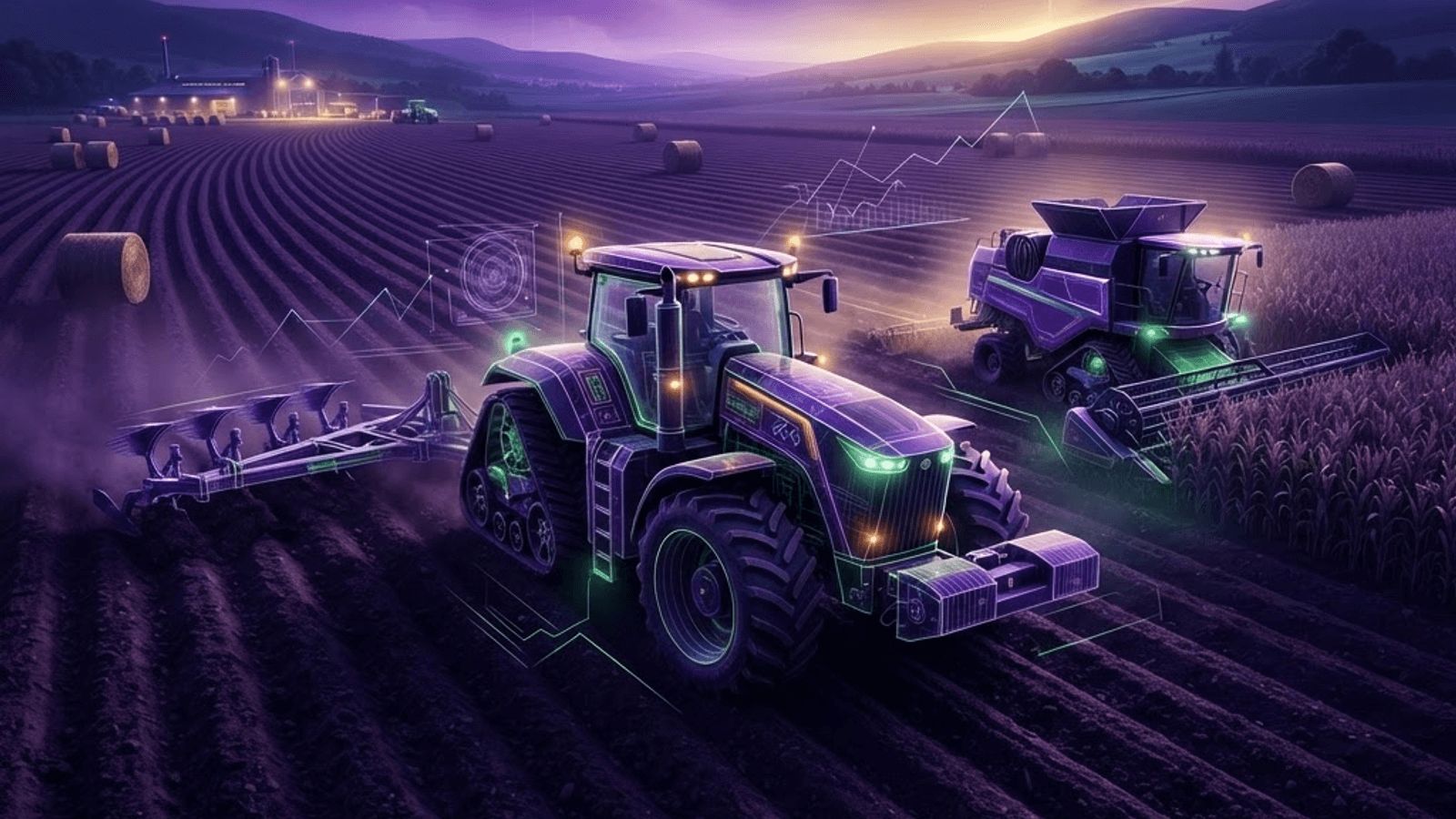
Farm Equipment for New England Conditions
Agricultural equipment decisions in the Worcester region are governed by conditions that differ sharply from the Midwest. Fields are small and irregular, frequently bordered by stone walls and woodlots. Soils are stony and often poorly drained. Slopes are common. Growing seasons are short, and the same machine that mows hay in July may need to move snow in January.
Those realities favor compact and utility tractors over large row-crop machines, versatility over specialization, and above all local dealer support over headline horsepower figures. A farm in Worcester County typically operates a small fleet of moderately sized machines with many implements rather than a few large dedicated units.
Why Dealer Support Outweighs Brand Loyalty
Experienced farmers in this region will tell you the same thing: buy the dealer, not the brand. During haying season or a snow event, equipment downtime is measured in lost revenue, and the difference between a dealer with local parts inventory and technicians versus one that orders everything is the difference between a half-day delay and a week.
That principle should shape purchasing. Before selecting a brand, identify which dealers are genuinely within reach, ask about parts availability for the specific model, confirm technician count and response practices, and get honest answers about loaner or rental availability during repairs. Only then compare machines.
Ten Agricultural Equipment Brands Well Represented Regionally
John Deere maintains the broadest presence and the deepest dealer network in the region. Compact utility tractors, mid-size utility models, and hay equipment are the workhorses here, supported by extensive parts availability and mature technology packages. The tradeoff is generally higher acquisition cost.
Kubota has become arguably the dominant brand among smaller New England farms. Compact tractors and utility vehicles suit small acreage well, reliability reputation is strong, and pricing is often more accessible than comparable competitors. Their implement compatibility is broad.
New Holland is particularly strong in hay and forage equipment, which matters in a region where hay is a major crop. Balers, mowers, and forage harvesters carry a long track record on New England farms, and their utility tractor line is well matched to dairy operations.
Massey Ferguson offers a strong mid-range utility tractor line with a reputation for straightforward mechanical design that many farmers appreciate for field serviceability. Value pricing relative to premium brands is part of the appeal.
Case IH covers utility and mid-size tractors along with hay tools, and its cab comfort and hydraulic capability appeal to operators spending long hours in the seat. Dealer coverage in Central Massachusetts is reasonable though less dense than the market leaders.
Kioti has gained meaningful share in the compact tractor segment on value and specification, offering substantial capability per dollar. Farmers report solid performance, with dealer network depth being the primary consideration to verify before buying.
Mahindra competes aggressively in compact and utility tractors with long warranty terms and simple, robust designs. Small diversified farms and part-time operations frequently find the value proposition compelling.
Bobcat dominates the compact loader and skid steer category that many farms rely on for material handling, manure management, and site work. Attachment versatility makes a single machine serve many functions, which suits small operations well.
Woods is an implement specialist rather than a tractor manufacturer, producing rotary cutters, finish mowers, tillers, and box blades that pair with virtually any compact tractor. For most small farms, implement selection determines actual capability more than tractor brand does.
Kverneland rounds out the list with tillage and hay equipment engineered for demanding conditions. Farms working stony ground appreciate implement designs with genuine protection against obstruction damage, which is a routine occurrence in New England fields.
Technology Trends in Farm Equipment
Precision agriculture technology has scaled down to smaller farms. Guidance systems, variable rate application, and yield mapping were once economical only at large acreage, but simplified and subscription-based offerings now make them accessible to operations of a few hundred acres, improving input efficiency measurably.
Electrification is arriving in the compact segment first. Battery-powered compact tractors and utility vehicles are commercially available, and for farms with limited daily run hours, quiet operation and minimal maintenance are genuinely attractive. Charging infrastructure and cold-weather range remain the practical constraints.
Autonomy is progressing but unevenly. Automated steering and implement control are mature; fully autonomous field operation remains limited, particularly on the irregular fields typical of this region where obstacle complexity is high.
Repairability has become a political and practical issue. Software restrictions on diagnostics and repair have prompted right-to-repair advocacy, and farmers increasingly weigh serviceability alongside capability when choosing equipment.
Buying Guidance
Match equipment to your actual fields rather than to aspiration. Oversized machines compact soil, struggle in tight field corners, and cost more to operate. Measure your smallest gate, tightest turn, and steepest slope before shopping.
Consider used equipment seriously. Well-maintained tractors from a decade or two ago remain highly serviceable and cost a fraction of new, which for a low-hour farm operation often produces better returns than financing new equipment. Have any used purchase inspected by an independent technician.
Explore shared ownership or custom hire for equipment used only a few days a year. Balers, planters, and specialized harvest equipment frequently make more sense shared among neighboring farms than owned individually.
Finally, budget for implements and maintenance, not just the tractor. Many new equipment owners discover that implement costs approach or exceed the tractor price, and that annual maintenance is a real line item rather than an occasional surprise.
Final Thoughts
Agricultural equipment serving the Worcester region emphasizes compact and utility machines, strong hay and forage capability, and versatile loaders and implements suited to small, stony, irregular fields. The brands above all have credible regional representation. Choosing based on dealer parts availability and service responsiveness, and sizing equipment to your actual land rather than to catalog appeal, is what makes a farm equipment investment productive.