
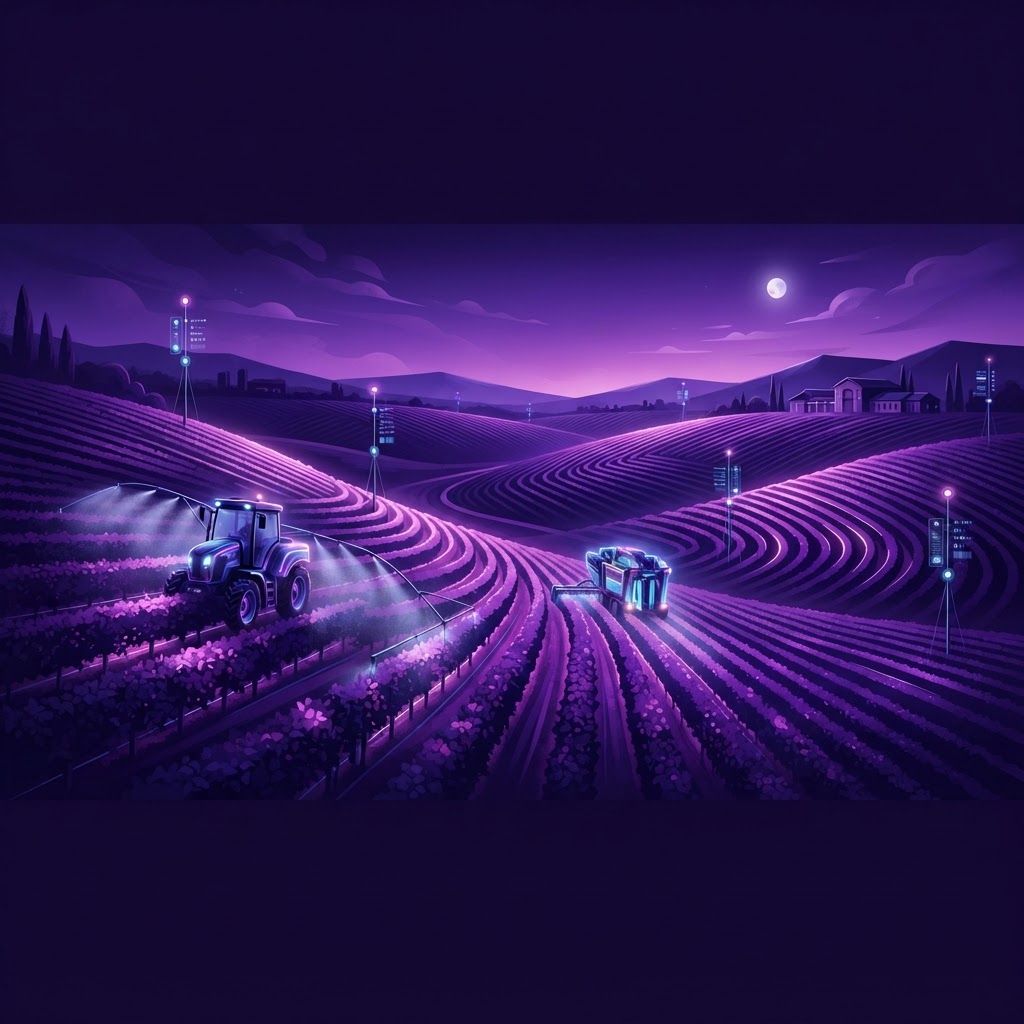
Agricultural equipment in Sonoma County has to solve a specific set of problems. Vineyard rows are narrow, hillsides are steep, orchards sit on uneven ground and many operations are small enough that a single machine must perform several jobs. Equipment brands that succeed here tend to offer compact, manoeuvrable and highly adaptable machinery rather than the large-scale implements suited to flat commodity farming.
What Makes Local Equipment Needs Unique
Row spacing in many vineyards leaves little clearance, which drives demand for narrow and specialty tractors. Slope stability matters on hillside plantings, making low centre of gravity designs and appropriate tyre configurations essential. Water scarcity has pushed irrigation technology to the forefront, and labour availability has accelerated interest in mechanised pruning, harvesting and mowing.
How This List Was Built
Brands and suppliers were assessed on build quality, suitability for local conditions, parts and service availability, dealer support, technology integration and total cost of ownership over a realistic equipment life.
1. Redwood Vineyard Tractor Company
Specialists in narrow and low-profile tractors designed for tight row spacing, with strong hydraulic capacity for mounted implements. Local service depth is a significant advantage during compressed seasonal windows.
2. Sonoma Precision Irrigation Systems
Drip systems, soil moisture sensing, filtration and control automation. Their approach emphasises measurement before hardware, which often reduces both water use and capital expenditure.
3. North Coast Harvest Machinery
Mechanical harvesters and sorting equipment adapted for regional grape varieties and terrain. Their adjustable settings help preserve fruit integrity, which matters greatly to quality-focused producers.
4. Laguna Orchard Equipment
Sprayers, platforms, pruning tools and orchard-specific implements. Attention to drift reduction and coverage accuracy addresses both regulatory compliance and material cost.
5. Gravenstein Compact Utility Machines
Compact loaders, utility vehicles and attachments used across mixed farms. Versatility rather than specialisation is the appeal, which suits operations with varied daily tasks.
6. Pacific Vineyard Automation
Autonomous and semi-autonomous platforms for mowing, spraying and monitoring. Adoption is still early, but labour pressures are driving serious evaluation among larger growers.
7. Russian River Tillage and Soil Equipment
Implements for reduced tillage, cover crop management and under-vine cultivation, supporting the shift toward soil health practices and reduced herbicide reliance.
8. Bennett Valley Frost Protection Systems
Wind machines, frost fans and monitoring technology protecting sensitive spring growth. Given the county's frost risk in low-lying areas, this equipment category is genuinely business critical.
9. Coastal Livestock and Pasture Equipment
Fencing systems, water infrastructure, handling equipment and pasture management machinery for the county's grazing operations.
10. Sebastopol Farm Technology Group
Sensors, weather stations, mapping tools and farm management software that tie equipment data into decision making. Increasingly, machinery value depends on the quality of the data it produces.
Technology Trends in Agricultural Equipment
Three shifts are reshaping the category. Electrification is advancing in small utility equipment, offering quieter operation near residential boundaries. Automation is moving from concept to limited field deployment, particularly for repetitive tasks such as mowing. Data integration is perhaps the most consequential, as growers increasingly expect machinery to log operations automatically for compliance and analysis.
Choosing Equipment Wisely
Buyers should evaluate row compatibility carefully, confirm local parts availability, assess operator comfort for long seasonal shifts and calculate cost per acre rather than purchase price alone. Demonstration on the actual property, ideally on the steepest block, reveals far more than a specification sheet ever will.
Matching Equipment to Terrain and Row Spacing
Buying agricultural equipment without measuring the property carefully is a costly mistake. Vineyard row widths vary considerably between older and newer plantings, and a tractor that fits comfortably in one block may damage vines in another. Slope introduces further constraints, since stability ratings, tyre selection and implement weight distribution all change on hillside ground. Before purchase, growers should measure the narrowest row, the steepest slope and the tightest headland turn on the property, then test the machine against those specific conditions rather than average ones.
Maintenance Planning and Parts Availability
Machinery reliability during a compressed harvest window depends almost entirely on preventive maintenance and local parts access. Growers should establish a documented service schedule based on operating hours rather than calendar dates, maintain a small inventory of high-failure components such as belts, filters and hydraulic hoses, and confirm that a dealer holds critical spares regionally. Asking how long a common repair part typically takes to arrive is one of the most revealing questions a buyer can pose before signing.
The Growing Role of Data
Modern agricultural equipment produces substantial data, including operating hours, fuel consumption, application rates and precise field coverage. Used well, this information supports compliance reporting, identifies inefficient practices and helps plan replacement cycles. Used poorly, it simply accumulates unread. Growers should consider whether equipment integrates with the farm management systems they already use, because isolated data that requires manual transcription rarely gets analysed at all.
Financing, Depreciation and Resale
Equipment represents one of the largest capital commitments most farms make. Purchase, lease and shared ownership arrangements each carry different tax, cash flow and flexibility implications, and neighbouring operations sometimes co-own specialist machinery used only briefly each year. Resale value varies enormously by brand and by how well maintained a machine is, so service records genuinely translate into money at the point of sale. Considering the exit before the purchase leads to considerably better long-term economics.
Final Thoughts
Agricultural equipment serving Santa Rosa reflects a region of small parcels, difficult terrain and high-value crops. The brands that perform best here combine mechanical durability with genuine adaptability, supported by service networks capable of responding within a single working day during harvest.