
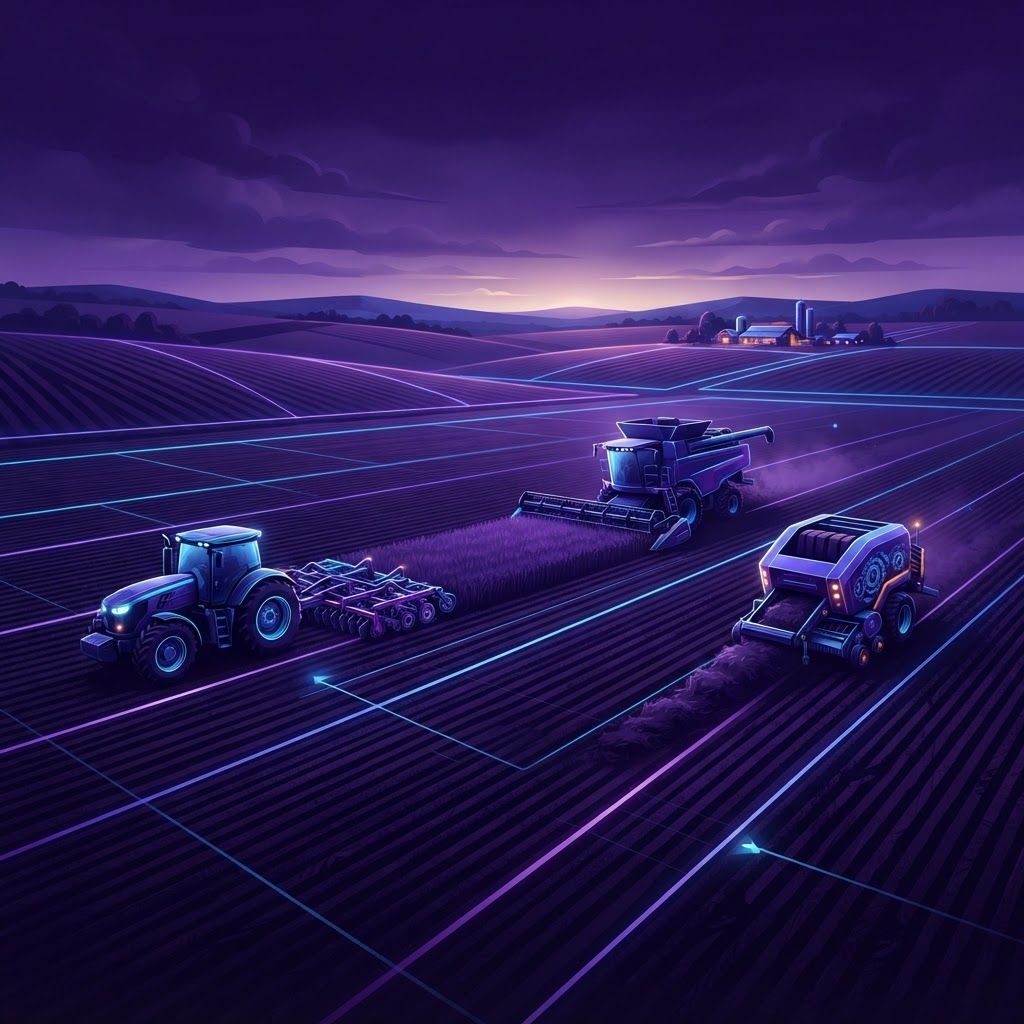
Equipment Choices That Shape a Farm's Economics
Few decisions affect a farming operation's profitability as directly as equipment selection. Machinery represents the largest capital investment on most farms, and the cost of ownership extends well beyond the purchase price into fuel, maintenance, parts, repair downtime, operator comfort and eventual resale value. In Rutherford County, where farms range from small hobby operations on a few acres to substantial commercial row crop and cattle enterprises, the appropriate equipment varies enormously.
Murfreesboro is well served by equipment dealers representing major brands, and the presence of local dealer support is arguably more important than brand preference. A tractor with excellent specifications and no local parts availability will disappoint its owner the first time it breaks during hay season.
Equipment Categories for Middle Tennessee Farms
Tractors form the foundation, with utility tractors in the moderate horsepower range dominating local operations because they handle loader work, mowing, hay equipment and general chores. Compact tractors serve smaller acreages and property maintenance. Larger row crop tractors appear on the county's grain operations.
Hay equipment is heavily represented because forage production is central to the local cattle industry. Mowers, tedders, rakes, round balers and square balers all see intensive seasonal use.
Tillage and planting equipment supports row crop production. Livestock equipment includes handling systems, feeders and watering infrastructure. Utility vehicles handle daily transport and light hauling. Precision agriculture technology increasingly overlays all of these categories.
The Leading Agricultural Equipment Brands in Murfreesboro
John Deere remains the most recognized name in agriculture, with a comprehensive lineup from compact utility tractors to large row crop machines, strong precision technology integration and one of the most extensive dealer and parts networks in the region.
Kubota has built a strong position in compact and utility tractors, particularly favored by smaller operations and property owners for maneuverability, reliability and reasonable operating costs.
New Holland is well regarded for hay and forage equipment, with balers and harvesting machinery that have earned a loyal following among Middle Tennessee cattle producers.
Case IH offers a full agricultural line with particular strength in row crop tractors, tillage and harvesting equipment for larger grain operations.
Massey Ferguson provides a balanced range of utility and mid-range tractors known for straightforward mechanics and value pricing that appeals to practical buyers.
Kioti has grown considerably in the compact and utility segment, offering competitive specifications and pricing that attract small farm and acreage owners.
Mahindra markets durable utility tractors with strong value positioning and generous warranty terms, popular among part-time farmers and landowners.
Bush Hog is a well-established implement brand for rotary cutters, finish mowers and land maintenance equipment built to handle rough Tennessee terrain.
Vermeer specializes in hay equipment, with round balers and forage tools that are widely used across the region's forage-producing farms.
Kuhn completes the list with disc mowers, tedders, rakes and spreaders known for build quality and field performance in demanding conditions.
Matching Equipment to Operation Size
The most common and expensive mistake in farm equipment purchasing is buying machinery sized incorrectly for the operation. Oversized equipment carries higher purchase, fuel and maintenance costs than the acreage can justify, and may be impractical on small fields and narrow gates. Undersized equipment wears out prematurely and turns manageable tasks into all-day projects.
Base sizing decisions on the most demanding regular task, not the occasional extreme. Consider power take-off requirements for implements, hydraulic flow needs for loaders and attachments, weight requirements for traction and stability, and physical dimensions relative to your gates, barns and field layouts.
Also think honestly about utilization. Equipment used only a few days a year may be better rented, hired through a custom operator, or shared with neighboring farms than purchased outright.
Precision Technology on Local Farms
Precision agriculture has moved well beyond large operations. Guidance systems reduce overlap and operator fatigue on tasks as routine as mowing and spreading. Section control prevents double application of seed and fertilizer. Yield monitoring identifies field variability that informs future management. Telematics report machine hours, fault codes and location, supporting maintenance planning and theft recovery.
Adoption decisions should rest on payback calculation. Guidance systems typically pay for themselves quickly on operations with significant acreage in spraying or planting. Yield monitoring delivers value when the data actually informs decisions rather than sitting unused.
Dealer Support and Total Cost of Ownership
When evaluating equipment, spend as much time evaluating the dealer as the machine. Ask about parts inventory for the specific models you are considering, service technician availability during peak season, loaner equipment policies and typical repair turnaround. A dealer who can put a part in your hands the same day during hay season is worth a meaningful premium.
Consider resale value as well. Brands with strong regional presence hold value better because buyers trust local support. Maintenance records, hours and condition influence resale substantially, so disciplined service documentation protects the asset.
Finally, evaluate financing and lease options carefully. Manufacturer financing programs sometimes offer terms that meaningfully change the comparison between two otherwise similar machines.
Final Thoughts
Agricultural equipment available in Murfreesboro covers every scale of operation found in Rutherford County, from compact tractors maintaining a few acres to full-size machinery working commercial ground. The best purchase decisions come from realistic assessment of tasks and utilization, honest sizing, and careful evaluation of local dealer support. Farmers who buy equipment that fits their operation and stands behind them through a breakdown in the middle of harvest are the ones who keep their costs under control and their fields productive.