
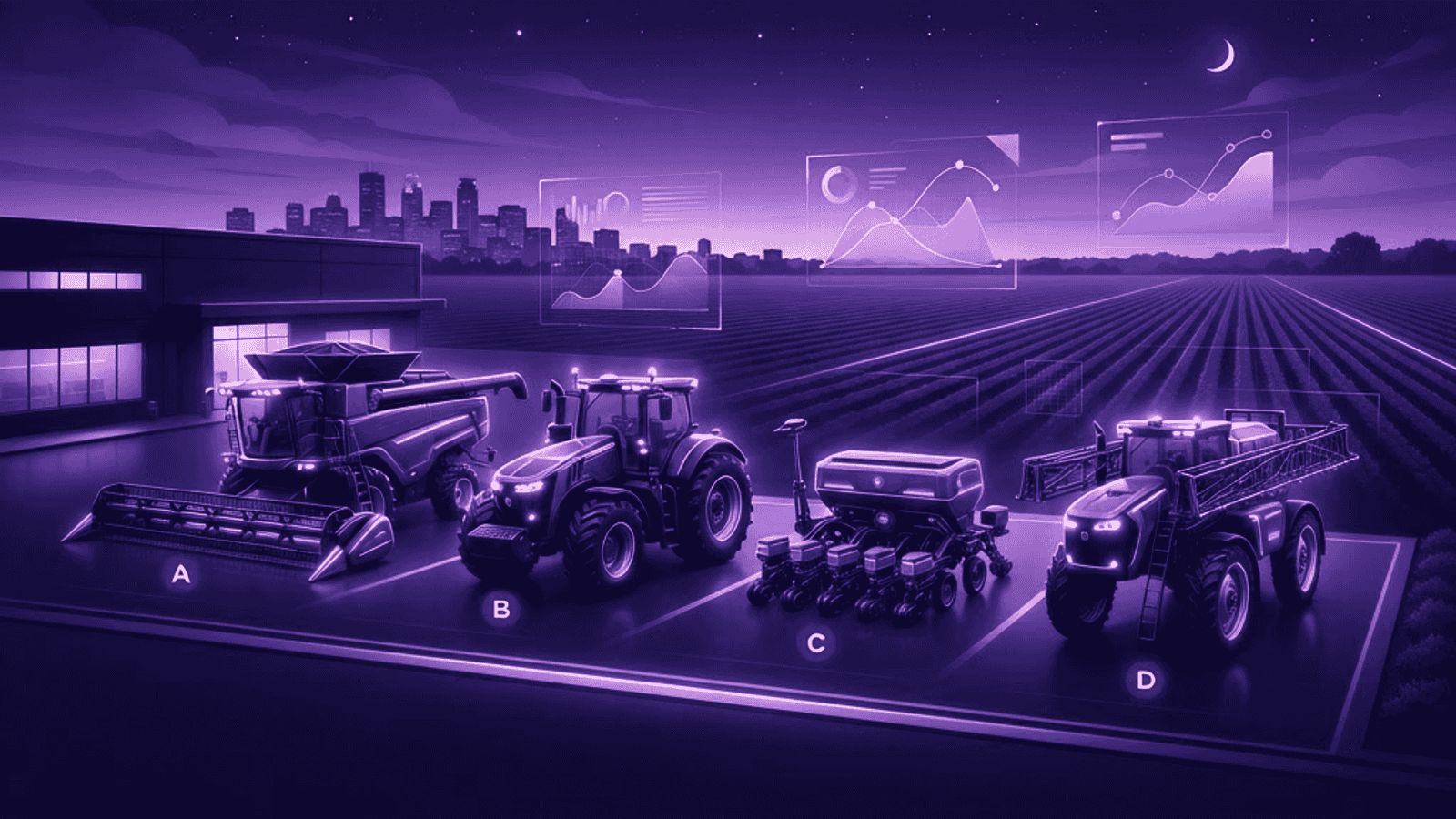
Agricultural equipment is one of the largest capital decisions a farm makes, and in the Minneapolis region it is also a decision with a long history. The Twin Cities were once home to major farm machinery manufacturing, and that legacy left behind a dense network of dealers, service technicians, parts distributors and used equipment channels that continues to benefit farms across Minnesota and neighboring states.
This guide reviews the agricultural equipment brands that perform best in this market, focusing on their genuine strengths and the dealer support that ultimately determines whether a machine delivers value.
Why Equipment Choices Matter More in This Region
Minnesota farming operates within narrow windows. Spring planting must happen in a short period between soil warming and the closing of the optimal window, and fall harvest races against freezing weather and moisture. Equipment reliability during those weeks is worth far more than marginal purchase price savings.
Soil conditions add complexity. Heavy, wet spring soils demand attention to compaction, tire and track selection and horsepower delivery. Cold starts, hydraulic performance in low temperatures and winter storage practices are all part of equipment planning here in a way they are not in warmer markets.
The 10 Best Agricultural Equipment Brands in Minneapolis
1. John Deere
The most widely supported brand in the region, John Deere offers a full line from compact utility tractors to high-horsepower articulated models, combines, planters and sprayers. Its integrated precision agriculture ecosystem, covering guidance, section control, data management and machine connectivity, is a major reason large operations standardize on it. Dealer density across Minnesota also means parts and service are rarely far away.
2. Case IH
Case IH is particularly strong in row-crop tractors, combines and tillage. Many operators prefer its cab ergonomics and transmission behavior, and its precision platform integrates guidance and agronomic data well. In small grain and row crop country, its harvesting equipment enjoys a loyal following.
3. New Holland
New Holland has strong positions in hay and forage equipment, balers and mid-range tractors. For livestock and dairy operations around the metro, its forage harvesting lineup and reputation for straightforward serviceability are meaningful advantages.
4. Kubota
Kubota dominates the compact and utility tractor segment, serving small farms, orchards, greenhouse operations, municipalities and acreage owners. Its machines are valued for maneuverability, reliability, strong resale value and a wide range of implements and attachments.
5. AGCO (Fendt and Massey Ferguson)
AGCO's brands bring distinctive engineering to the market. Fendt is known for continuously variable transmissions and premium efficiency, while Massey Ferguson offers strong value across mid-range tractors. AGCO's approach to open data systems appeals to operators who want flexibility in how machine information is used.
6. Claas
Claas is highly regarded in forage harvesting and combines, with a strong reputation for crop flow engineering and throughput. Operations focused on silage and high-volume harvesting often find its machines deliver superior capacity per hour.
7. Bobcat
With deep Upper Midwest roots, Bobcat is the reference brand for compact loaders and skid steers used in livestock operations, feed handling, snow removal and general farmstead work. Attachment versatility makes a single machine useful year-round.
8. Vermeer
Vermeer specializes in hay and forage equipment, particularly round balers, along with agricultural and land management machinery. Its baler durability and bale density performance are frequently cited by forage producers.
9. Great Plains
Great Plains focuses on seeding, tillage and soil preparation equipment, including drills and vertical tillage tools. As conservation tillage adoption grows, its equipment designed for residue management and consistent seed placement has gained relevance.
10. Trimble
Trimble represents the precision technology layer rather than heavy iron, supplying GPS guidance, autosteer, variable rate control and data platforms that retrofit across mixed equipment fleets. For farms running multiple brands, brand-agnostic precision systems are often the practical path to consistent accuracy.
Trends in Agricultural Equipment
Autonomy is advancing steadily. Driver-assist features, automated headland turns and supervised autonomous operation are moving from demonstration to commercial availability, addressing the persistent shortage of skilled seasonal operators.
Data interoperability is a central industry debate. Farms increasingly want agronomic data to move freely between machines, farm management software and advisors, which has pushed manufacturers toward more open standards.
Right to repair has become a defining issue for equipment buyers. Access to diagnostic tools, software and repair documentation directly affects downtime during critical windows, and it increasingly influences purchase decisions alongside horsepower and price.
Electrification and alternative power are emerging first in compact equipment, where battery capacity is sufficient. Larger machines are exploring hybrid drivetrains and alternative fuels, though diesel remains dominant in high-horsepower field applications.
Sustainability pressure is also shaping design, with emphasis on precision application to reduce input use, controlled traffic to limit compaction and equipment that supports cover cropping and reduced tillage systems.
How to Choose Agricultural Equipment
Evaluate the dealer before the machine. Parts availability, technician skill, loaner equipment during breakdowns and response time during harvest matter more than specification sheets. The best brand with weak local support is the wrong choice.
Calculate total cost of ownership including fuel efficiency, maintenance intervals, expected repair costs, resale value and financing terms. Consider whether used equipment with strong service history serves your acreage better than new machinery.
Match capacity honestly to acreage and timing requirements. Oversized equipment carries idle capital cost; undersized equipment risks missing planting or harvest windows, which is usually the more expensive error.
Finally, plan technology adoption incrementally. Guidance and section control typically deliver rapid payback, while full data platform integration is best added once the operation has processes to use the information.
Final Thoughts
Minneapolis and the surrounding region offer access to essentially every major agricultural equipment brand, backed by an unusually deep dealer and service network built over a century of farm machinery history. Farms that select equipment based on dealer support, realistic capacity needs and lifecycle cost, rather than brand loyalty alone, consistently achieve better uptime and stronger returns on capital.