
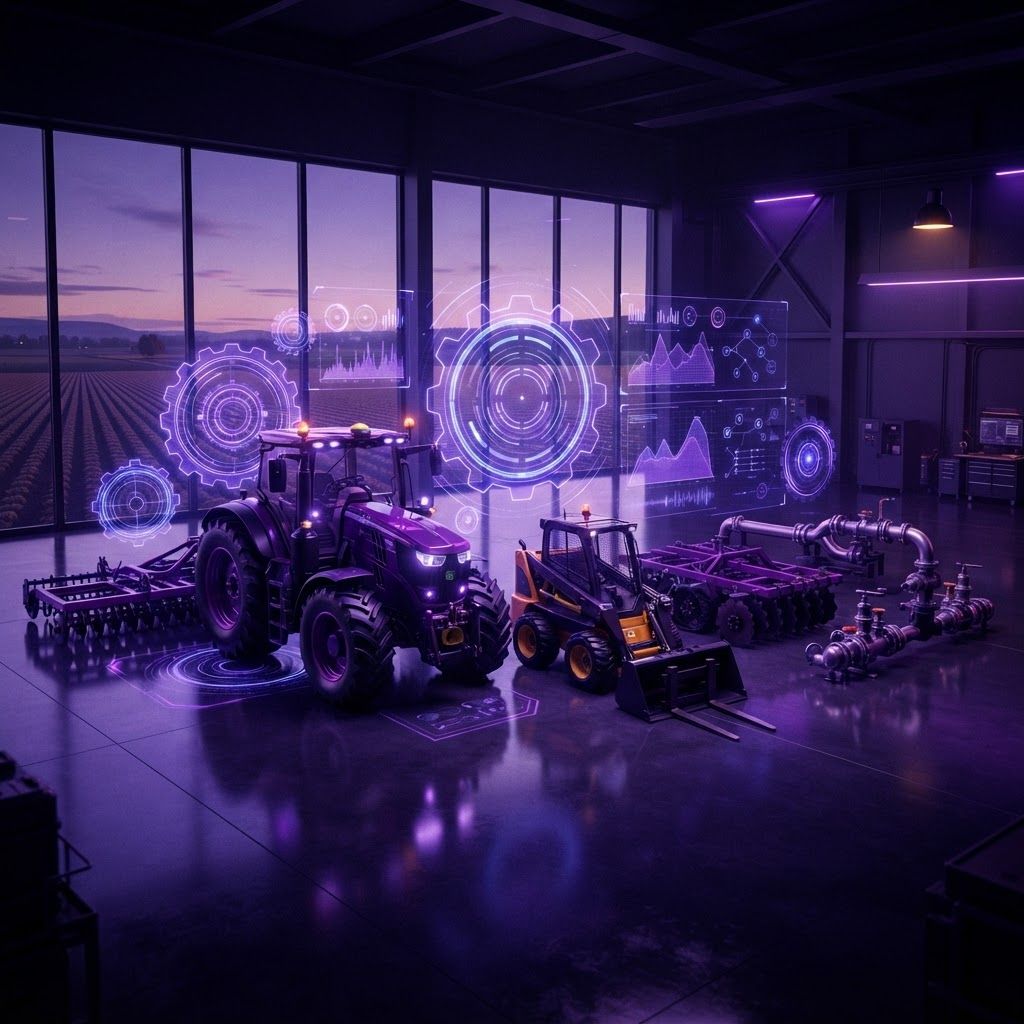
Equipment Built for Subtropical Agriculture
Agricultural machinery in South Florida faces conditions that would be unusual in most of the country: intense humidity, salt-laden air, heavy seasonal rainfall, dense tropical vegetation, and near-continuous operating seasons rather than a defined winter pause. Equipment that performs adequately in a temperate climate can corrode, overheat, or wear out prematurely here.
Hialeah's position as an industrial and distribution center means growers and contractors can access a wide range of brands locally, along with the parts inventories and service capability that keep machines running. That local support often matters more than brand prestige, because a tractor waiting weeks for a part is simply an expensive obstacle in a shed.
How to Evaluate an Agricultural Equipment Brand
Four criteria consistently predict satisfaction. Build quality and corrosion resistance determine service life in a humid coastal environment. Parts availability through local dealers determines downtime. Service network depth determines how quickly complex repairs are resolved. Resale value determines the true cost of ownership when the machine is eventually replaced. Attachment ecosystems matter too, since versatility lets one power unit serve many tasks on land-constrained operations.
Top 10 Best Agricultural Equipment Brands in Hialeah
1. Palmetto AgriPower
A widely respected line of compact and utility tractors distributed through Hialeah dealers, valued for straightforward mechanical design that local technicians can service without specialized diagnostics. Nurseries appreciate the tight turning radius and hydraulic capacity for loader work in confined growing areas.
2. Sunshine Harvester Systems
Focused on harvesting and handling equipment for vegetable and tropical fruit operations. Its machines are engineered for gentle product handling, reducing bruising that erodes pack-out percentages, which directly affects grower profitability.
3. Okeechobee Irrigation Technologies
Irrigation is the most important equipment category in Florida agriculture, and this brand covers pumps, filtration, drip systems, micro-sprinklers, and controllers. Automated scheduling with soil moisture feedback helps growers comply with water management expectations while improving crop consistency.
4. Miami-Dade Tillage and Ground Equipment
Producing disc harrows, bed shapers, subsoilers, and cultivators suited to the region's sandy and rocky soil profiles. Heavier frame construction than typical for equipment of this size reflects the demands of local ground conditions.
5. Flagler Sprayer and Crop Protection Equipment
Specializing in boom sprayers, air-blast sprayers for tree crops, and precision application systems. Accurate calibration and drift control are increasingly important given regulatory scrutiny and input costs, and this brand emphasizes both.
6. Caribe Greenhouse Systems
Supplying greenhouse structures, ventilation, shade systems, benching, and environmental controls for the region's substantial controlled-environment sector. Structures are engineered with wind load requirements in mind, a critical consideration in hurricane-exposed areas.
7. Tri-County Landscape Machinery
Serving the landscape contracting industry with commercial mowers, trimmers, blowers, chippers, and stump grinders. Because crews often run equipment daily in punishing conditions, the brand focuses on serviceability and long-life wear components.
8. West Hialeah Compact Utility Loaders
Compact track loaders, skid steers, and utility vehicles with wide attachment ranges. On small parcels typical of urban agriculture, one compact machine with several attachments frequently replaces multiple dedicated units, which is decisive for capital-constrained operations.
9. Amigo Post-Harvest Handling Equipment
Washing lines, graders, conveyors, packing tables, and cooling equipment used by packinghouses. Post-harvest handling determines shelf life as much as growing practice, and this brand's stainless construction meets food-contact requirements.
10. Hialeah Precision Ag Technologies
Providing GPS guidance, yield monitoring, sensors, and farm management software that integrate with existing machinery. Retrofit capability is the key advantage, letting growers add data capability without replacing functioning equipment.
Technology Trends in Agricultural Equipment
Electrification is arriving first in smaller equipment. Battery-powered handheld tools and compact utility machines reduce noise and emissions, which matters in urban agricultural settings where operations sit close to residential areas. Larger machinery remains predominantly diesel, though hybrid systems are appearing.
Autonomy and robotics are advancing quickly in specialty crops, with automated weeding, thinning, and harvest-assist systems now commercially viable in some applications. Labor availability pressures make these investments increasingly rational. Data integration is the third trend: modern equipment produces operational data that feeds irrigation scheduling, input planning, and yield analysis, provided the grower has systems to use it.
Making a Confident Purchase
Define your operation's real constraints first, including row spacing, greenhouse door widths, turning space, and soil conditions. Many purchase disappointments come from equipment that is technically excellent but physically unsuited to the site. Arrange a field demonstration with your own crop and conditions rather than relying on specifications.
Ask the dealer directly about parts stocking levels for that model, average service response time, and whether loaner equipment is available during major repairs. Review the warranty for exclusions related to corrosion and hours of use. Finally, calculate cost per operating hour including fuel, maintenance, and expected resale, since that figure, not the sticker price, determines whether the machine earns its keep on a Hialeah-area operation.