
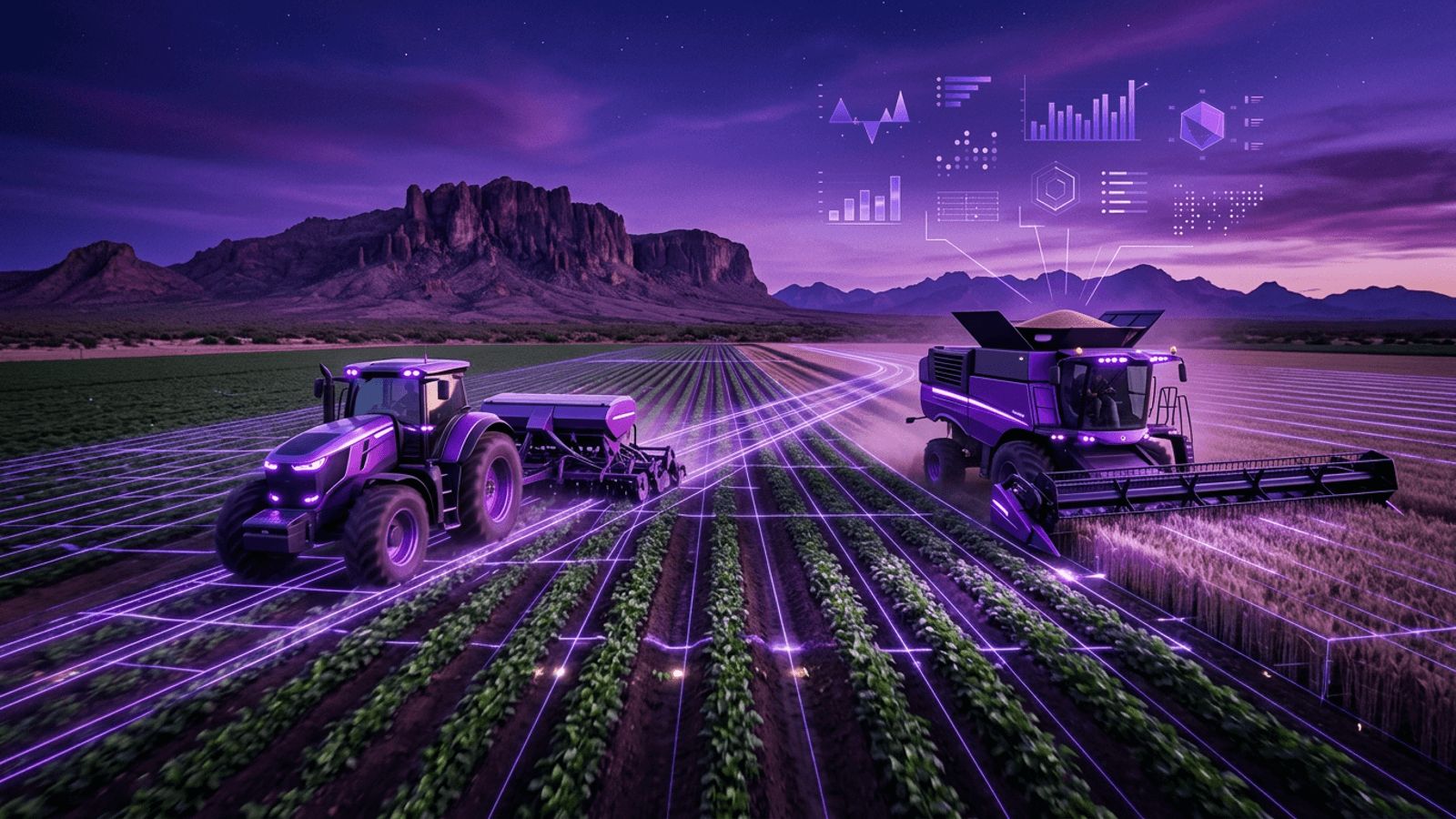
Agricultural Equipment in the West Valley
Farming in the West Valley takes equipment that can handle extreme heat, dust, and long working days. Growers in and around Goodyear produce cotton, alfalfa, vegetables, and grains, and they depend on tractors, harvesters, tillage tools, and irrigation systems that run reliably under tough conditions. Choosing the right equipment brand affects productivity, fuel costs, maintenance, and long-term profitability.
Technology has changed farm equipment dramatically. GPS guidance, telematics, variable-rate application, and autonomous features let farmers work more precisely and use fewer resources. Here are ten agricultural equipment brands that West Valley growers trust.
Top 10 Agricultural Equipment Brands in Goodyear
1. John Deere
John Deere is the most recognized name in agricultural equipment, offering tractors, combines, sprayers, and precision agriculture technology. Its Operations Center platform helps farmers manage field data and machine performance. Arizona dealers such as Stotz Equipment provide sales, parts, and service across the region.
2. Case IH
Case IH is known for powerful tractors, cotton pickers, and combines, along with its AFS precision farming technology. Its heritage in cotton harvesting equipment makes it especially relevant to Arizona growers.
3. New Holland Agriculture
New Holland offers a wide range of tractors, hay and forage equipment, and harvesters. Its hay tools are popular among alfalfa growers, one of the most important crops in Arizona's agricultural economy.
4. Kubota
Kubota is known for reliable compact and utility tractors, as well as implements and construction equipment. Small farms, hobby farms, and landscaping businesses in the Goodyear area value Kubota's fuel efficiency, durability, and ease of operation.
5. Massey Ferguson
Massey Ferguson, part of AGCO, offers tractors and hay equipment that combine solid performance with value pricing. Its straightforward design and dependable engines make it a practical choice for mid-sized farm operations.
6. Fendt
Fendt, another AGCO brand, is known for premium tractors with advanced continuously variable transmissions and operator comfort. Large-scale growers who want top-tier efficiency and technology often consider Fendt.
7. Valley Irrigation
Valley Irrigation, a Valmont brand, makes center pivot and linear irrigation systems. In Arizona, where water is precious, efficient irrigation is critical, and Valley's remote monitoring and precision control help farmers conserve water while maintaining yields.
8. Lindsay Zimmatic
Lindsay's Zimmatic irrigation systems and FieldNET remote management technology give growers precise control over water application. Its focus on water efficiency fits the needs of desert agriculture.
9. Mahindra
Mahindra is one of the world's largest tractor manufacturers by volume, offering durable compact and utility tractors at competitive prices. Small farms and property owners in the West Valley value its rugged build and strong warranty programs.
10. CLAAS
CLAAS is a global leader in forage harvesters and combines, known for high-capacity machines and advanced technology. Large hay and forage operations rely on CLAAS equipment for efficient harvesting.
How to Choose Agricultural Equipment
Start with your crops, acreage, and labor availability. Large row crop operations need high-horsepower tractors and specialized harvesters, while small farms may get more value from compact tractors and versatile implements. Dealer support is just as important as the brand itself. Choose a brand with a nearby dealer that keeps parts in stock and offers responsive service, because downtime during planting or harvest is costly.
Consider total cost of ownership, including fuel efficiency, maintenance intervals, and resale value. Precision technology can deliver strong returns through lower input costs and better yields, but it requires training and data management.
Trends in Agricultural Equipment
Autonomy is one of the biggest trends, with manufacturers developing self-driving tractors and robotic systems to address labor shortages. Precision agriculture keeps advancing through better sensors, drones, and data analytics. Electrification is emerging for smaller equipment, and water-efficient irrigation technology is critical for desert regions. Right-to-repair discussions are also shaping how manufacturers support farmers and independent repair shops.
Frequently Asked Questions
What size tractor does a small farm need?
Small farms and hobby properties often do well with compact or utility tractors between about 25 and 75 horsepower, which can handle mowing, tilling, loading, and light hay work. Larger row crop operations require higher horsepower and specialized implements.
Is precision agriculture worth the investment?
For many farms, yes. GPS guidance reduces overlap, variable-rate application saves fertilizer and seed, and yield mapping helps identify problem areas. The savings often pay for the technology over several seasons, especially on larger acreage.
How important is dealer support?
Dealer support is critical. Quick access to parts, skilled technicians, and field service can prevent costly delays during planting and harvest. Many farmers choose a brand based partly on the strength of the nearest dealer.
What irrigation systems work best in the desert?
Center pivots, linear move systems, and drip irrigation are common choices. Modern systems with remote monitoring and variable-rate control apply water precisely where crops need it, reducing waste and helping farms comply with water conservation goals.
Conclusion
Goodyear and the West Valley's farmers need equipment that performs in demanding desert conditions. These ten brands combine durability, innovation, and strong dealer support. Whether you manage a large commercial operation or a small family farm, choosing the right equipment helps you work more efficiently and sustainably.