
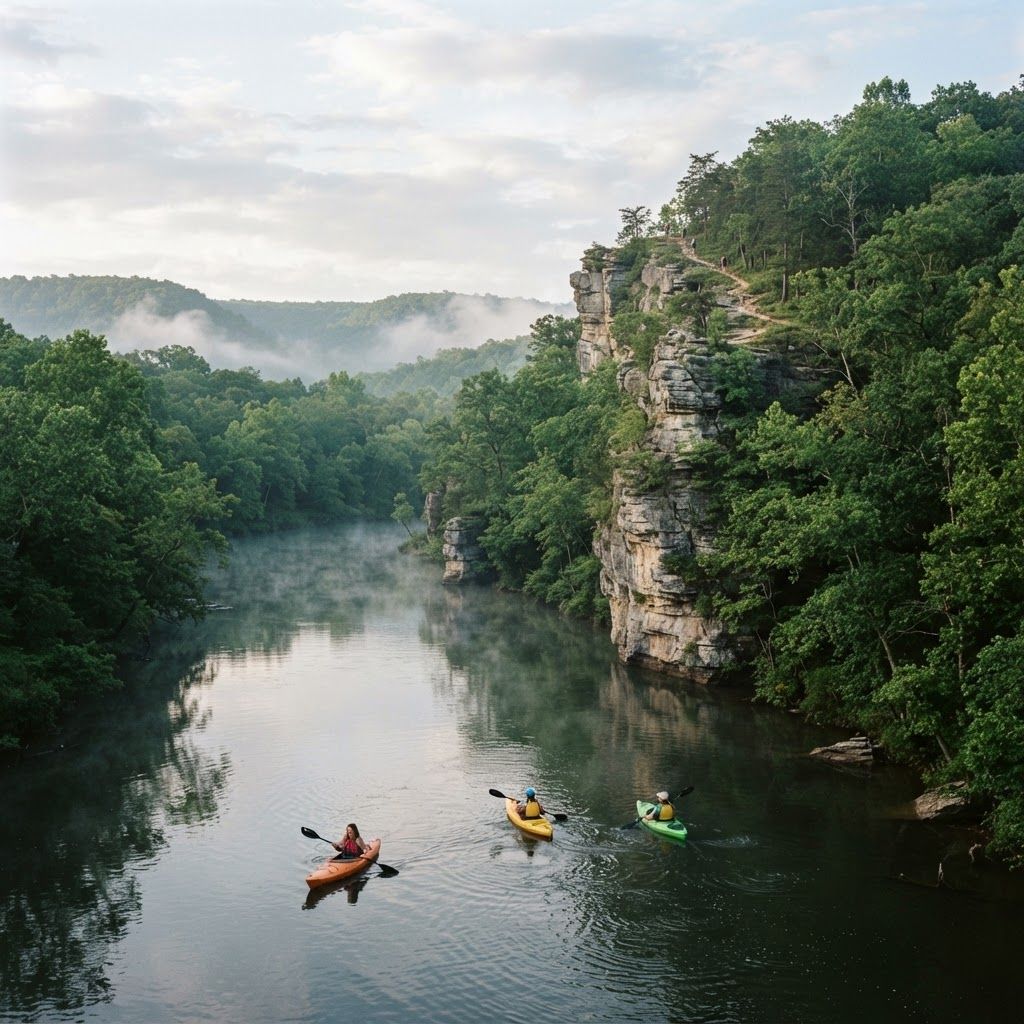
St. Louis as an Adventure Basecamp
People underestimate St. Louis as an outdoor city, usually because they have only seen it from the highway. The reality is that within a ninety-minute radius you can reach the largest concentration of surveyed caves in the country, the limestone bluffs of the Great River Road, the spring-fed float streams of the Ozarks, and hundreds of miles of purpose-built mountain bike trail. The Katy Trail, one of the longest rail-trail conversions in the world, begins a short drive west of the city. The Mississippi and Missouri rivers converge just north of downtown, creating paddling water with genuine character.
What makes an adventure travel company valuable here is not access alone, since much of this land is public. It is judgment. River levels on Ozark streams change quickly, cave systems demand real technical competence, and river paddling on a working commercial waterway is not a beginner activity without guidance. The best operators in this market sell expertise as much as equipment.
What Separates a Strong Operator from a Rental Counter
Before reviewing specific companies, it helps to know what to look for. Guides should hold current wilderness first aid or wilderness first responder credentials. Cave operators should follow established conservation protocols including gear decontamination to limit the spread of white-nose syndrome in bat populations. Paddling outfitters should be transparent about river gauge thresholds and willing to cancel or relocate a trip when water is unsafe. Climbing programs should use current single pitch instructor standards. Insurance, permits and land-manager agreements should be documented rather than implied.
The Ten Best Adventure Travel Companies Serving St. Louis
1. Alpine Shop Adventure Programs
Alpine Shop is a St. Louis institution and functions as the region's outdoor community hub as much as a retailer. Its programming arm runs guided paddling clinics, cycling events, orienteering and adventure racing, and it has been central to building the regional endurance and adventure race scene for decades. The staff depth is the real asset: these are people who actually climb, paddle and race in the places they are advising you about. For beginners, its clinic structure is the least intimidating on-ramp in the market.
2. Big Muddy Adventures
Big Muddy Adventures built its reputation on something genuinely distinctive: guided expeditions on the Missouri and Mississippi rivers, including the confluence itself, using large voyageur-style canoes. Floating past the downtown skyline, camping on river islands, and learning the ecology and commercial history of the working river is an experience almost no other operator in the country offers in this form. Its guides are deeply versed in river reading, and the company has become an advocate for urban river access and stewardship.
3. Adventure Alliance Missouri
This outfit focuses on multi-sport itineraries that combine caving, climbing and paddling into single weekends, which suits visitors who have limited time and want variety rather than depth in one discipline. Group management is a strength, making it a frequent choice for corporate teams and university outdoor programs. Equipment is well maintained and guide-to-participant ratios are conservative.
4. Onondaga Cave Guided Programs
Cave country west of St. Louis is a legitimate world-class resource, and guided programs at state park caves offer the safest structured introduction to it. Interpretive tours cover speleothem formation, cave biology and the hydrology of the Meramec basin. For families with children, this is the highest-value outdoor education experience within a short drive of the city, and the conservation ethic built into the programming is genuinely educational rather than decorative.
5. Meramec River Float Outfitters
Float trips are a Missouri cultural tradition, and the Meramec corridor is the closest quality float water to St. Louis. Established outfitters along this stretch handle canoe and raft rental, shuttle logistics, campsite coordination and river-level advisories. The best of them are candid about conditions and actively manage group behavior to keep trips family-appropriate. Choose operators that publish gauge thresholds and enforce life jacket policy.
6. Castlewood Cycling and Trail Guides
The trail networks at Castlewood, Greensfelder and Chubb Trail form a legitimate mountain biking destination, and guided programs here handle skills instruction, bike fitting and route selection for riders who do not know the terrain. Progression-focused coaching is the differentiator. Riders who arrive intimidated by rock gardens and roots typically leave with a real technical foundation rather than just a completed loop.
7. Gateway Climbing and Rope Programs
Climbing instruction in the region spans indoor gym progression through outdoor sport and traditional climbing at regional crags. Strong programs here move students deliberately from top-rope competence through anchor building and lead climbing, with clear safety systems at each stage. For anyone wanting to transition from gym climbing to real rock, structured instruction is not optional and this is where to find it.
8. Great River Road Cycling Tours
Road cycling along the Illinois side of the Mississippi, beneath the bluffs between Alton and Grafton, is some of the most scenic riding in the Midwest. Tour operators handle route planning, support vehicles, lodging and food logistics for multi-day trips. Historical interpretation of river towns and the Lewis and Clark departure sites adds substance beyond the mileage.
9. Katy Trail Expedition Services
Long-distance trail travel requires logistics support, and companies serving the Katy Trail provide shuttles, luggage transfer, bike rental and bed-and-breakfast coordination across multi-day itineraries. This turns an intimidating point-to-point journey into something an average recreational cyclist can complete comfortably. For riders coming from out of state, this support is what makes the trip feasible.
10. Confluence Kayak and Paddleboard Guides
Flatwater paddling on regional lakes, backwater sloughs and slower river stretches is the accessible entry point to paddlesports, and guided programs here focus on instruction, safety and wildlife interpretation. Sunrise and sunset paddles have become popular, and stand-up paddleboard instruction has grown quickly. Good operators pair every trip with a real safety briefing and a weather contingency plan.
Trends in Regional Adventure Travel
Several patterns are visible across the market. Demand for shorter, higher-quality experiences has grown, with half-day guided trips outpacing week-long expeditions. Conservation messaging has moved from marketing language to operational practice, particularly in cave and river programs. Accessibility programming has expanded meaningfully, with adaptive equipment now available through several operators. And gear rental has consolidated, letting travelers arrive with nothing and still participate fully.
Choosing the Right Company for Your Trip
Be honest about your fitness and experience, because good operators will place you correctly and bad ones will simply take your money. Ask directly about guide certifications and cancellation policy for unsafe conditions. Confirm what equipment is included versus rented. If you are traveling with children or older participants, ask about the actual pace rather than the advertised difficulty rating. And book shoulder seasons when possible, since spring and fall in Missouri offer better temperatures and thinner crowds than midsummer.
Final Thoughts
The adventure travel scene around St. Louis is mature, varied and considerably better than the region's reputation suggests. Big Muddy Adventures offers something singular on the rivers, Alpine Shop remains the community's center of gravity, and the cave, float and trail operators collectively cover terrain that would headline a tourism campaign in a different state. Pick the discipline that appeals, choose an operator that leads with safety credentials, and go use the landscape.