
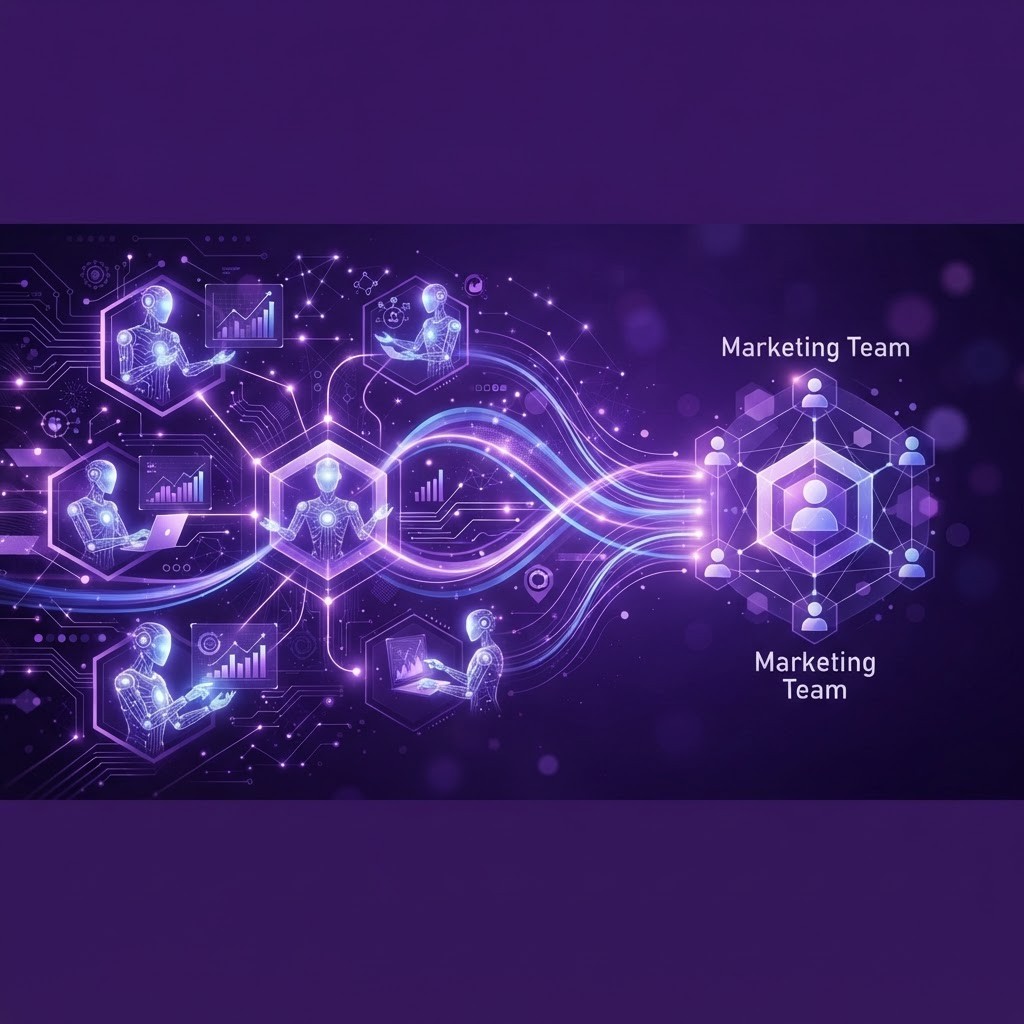
A new generation of AI tools has emerged that goes beyond answering questions or generating text. AI agents are autonomous systems capable of setting goals, taking actions, and adjusting their approach based on results. For marketing teams, these agents represent a powerful way to offload complex, multi-step work, freeing humans to focus on strategy, creativity, and relationship building. Understanding how they help is key to using them effectively.
How AAMAX.CO Helps Teams Adopt AI Agents
Implementing AI agents effectively requires both technical understanding and marketing know-how. AAMAX.CO helps businesses bridge that gap, guiding teams on how to integrate autonomous tools into their existing workflows. As a full-service digital marketing company operating worldwide, they ensure that AI agents are deployed in ways that support real objectives rather than adding complexity. Their digital marketing team helps organizations get tangible value from these emerging technologies. Learn more about their services at AAMAX.CO.
What Exactly Is an AI Agent?
Unlike a simple chatbot that responds to a single prompt, an AI agent can break a large goal into smaller tasks and work through them step by step. It can gather information, make decisions, use tools, and evaluate outcomes, all while adapting to new data. In marketing, this means an agent could research a topic, draft content, schedule posts, and monitor performance, coordinating these actions toward a defined objective.
Automating Research and Analysis
Marketing teams spend significant time gathering information about markets, competitors, and audiences. AI agents can automate much of this research, scanning sources, summarizing findings, and highlighting the most relevant insights. Instead of manually compiling competitive analyses or trend reports, teams can task an agent with the work and receive a synthesized overview, dramatically reducing the time from question to answer.
Executing Multi-Step Campaigns
One of the most valuable capabilities of AI agents is their ability to execute multi-step workflows. An agent can take a campaign brief and handle many of the operational steps, from generating creative variations to setting up A/B tests and adjusting parameters based on early results. This coordination reduces the manual coordination burden and helps campaigns launch faster and run more smoothly.
Continuous Optimization
Campaigns rarely perform perfectly from the start. AI agents excel at continuous optimization, monitoring performance data and making incremental adjustments in real time. They can reallocate budget toward high-performing segments, pause underperforming ads, and tweak messaging based on engagement. This constant fine-tuning would be exhausting for humans to perform manually but is well suited to an autonomous system.
Personalized Customer Interactions
AI agents can manage personalized interactions at scale. They can respond to customer inquiries, recommend products, and guide users through decisions based on individual context. Because they operate continuously and learn from each interaction, these agents improve over time, delivering increasingly relevant experiences without requiring constant human oversight for routine cases.
Freeing Teams for Strategic Work
Perhaps the greatest benefit of AI agents is the time they give back. By handling repetitive and operational tasks, agents allow marketers to concentrate on the work that truly requires human judgment: developing brand strategy, crafting compelling stories, building partnerships, and understanding customer emotions. This shift elevates the role of the marketer from executor to strategist and creative director.
Keeping Humans in the Loop
Despite their autonomy, AI agents work best with human oversight. Marketers should set clear goals, define guardrails, and review important decisions before they go live. This collaborative model combines the speed and scale of AI with the wisdom and empathy of human professionals. The goal is not to remove people from marketing but to amplify what they can accomplish.
Getting Started With AI Agents
Teams interested in AI agents should start small, identifying a specific, well-defined task to automate before expanding. Measuring results and refining the approach ensures that the technology delivers real value. With thoughtful implementation and the right guidance, AI agents can become trusted collaborators that help marketing teams achieve more than they ever could alone.