
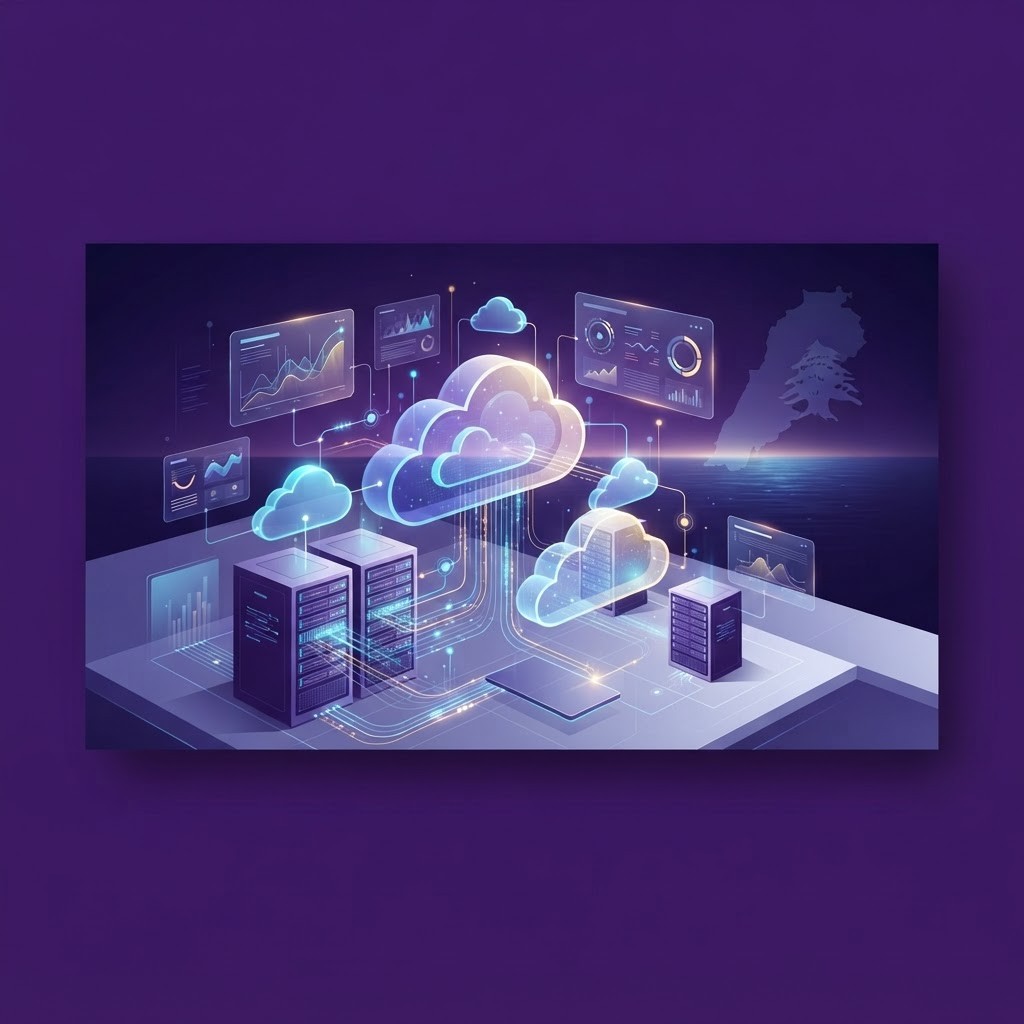
The Cloud Revolution Reaches Lebanon
Cloud computing has transformed how organizations around the world operate, and Lebanon is no exception. For Lebanese businesses, the cloud offers something especially valuable: resilience. In a country where power outages and infrastructure challenges are common realities, the ability to host data and applications in reliable, geographically distributed data centers has become a strategic necessity rather than a luxury. Companies of all sizes are now migrating workloads to the cloud to ensure continuity, reduce capital expenditure, and scale on demand.
This shift has created a dynamic market of cloud service providers, ranging from local specialists who understand the unique conditions on the ground to partners who connect Lebanese clients with global hyperscale platforms. Together, they form an ecosystem that is helping the country leapfrog into a more digital future.
Why Cloud Matters for Lebanese Businesses
The benefits of cloud adoption are particularly pronounced in Lebanon. Migrating to the cloud eliminates the need for costly on-premise hardware that is vulnerable to power instability and difficult to maintain. It enables remote work, which has become essential for many organizations. It also provides built-in disaster recovery, automatic backups, and enterprise-grade security that would be prohibitively expensive to replicate in-house. For startups and SMEs, the pay-as-you-go model means they can access world-class infrastructure without large upfront investment.
The Leading Cloud Service Providers
IDS (Inconet Data Management) is among the most established technology infrastructure providers in Lebanon, offering data center services, hosting, and managed cloud solutions tailored to enterprise needs. Their local presence gives clients reassurance around data sovereignty and support.
Cedarcom delivers connectivity and cloud-related services, helping businesses combine reliable internet with hosted infrastructure. Their integrated approach is popular among organizations that want a single partner for both networking and cloud.
Mobinets provides telecom and IT infrastructure expertise, supporting cloud migration and managed services for larger enterprises and operators across the region.
Broadband Plus and Terranet have expanded beyond connectivity into hosting and cloud-adjacent services, giving Lebanese companies dependable platforms for their digital operations.
Murex-affiliated infrastructure teams and other large technology employers have also fostered local cloud expertise, training engineers who now serve the broader market.
In addition, many Lebanese IT consultancies act as certified partners for global platforms such as Amazon Web Services, Microsoft Azure, and Google Cloud, helping local clients architect, migrate, and optimize workloads on these hyperscale environments. These partners combine international best practices with on-the-ground understanding of Lebanese business realities.
Hybrid and Multi-Cloud Strategies
A growing trend among Lebanese organizations is the adoption of hybrid and multi-cloud strategies. Rather than relying on a single provider, businesses distribute workloads across local data centers and global platforms to balance performance, cost, compliance, and resilience. This approach is especially attractive given the importance of redundancy in the Lebanese context, where having multiple fallback options can mean the difference between continuity and costly downtime.
Security and Compliance Considerations
As more sensitive data moves to the cloud, security and compliance have become central concerns. The best providers offer robust encryption, identity and access management, and continuous monitoring. They also help clients navigate data protection expectations, ensuring that personal and financial information is handled responsibly. For sectors such as banking and healthcare, working with providers who understand regulatory nuances is essential.
Cost Optimization in a Challenging Economy
Given Lebanon's economic situation, cost control is paramount. Skilled cloud providers help clients avoid overspending through right-sizing, reserved capacity planning, and automated scaling that matches resources to actual demand. By converting large capital expenses into predictable operating costs, the cloud helps businesses preserve cash flow and remain agile in uncertain conditions.
The Road Ahead
The future of cloud computing in Lebanon looks promising. As connectivity improves and awareness grows, adoption is expected to accelerate across all sectors. Emerging areas such as cloud-based artificial intelligence, serverless computing, and edge solutions will open new possibilities for innovation. Providers who can combine technical excellence with genuine understanding of local challenges will be best positioned to lead this transformation.
Conclusion
Cloud service providers are playing a pivotal role in Lebanon's digital modernization. By offering resilience, scalability, and access to advanced technology, they are empowering businesses to thrive despite difficult circumstances. The providers featured here represent the strongest options for any organization ready to embrace the cloud and future-proof its operations.