
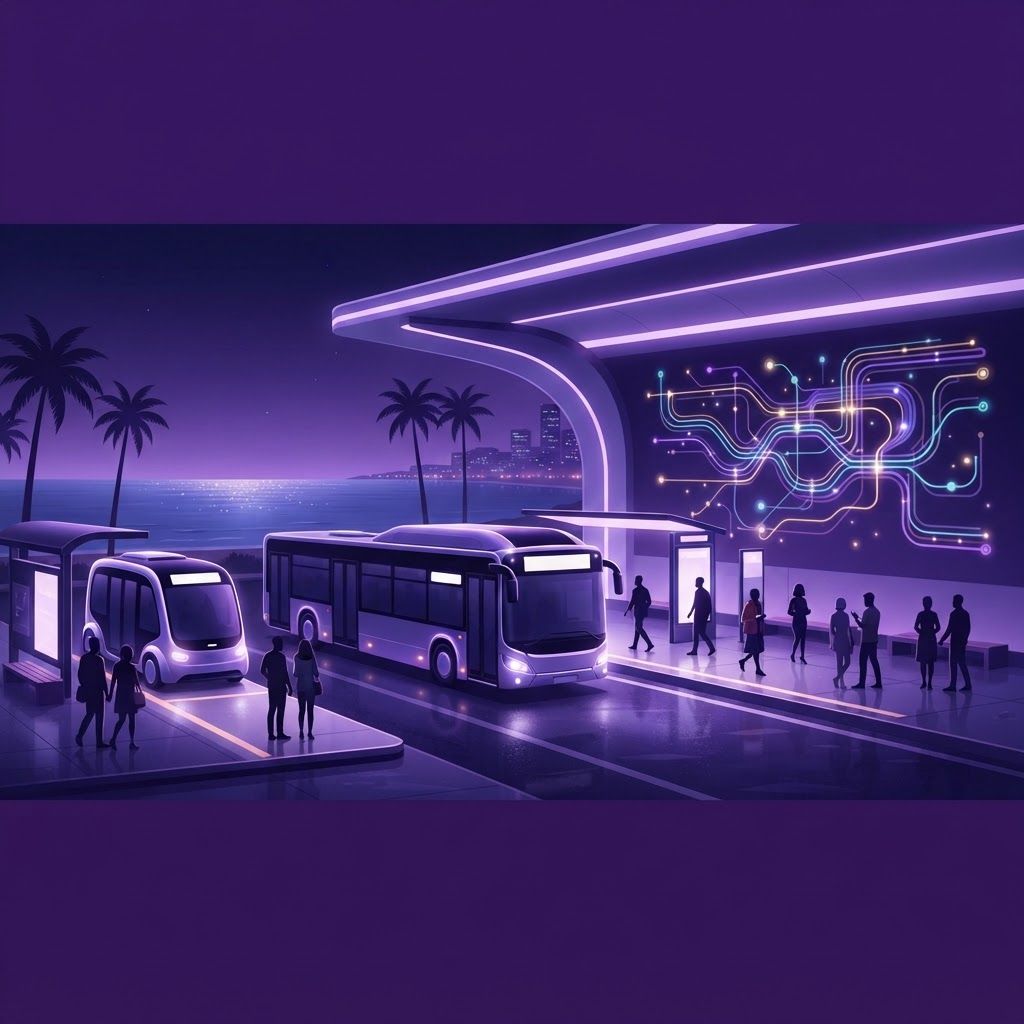
Public Transit in Surf City
Huntington Beach was built during the era of the automobile, and its wide boulevards and generous parking reflect that. Yet a meaningful and growing share of residents, students, workers and visitors move through the city without a personal vehicle. Rising vehicle ownership costs, congestion along Pacific Coast Highway during summer, limited beach parking and environmental considerations have all pushed transit use upward.
The network serving the city is layered. County bus routes provide the backbone, regional rail connects to Los Angeles and San Diego through nearby stations, community shuttles serve specific populations, and micromobility fills the short-distance gaps that fixed routes cannot economically cover. Used together, these services make car-free living genuinely viable in much of the city.
1. OC Bus Fixed Routes
The Orange County Transportation Authority operates the core bus network. Several routes serve Huntington Beach directly, running along Beach Boulevard, Bolsa Chica Street, Warner Avenue, Goldenwest Street and Pacific Coast Highway. These connect residents to Westminster, Fountain Valley, Costa Mesa, Santa Ana and the transit centers that link onward across the county. Service operates seven days a week with reasonable frequency on trunk corridors.
2. OC Bus Route 1 Along Pacific Coast Highway
The coastal route deserves separate mention because it functions as both a transit service and one of the best value sightseeing rides in Southern California. Running along the shoreline between Long Beach and San Clemente, it connects beach communities, piers and coastal attractions for the price of a standard fare. For visitors staying in Huntington Beach, it provides easy access to neighboring beach towns without parking hassles.
3. OC Flex On-Demand Microtransit
OC Flex offers app-based shared rides within defined zones, functioning as a hybrid between a bus and a rideshare. Passengers request a pickup and are matched with a shared vehicle serving nearby trips. This model works well in lower-density areas where fixed routes are inefficient, and it addresses the first and last mile problem that keeps many potential riders in their cars.
4. Metrolink Regional Rail
Metrolink commuter rail is accessed through stations in Santa Ana, Irvine, Anaheim and Buena Park. The Orange County Line connects to Los Angeles Union Station, making a car-free commute to downtown Los Angeles realistic. Weekend service and special event trains to sporting and cultural venues have expanded, and connecting bus service from stations improves accessibility for Huntington Beach residents.
5. Amtrak Pacific Surfliner
The Pacific Surfliner serves the same nearby stations and extends coverage north toward Santa Barbara and San Luis Obispo and south to San Diego. With comfortable seating, a café car and generous baggage policies including surfboard and bicycle accommodation, it is a strong option for day trips and weekend travel that avoids freeway congestion entirely.
6. Senior and Disabled Transportation Programs
Paratransit and community transportation programs provide door-to-door service for residents unable to use fixed-route buses. Vehicles are wheelchair accessible, drivers are trained in passenger assistance, and trips commonly cover medical appointments, grocery shopping and community center visits. Eligibility certification is required, and advance booking is standard, but the service provides essential independence for many residents.
7. Community and Municipal Shuttle Services
Seasonal and event-based shuttles operate during peak periods, moving visitors between remote parking areas and the downtown and pier districts. These services relieve pressure on limited beach parking during summer weekends and major events such as surf competitions and holiday celebrations. They are typically low-cost or free and represent one of the most effective congestion management tools the city deploys.
8. Golden West College and Campus Transit Connections
Student-focused transit programs connect Golden West College and other regional campuses to the bus network, often with discounted or included fare passes. For students, these programs substantially reduce the cost of attendance by eliminating parking permits and fuel expenses. Route timing is generally aligned with class schedules.
9. Bike Share and Micromobility Services
Electric scooters, shared bicycles and rental beach cruisers cover short trips within the city, particularly along the coastal trail and through the downtown area. The flat terrain and extensive paved path network make Huntington Beach unusually well suited to micromobility. These services work best when paired with bus or rail for longer journeys, forming a practical multimodal combination.
10. The Huntington Beach Coastal Trail Network
Active transportation infrastructure deserves recognition as part of the transit system. The paved beach path running along the coastline, together with on-street bike lanes across the city, allows residents to cycle or walk to work, school and shopping. For many trips under three miles, this is the fastest and most pleasant option available, and the city's continued investment in bike infrastructure reflects that reality.
Making Transit Work for You
Use the OC Bus mobile ticketing app to purchase fares and track vehicle arrival in real time, which removes the uncertainty that discourages occasional riders. Consider a day pass when making three or more trips, since it typically costs less than individual fares. Combine modes deliberately: a bike or scooter to the bus stop, then a bus to a rail station, covers considerable distance economically. Check schedules in advance for evening and Sunday travel when frequency reduces.
Where the Network Is Heading
Regional transit planning continues to emphasize improved bus frequency on high-ridership corridors, expanded on-demand microtransit coverage, zero-emission bus fleet conversion in line with California's targets, and better integration between bus, rail and micromobility through unified payment systems. Coastal rail resilience work will also affect long-term reliability of the regional connections Huntington Beach residents depend on.
Final Thoughts
Public transit in Huntington Beach will not replace a car for every household, but it covers far more than most residents realize. County bus routes provide broad coverage at low cost, regional rail connects the city to the wider Southern California megaregion, specialized programs serve residents with mobility needs, and the city's exceptional bike infrastructure handles short trips better than driving ever could. For commuters, students, visitors and anyone looking to reduce driving, the network is worth a serious look.