
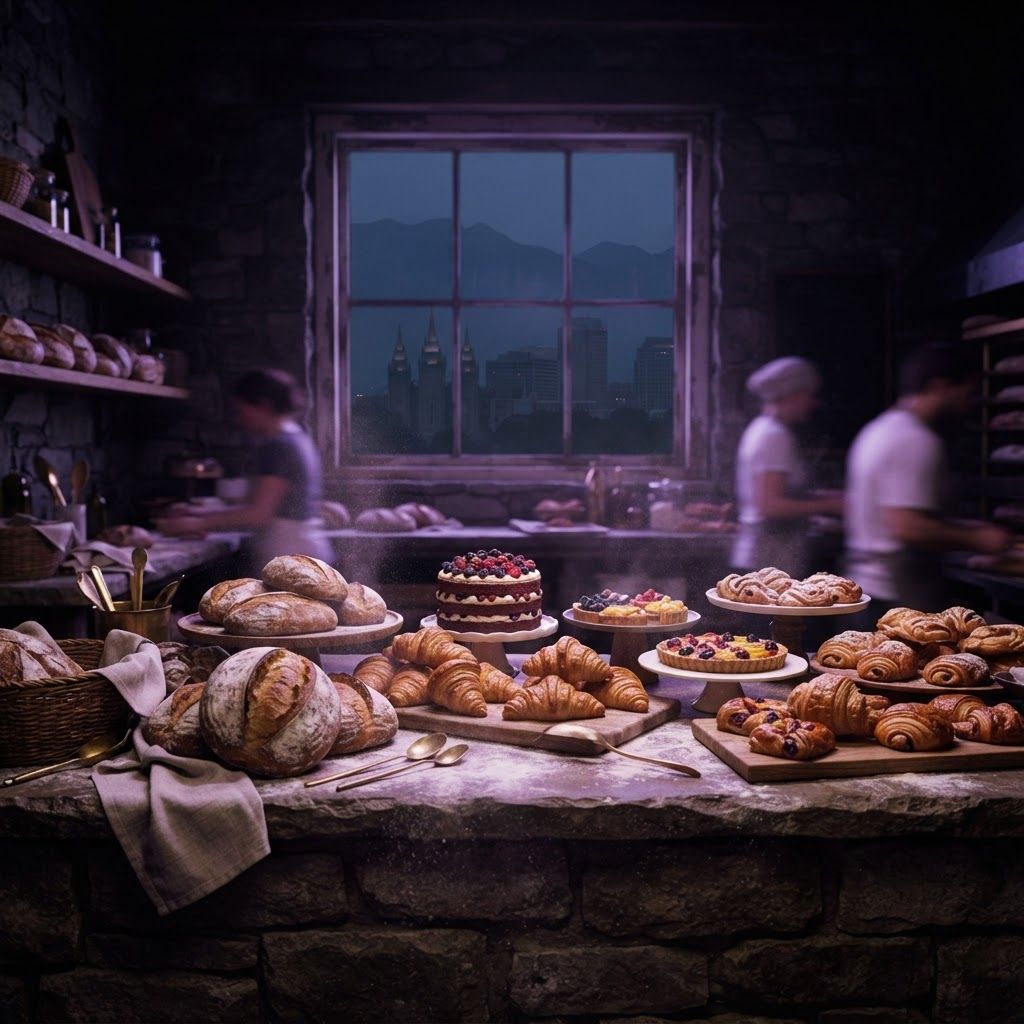
A Bakery Scene That Outgrew Expectations
Salt Lake City's food culture has changed dramatically over the past fifteen years, and bakeries have been among the clearest beneficiaries. What was once a market dominated by supermarket bread and a handful of long-standing family shops now supports naturally leavened sourdough specialists, classically trained pastry kitchens, traditional Mexican bakeries, Scandinavian-influenced cafes and dedicated gluten-free operations. Weekend lines outside neighborhood bakeries have become a normal feature of the city.
Several factors drove the change. The city's population grew younger and more diverse, expanding both demand and the range of traditions represented. A strong farmers market culture connected bakers with regional grain producers, and Utah's agricultural history includes substantial wheat cultivation. And the local restaurant scene matured enough to support skilled pastry professionals, some of whom eventually opened their own shops.
What High Altitude Does to Baking
Baking in Salt Lake City is genuinely more difficult than baking at sea level, and understanding why deepens appreciation for what local bakers accomplish. At roughly 4,200 feet, atmospheric pressure is meaningfully lower. Gases expand more readily, so leavened doughs rise faster and can over-proof or collapse before structure sets. Water boils at a lower temperature, which changes how moisture evaporates during baking and affects both crumb texture and crust formation.
The climate compounds this. Utah's air is dry for most of the year, so flour absorbs less ambient moisture and doughs need hydration adjustment. Fermentation timing must be watched more carefully because the margin between properly proofed and over-proofed narrows. Sugar and fat ratios often require modification to prevent structural weakness in cakes and enriched doughs.
Experienced local bakers adjust instinctively, reducing leavening, increasing liquid, strengthening structure with additional egg or protein, and shortening proof windows. Visitors who bake at home frequently notice that recipes developed elsewhere behave unexpectedly here, which is why local bakeries with years of altitude experience produce noticeably more consistent results.
Ten Standout Bakeries in Salt Lake City
1. Wasatch Sourdough House. A naturally leavened bread bakery working with regional grain and long fermentation schedules. Wasatch Sourdough House is known for a deeply caramelized crust and open, custard-like crumb, and its country loaves and seeded whole grain breads sell out regularly. The bakery mills a portion of its own flour, which shows in the flavor.
2. Great Salt Patisserie. A classical French pastry kitchen producing laminated doughs, entremets and tarts. Great Salt Patisserie is widely regarded as the technical high point of the local scene, with croissants that demonstrate proper lamination and honeycomb structure. Seasonal fruit tarts and canele are frequently recommended.
3. Panaderia Alpina. A traditional Mexican bakery serving conchas, orejas, empanadas and bolillo alongside cafe de olla. Panaderia Alpina reflects the substantial Latino community on the city's west side and operates in the classic self-service style with tongs and trays. Prices remain modest and turnover is high, which means everything is fresh.
4. Bonneville Bread Company. A neighborhood bakery focused on everyday breads and sandwich service. Bonneville Bread Company produces sturdy sandwich loaves, focaccia, rye and rolls, and its lunch counter has become a fixture for nearby offices. It is the kind of practical bakery a neighborhood relies on rather than visits as a destination.
5. Canyon Gluten Free Bakery. A dedicated facility producing breads, cookies, cakes and pastries without wheat. Canyon Gluten Free Bakery operates a fully separated kitchen, which matters considerably for customers with celiac disease, and its work has earned respect even among customers without dietary restrictions.
6. Meridian Coffee and Pastry. A cafe-bakery hybrid emphasizing morning pastry and specialty coffee. Meridian Coffee and Pastry produces scones, morning buns, galettes and laminated pastries in small batches through the morning, and its bright, well-designed space has made it a popular remote work location.
7. Redrock Cake Studio. A custom cake and celebration bakery. Redrock Cake Studio handles wedding cakes, sculpted designs and event desserts, and its high-altitude formulation experience produces cakes that remain moist and structurally sound, which is a genuine technical achievement at this elevation.
8. Beehive Donut Company. A yeast-raised and cake donut shop with rotating seasonal flavors. Beehive Donut Company makes its glazes and fillings in house, and its brown butter and seasonal fruit varieties have a devoted local following. Early arrival is advisable on weekends.
9. Lakeview Nordic Bakehouse. A Scandinavian-influenced bakery producing cardamom buns, rye breads, kringle and open-faced sandwiches. Lakeview Nordic Bakehouse offers a distinct flavor profile in the local market, and its cardamom knots are among the most recommended single items in the city.
10. Alpine Village Bakery. A long-standing family operation producing central European breads, strudel and cookies. Alpine Village Bakery has served the community for decades and represents the older layer of Salt Lake City's baking history, with recipes that have remained essentially unchanged.
What Is Driving the Scene Forward
Several trends are visible. Regional grain sourcing has grown, with bakeries buying from Utah and Idaho farms and sometimes milling on site, which produces noticeably more flavorful bread. Long fermentation has become standard among artisan bakeries, improving both digestibility and taste. Laminated pastry quality has risen sharply as trained pastry professionals opened independent shops.
Dietary accommodation has moved from afterthought to serious practice, with dedicated gluten-free and vegan bakeries operating at genuine quality levels. And bakeries have become community anchors, hosting bread subscriptions, baking classes and neighborhood gatherings in a way that reflects the city's strong local orientation.
How to Get the Most Out of a Bakery Visit
Arrive early for bread, since naturally leavened loaves are typically baked once and sell out by midday at the more popular shops. Ask what came out of the oven most recently rather than ordering from memory, because bakery quality is a function of timing more than anything else. Try the item the bakery makes most of, which is usually the clearest expression of its skill.
If you bake at home, buy flour locally where possible and expect to adjust recipes for altitude. And consider a bread subscription if one is offered, since it guarantees availability and provides bakeries with the predictable demand that allows them to plan production and reduce waste. Supporting that stability is one of the more practical ways to keep a bakery scene like this growing.